As tensions in the Middle East intensify and the United States tightens military pressure on Iran, a new geopolitical reality is emerging in Eurasia. While much global attention has focused on China’s role in supporting Tehran, analysts increasingly argue that Russia—not Beijing—has become Iran’s most crucial lifeline, using the Caspian Sea to bypass American pressure and sustain Tehran’s economy and military logistics.
The development comes amid an evolving U.S. strategy aimed at limiting Iran’s ability to rebuild its military capabilities after sustained American and Israeli operations. Yet despite sanctions, airstrikes, and a reported naval blockade in the Persian Gulf, Tehran continues to receive critical supplies through a corridor Washington cannot easily disrupt.
Russia Emerges as Iran’s Key Strategic Partner
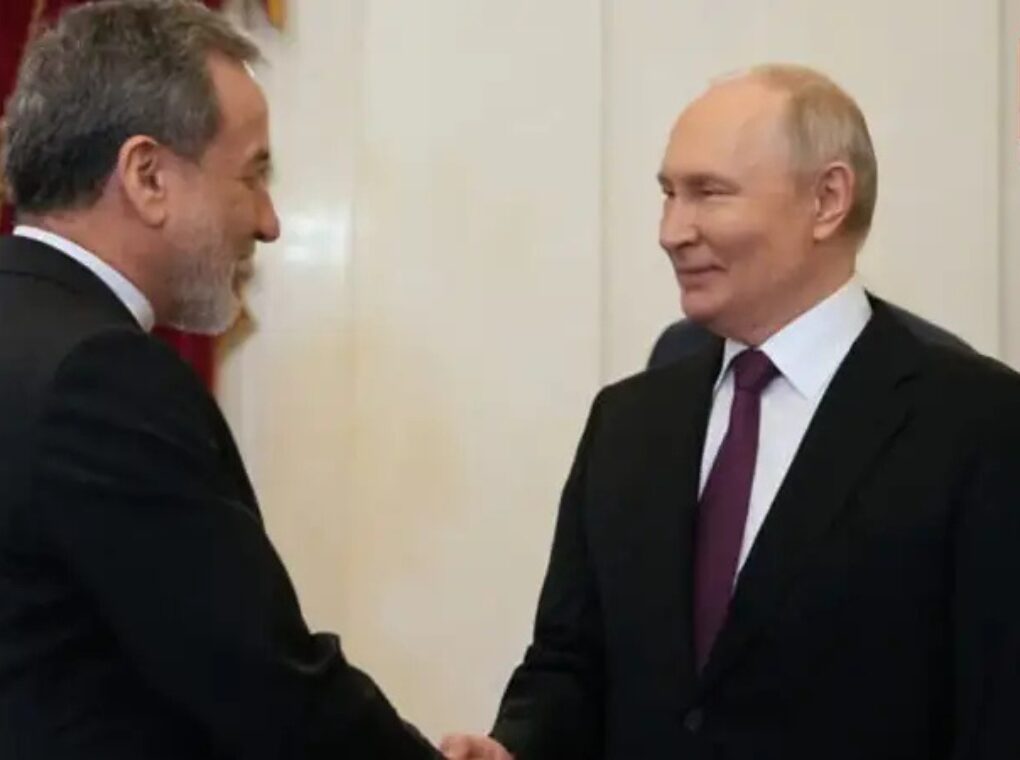
Although China remains one of Iran’s most significant economic partners, especially in energy imports, Moscow appears to have taken a more direct operational role in helping Tehran withstand mounting Western pressure.
Recent reports indicate Russia has intensified shipments of essential goods and military-linked materials to Iran through the Caspian Sea, a landlocked body of water bordered exclusively by five countries: Russia, Iran, Azerbaijan, Kazakhstan, and Turkmenistan.
According to multiple reports, Russia has allegedly used maritime routes linking ports such as Astrakhan and Makhachkala to Iran’s northern ports, including Bandar Anzali and Amirabad, to transport wheat, industrial supplies, and components linked to Iran’s military infrastructure.
Western analysts believe this route has become increasingly important as Iran attempts to replenish military capabilities weakened during recent regional confrontations.
The Caspian corridor reportedly enables Moscow and Tehran to maintain a steady logistical chain away from the heavily monitored Persian Gulf, where U.S. naval presence remains dominant.
The “Caspian Loophole” Challenging U.S. Pressure
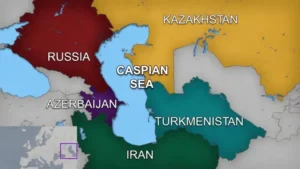
The growing importance of the Caspian Sea stems largely from its unique legal and geographic status.
Unlike major global waterways such as the Strait of Hormuz or the Red Sea, the Caspian is effectively closed to outside military powers. Under the 2018 Convention on the Legal Status of the Caspian Sea, only the five littoral states bordering the waterbody have jurisdiction over maritime security and military activity.
This means neither the U.S. Navy nor NATO forces possess legal authority to patrol or intercept vessels operating in the region.
As a result, the Caspian Sea has emerged as what some security experts describe as a “strategic blind spot” for Washington.
Analysts argue that this geographic reality provides Russia and Iran with a rare opportunity to sustain trade, military coordination, and sanctions-resistant supply chains without fear of direct Western interdiction.
Reports suggest vessels moving between Russian and Iranian ports may sometimes operate with reduced tracking visibility by switching off automatic identification systems (AIS), making monitoring more difficult.
Iran’s Supply Lines Shift North
Iranian officials have reportedly accelerated efforts to expand northern trade corridors after disruptions in southern maritime routes.
Ports including Amirabad, Bandar Anzali, Nowshahr, and Caspian Port are believed to be operating at significantly increased capacity to process imports of wheat, corn, sunflower oil, livestock feed, and industrial materials.
Trade statistics indicate Russia has dramatically expanded grain exports to Iran in recent months, with millions of tons of agricultural products rerouted through the Caspian instead of traditional Black Sea routes, which face growing security concerns.
The increased trade highlights a broader strategic adjustment: Tehran is reducing dependence on vulnerable southern shipping lanes and strengthening northern logistics ties with Moscow.
For Iran, maintaining food security and industrial continuity remains essential as international pressure intensifies.
Military Cooperation Deepens Between Moscow and Tehran
The strengthening partnership extends beyond economics.
Russia and Iran formalized a deeper strategic relationship in 2025 through a bilateral cooperation agreement that reportedly expanded military coordination, including naval exercises in the Caspian region.
Since conducting their first major joint naval drills in 2020, the two countries have increased military engagement, including maritime patrol coordination, naval passage exercises (PASSEX), and air-defense simulations.
Security observers say these exercises offer Tehran opportunities to test radar systems, electronic warfare technologies, and naval interoperability in an environment less exposed to American surveillance than the Persian Gulf.
The partnership gained further significance after Israeli military operations reportedly targeted Iranian naval infrastructure near Bandar Anzali earlier this year, damaging vessels and disrupting regional maritime operations.
Following those strikes, reports suggest Russia increased defense coordination efforts to help maintain Iran’s military viability and preserve strategic balance against Western influence.
Why the Caspian Sea Matters Geopolitically
The Caspian region is becoming increasingly central to global geopolitics—not only because of Iran and Russia, but also due to its role in energy transport and Eurasian connectivity.
Located at the crossroads of Europe, Asia, and the Middle East, the Caspian functions as a major transit hub for rail, road, and maritime trade corridors linking Russia, Central Asia, India, China, and Europe.
Projects such as the North-South Transport Corridor involving Russia, Iran, and India are designed to bypass traditional maritime chokepoints and reduce dependence on Western-controlled trade routes.
At the same time, major oil and gas pipeline networks connected to the region have become critical to Europe’s energy diversification strategies.
This strategic positioning makes the Caspian not merely a regional waterway but an increasingly contested geopolitical arena.
A Strategic Blind Spot for Washington?
For the United States, the rise of the Caspian corridor presents a growing challenge.
While Washington maintains overwhelming naval superiority in the Persian Gulf and broader Middle East, experts argue its ability to contain Iranian logistics is significantly constrained in northern waters.
Some foreign policy analysts describe the Caspian as an overlooked theater where Russian influence continues to expand with limited Western visibility.
As U.S.-Iran tensions remain volatile, Russia’s ability to sustain Tehran through northern supply networks could reshape regional calculations and complicate Washington’s broader strategy of economic and military containment.
The bigger question now is whether the United States will adapt its regional approach—or continue to face a strategic gap in one of Eurasia’s most overlooked geopolitical corridors.