
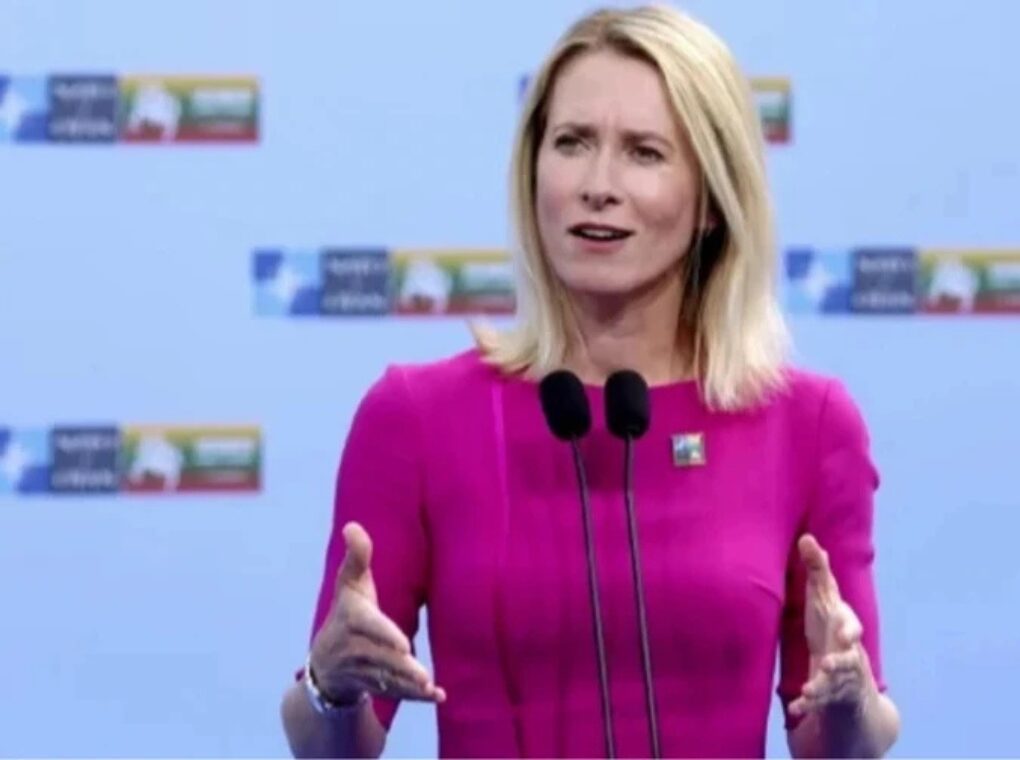
On December 15, 2025, as diplomats gathered in Brussels for the EU Foreign Affairs Council, Europe’s top diplomat Kaja Kallas delivered a blunt and carefully chosen warning that immediately cut through the usual diplomatic language. Speaking in a “doorstep” remark to journalists upon her arrival, the EU High Representative for Foreign Affairs and Security Policy cautioned that conceding Ukraine’s Donbas region to Russia would not bring peace. Instead, she argued, it would invite further aggression.
“The Donbas isn’t Putin’s end game. If he gets it, he will demand more. We know this from history and we should learn from history,” Kallas said. In subsequent remarks, she sharpened the point even further: if Russia secures Donbas, “the fortress is down and then they definitely move on with taking the whole of Ukraine.”
Her words reflect not only the EU’s institutional position, but also a growing anxiety in European capitals that the push for a quick peace—particularly one involving territorial concessions—risks repeating some of the most dangerous mistakes of the 20th century.
A Pivotal Moment for Ukraine and Europe
Kallas’ statement came at a critical juncture in the war. Nearly four years into Russia’s full-scale invasion of Ukraine, the conflict has settled into a grinding war of attrition, with Donbas remaining the most fiercely contested battlefield. At the same time, diplomatic activity has intensified. U.S.-led efforts to explore a negotiated settlement have reportedly included discussions of ceasefire lines and territorial compromises, with Donbas often presented as the most “realistic” concession.
For the EU, this is a moment of strategic choice. The Foreign Affairs Council meeting focused on Russia’s continued aggression against Ukraine, additional sanctions, military assistance, and measures against Russia’s shadow oil fleet. Ukrainian Foreign Minister Andrii Sybiha joined ministers virtually, reinforcing Kyiv’s message that any peace built on territorial surrender would be neither just nor durable.
Kallas’ warning was clearly aimed not only at Moscow, but also at Western partners tempted by the promise of short-term stability.
Why Donbas Matters Strategically
Donbas is not just symbolic territory. It is a critical military and industrial region that underpins Ukraine’s defensive depth in the east. Over the past decade, and especially since 2022, Ukraine has invested heavily in fortifications, logistics hubs, and layered defenses across Donetsk and Luhansk oblasts.
As of December 2025, Russian forces control a significant majority of Donbas, but not all of it. Ukrainian-held areas still anchor defensive lines that prevent Russian forces from pushing westward toward the Dnipro River basin and central Ukraine. Cities such as Sloviansk, Kramatorsk, and surrounding fortified zones function as barriers—what Kallas described as a “fortress.”
Conceding Donbas would not freeze the conflict; it would fundamentally alter the balance of power on the ground. Ukraine’s defensive lines would collapse east of the Dnipro, giving Russia operational freedom to threaten new regions. From a military perspective, Kallas’ argument is straightforward: once the fortress falls, the road opens.
The Weight of History
Kallas’ invocation of history was no accident. Her remarks were widely interpreted as a reference to the 1938 Munich Agreement, when European powers allowed Nazi Germany to annex Czechoslovakia’s Sudetenland in the hope of avoiding war. That concession did not satisfy Adolf Hitler; it emboldened him.
The parallel resonates deeply in Europe, particularly among leaders from Central and Eastern Europe who have long warned that Vladimir Putin views concessions as weakness. In this reading, Donbas is not a final demand but a steppingstone—much like Sudetenland was—toward broader territorial ambitions.
Kallas’ message reflects a core belief shared by many EU officials: Russia only negotiates seriously when it is under pressure. Premature concessions, they argue, do not end wars; they postpone them.
Europe’s Stance Versus the Push for a Quick Deal
The EU’s position, reiterated after the Foreign Affairs Council, remains firm: there can be no “just and durable peace” that rewards aggression. Kallas emphasized that Russia has shown no genuine interest in peace unless it faces sustained military, economic, and political costs.
This stance stands in contrast to some proposals circulating in international diplomacy that frame territorial compromise as pragmatic realism. For Ukraine, however, giving up Donbas would mean more than land—it would mean surrendering sovereignty under duress and accepting that borders can be changed by force.
Kallas’ warning serves as a signal to both allies and adversaries: Europe sees the war not as a narrow dispute over territory, but as a test of the international order.
More Than Ukraine’s War
Ultimately, Kaja Kallas framed Donbas as a European security issue, not just a Ukrainian one. If Russia succeeds through force and negotiation in legitimizing territorial conquest, the implications extend far beyond Ukraine. The credibility of deterrence, the sanctity of borders, and the lessons of history all hang in the balance.
Her message was stark but deliberate: peace bought at the price of appeasement is not peace at all. For Europe, learning from history may be the difference between ending a war—and inviting the next one.