Hungary’s 2026 parliamentary election is shaping up to be far more than a domestic political contest. What would ordinarily be a national vote in a Central European country of under 10 million people has evolved into a geopolitical flashpoint — one that could reshape the balance of power between Brussels, Washington, and even Moscow.
At the center of this political storm stands Viktor Orbán, Europe’s longest-serving leader and the self-declared architect of “illiberal democracy.” After 16 years in power, Orbán faces one of the toughest electoral battles of his career — not only from a rising domestic opposition but also from mounting pressure within the European Union, where many leaders see him as an internal challenger to bloc unity.
The stakes extend well beyond Budapest.
Orbán vs. Brussels: The Ukraine Fault Line
Since the outbreak of the Russia–Ukraine war, the European Union has largely presented a united front in supporting Kyiv — financially, militarily, and diplomatically. However, Orbán has repeatedly broken ranks.
He has opposed large-scale EU funding packages for Ukraine, criticized sanctions on Russia that he argues hurt European economies more than Moscow, and consistently called for immediate peace negotiations with Vladimir Putin. Orbán maintains that prolonging the conflict is economically damaging for Europe and unrealistic in terms of Ukraine’s prospects for outright military victory.
He has also openly criticized Ukrainian President Volodymyr Zelenskyy, arguing that it is naïve to believe Russia can be decisively defeated on the battlefield.
These positions have deeply frustrated Brussels.
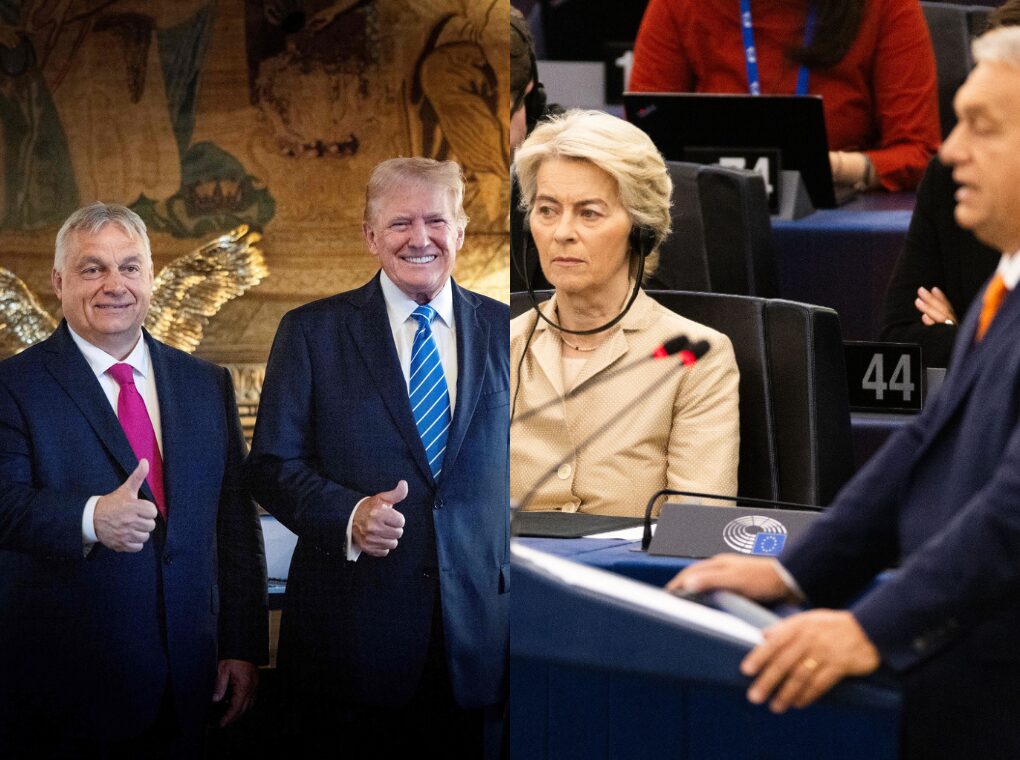
EU leadership, including European Commission President Ursula von der Leyen, views Hungary’s repeated veto threats and resistance to Ukraine aid as undermining European unity during a critical security crisis. From the EU’s perspective, collective support for Ukraine is not only about Kyiv — it is about defending the European security order.
Orbán, however, frames the issue differently. He argues that the EU is prioritizing Ukraine over its own member states, particularly Central and Eastern European economies. According to his narrative, Brussels is redirecting financial and political capital toward Kyiv while neglecting the economic stability of countries like Hungary.
Frozen Funds and Rule-of-Law Disputes
Tensions escalated further when the European Union froze billions of euros in EU funds allocated to Hungary. Brussels cited concerns about corruption, judicial independence, and broader rule-of-law standards under Orbán’s Fidesz government.
For the Hungarian government, the move is political pressure — even coercion. Orbán portrays the frozen funds as an attempt to force Hungary into alignment with EU policies on Ukraine, migration, and governance reforms.
His messaging to voters emphasizes sovereignty: Hungary, he argues, should not be punished for pursuing an independent foreign policy or protecting its national interests.
Meanwhile, Hungary’s opposition contends that restoring trust with Brussels and unlocking the frozen funds is essential for economic recovery and long-term stability. That debate lies at the heart of the upcoming election.
The Rise of Péter Magyar and the Tisza Party
Orbán’s most formidable challenger is Péter Magyar, leader of the Tisza Party. A former insider who broke with Fidesz, Magyar presents himself as a reformer capable of rebuilding Hungary’s relationship with the European Union.
His platform includes commitments to restore rule-of-law standards, ease tensions with Brussels, and reposition Hungary as a constructive EU member state. In essence, Magyar represents a pivot back toward closer European integration.
Recent polling suggests that Orbán faces a more competitive race than at any point in the past decade — an unusual development in Hungarian politics, where Fidesz has long maintained dominance.
And this is where Washington enters the equation.
Trump’s Support and the American Dimension
Under President Donald Trump, US policy toward Hungary has shifted noticeably.
Trump has publicly praised Orbán as a strong and decisive leader who defends national sovereignty. The relationship between the two has been marked by ideological alignment on issues such as migration, nationalism, and skepticism toward supranational institutions.
In February 2026, US Secretary of State Marco Rubio visited Budapest, signaling strong diplomatic support for Orbán’s government. Discussions included energy cooperation and nuclear agreements, underscoring Washington’s willingness to engage Hungary as a strategic partner.
Additionally, the Trump administration granted Hungary a temporary waiver allowing continued purchases of Russian energy without triggering US sanctions penalties. The move stood out, given broader Western efforts to economically isolate Moscow.
For Orbán, this reinforces what he calls a “realist” foreign policy — maintaining energy ties with Russia to shield Hungarian households from price volatility.
For many European leaders, however, it appears that Washington is backing a controversial figure inside the EU, potentially complicating bloc unity.
Allegations of Interference
As the campaign intensifies, accusations of political interference have surfaced on multiple fronts.
Orbán’s camp claims Brussels is subtly influencing the election by withholding funds and tightening regulatory pressure under the banner of combating disinformation. Hungarian officials argue that such measures create an uneven political playing field.
On the other side, critics suggest that Washington’s visible diplomatic engagement — including high-profile visits and policy waivers — amounts to political signaling in Orbán’s favor.
The result is a perception that Hungary’s election has become entangled in broader geopolitical rivalries.
What is at Stake?
If Orbán secures another term:
Nationalist movements across Europe may feel emboldened.
EU decision-making on Ukraine could remain complex and contested.
Orbán’s push for negotiated peace could gain more political traction.
Transatlantic tensions could deepen if Brussels and Washington continue to diverge in strategy.
If the opposition prevails:
Hungary could realign more closely with EU leadership.
Frozen EU funds might be restored.
Hungary may adopt a firmer pro-Ukraine stance within the bloc.
However, debates over EU debt levels and long-term war strategy could intensify.
Either way, Hungary has become central to a much larger debate about Europe’s future.
A Contest of Competing Visions
Ultimately, the 2026 Hungarian election reflects a broader ideological divide within the West.
Brussels emphasizes unity, institutional governance, and collective security.
Trump’s Washington stresses transactional diplomacy and national sovereignty.
Moscow, meanwhile, watches closely as divisions within the West play out.
Orbán has positioned himself as either a bridge — or a fault line — between these competing visions.
As Hungarians head toward the April 2026 vote, the outcome will resonate far beyond their borders. What happens in Budapest will ripple through Brussels, echo in Washington, and carry implications for Moscow.
The question is no longer simply who will govern Hungary.
It is which vision of Europe — and the West — will shape the next chapter of global politics.