Diplomatic efforts to end the war in Ukraine have once again run aground over territory, with US-mediated talks in Berlin collapsing over deep disagreements on the future of the Donbas region. Despite hours of discussion and limited progress on political questions, negotiators failed to bridge the gap on Ukraine’s eastern territories, underlining how far apart the sides remain after nearly four years of war.
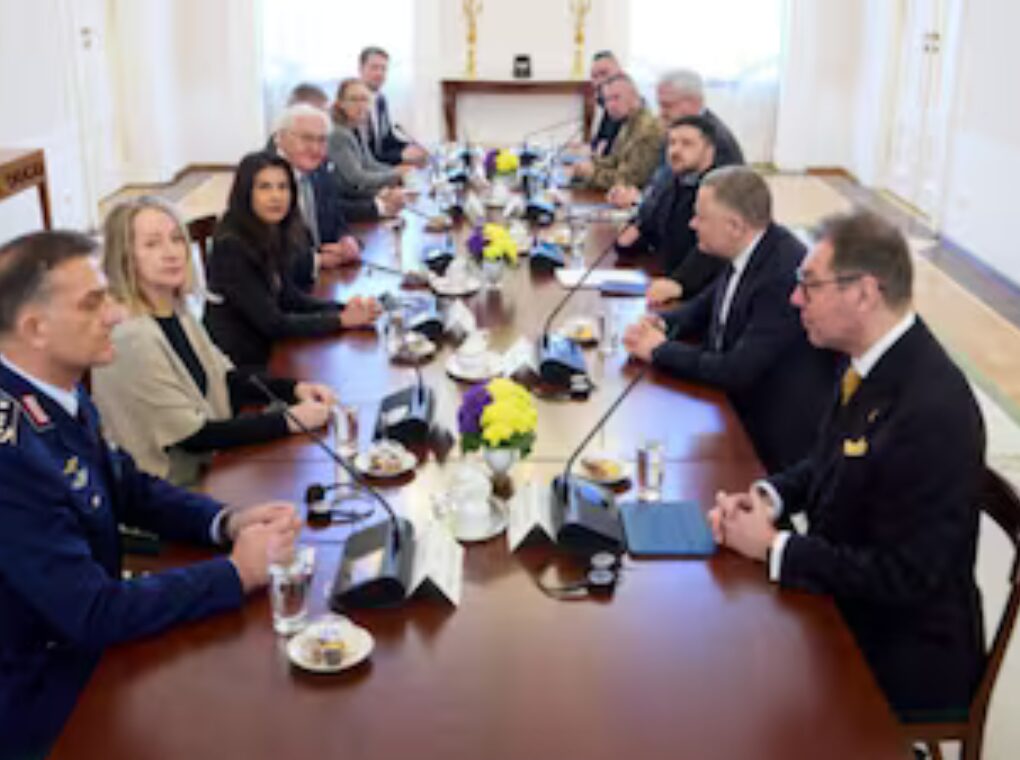
The five-hour meeting in the German capital brought together Ukrainian officials and representatives of the United States, reportedly including envoys aligned with former President Donald Trump’s administration. According to reports by Digi24.ro, citing German media outlets such as Bild, the talks ended without a breakthrough, with Donetsk emerging as the central point of contention.
Long Talks, Limited Progress
The Berlin discussions focused on a US-backed framework aimed at laying the groundwork for a ceasefire and eventual peace settlement. Ukrainian negotiators presented Kyiv’s vision for ending the conflict, while American officials outlined proposals designed to produce a rapid de-escalation and stabilize front lines.
While some flexibility reportedly emerged on political issues, territory once again proved to be the principal obstacle. According to Bild, no compromise was reached on Donbas, the eastern industrial region partially occupied by Russian forces since 2014 and expanded through Russia’s full-scale invasion in 2022.
Sources familiar with the talks described the atmosphere as tense but substantive, with negotiators exploring multiple options before talks stalled over troop withdrawals and control of remaining Ukrainian-held areas.
Areas Where Kyiv Showed Flexibility
Despite the impasse, Ukrainian officials signaled a willingness to engage on several previously sensitive issues. According to Digi24.ro, Kyiv indicated openness to:
Discussing the abandonment of NATO membership aspirations
Holding national elections once security conditions allow
Temporarily freezing the front line, effectively accepting de facto Russian control over currently occupied territories
However, Ukrainian negotiators made clear that any additional territorial concessions would cross a “red line.” The status of cities and towns still under Ukrainian control in Donetsk oblast was described as non-negotiable.
This distinction — between freezing the conflict and formally or informally surrendering territory — remains central to Kyiv’s position.
The Core Dispute: Donetsk and Demilitarization
The sharpest disagreement centered on Donetsk oblast. According to Bild, the US side proposed the creation of a “demilitarized zone” in parts of Donbas. Under this proposal, Ukraine would withdraw its forces from approximately 5,600 square kilometres of territory it currently controls in Donetsk.
In return, Russian forces would reportedly refrain from immediately moving into the vacated area, which would be designated as a demilitarized or special economic zone. Supporters of the proposal framed it as a pragmatic compromise that could halt active fighting while deferring final status questions.
Kyiv, however, categorically rejected the idea.
Ukrainian officials argued that withdrawing from cities and towns they still hold would amount to a unilateral concession, with no enforceable guarantees that Russian troops would not eventually occupy the territory. Concerns were also raised about Russian forces entering the area disguised as civilians or through proxy security formations.
Kyiv’s Counterproposal
Ukraine responded with an alternative framework centered on reciprocity. President Volodymyr Zelensky publicly outlined Kyiv’s position, questioning the logic of a one-sided withdrawal.
“If Ukrainian troops withdraw, say, five to ten kilometres, why shouldn’t Russian troops also withdraw the same distance inside the occupied territories?” Zelensky said, according to Digi24.ro.
Kyiv’s counterproposal includes:
Mutual demilitarization on both sides of the front line
A freeze along current lines without further withdrawals
Territorial questions deferred to a later stage, potentially involving elections or referendums under international supervision
Ukrainian officials emphasized that any long-term settlement must be symmetrical and verifiable, rejecting arrangements that would lock in Russian territorial gains without formal guarantees.
US Pressure and Diverging Narratives
Some media outlets described the Berlin talks as having “collapsed,” particularly following Kyiv’s refusal to withdraw from Donbas. Other sources suggested that while the territorial track stalled, discussions on security guarantees and political sequencing showed “real progress.”
The US delegation reportedly pushed for a swift deal, reflecting growing pressure in Washington to reduce involvement in the conflict. Trump-aligned figures have previously argued that freezing the war — even at the cost of territorial compromises — is preferable to prolonged fighting.
Russian officials, meanwhile, have maintained that full control of Donbas is non-negotiable. Kremlin-linked figures have hinted at tactical flexibility, such as partial troop withdrawals, but insist on retaining security forces, including National Guard and police units, in occupied areas.
Public Opinion and European Response
Public sentiment in Ukraine remains overwhelmingly opposed to ceding Donbas. Recent polling indicates that roughly 75% of Ukrainians reject any territorial concessions, even as war fatigue grows.
European leaders, including officials from France, Germany, and the United Kingdom, have expressed support for Kyiv’s refusal to accept what they view as one-sided or pro-Russian terms. European diplomats have privately warned that forcing Ukraine into territorial withdrawals could destabilize the region and set a dangerous precedent.
Uncertain Path Ahead
For now, the territorial question remains unresolved. While diplomatic channels remain technically open, the Berlin talks highlighted the fundamental contradiction at the heart of the negotiations: Washington’s push for rapid de-escalation versus Kyiv’s insistence on reciprocity, sovereignty, and credible security guarantees.
As fighting continues in eastern Ukraine and Russian forces maintain pressure in Donetsk, the battlefield remains a powerful influence on diplomacy. Without movement on territory, future negotiations risk repeating the same cycle — long talks, limited flexibility, and an enduring stalemate.
Whether the gap can be bridged will likely depend not only on diplomatic creativity, but on developments on the ground and the balance of political pressure in Washington, Kyiv, Moscow, and European capitals alike.