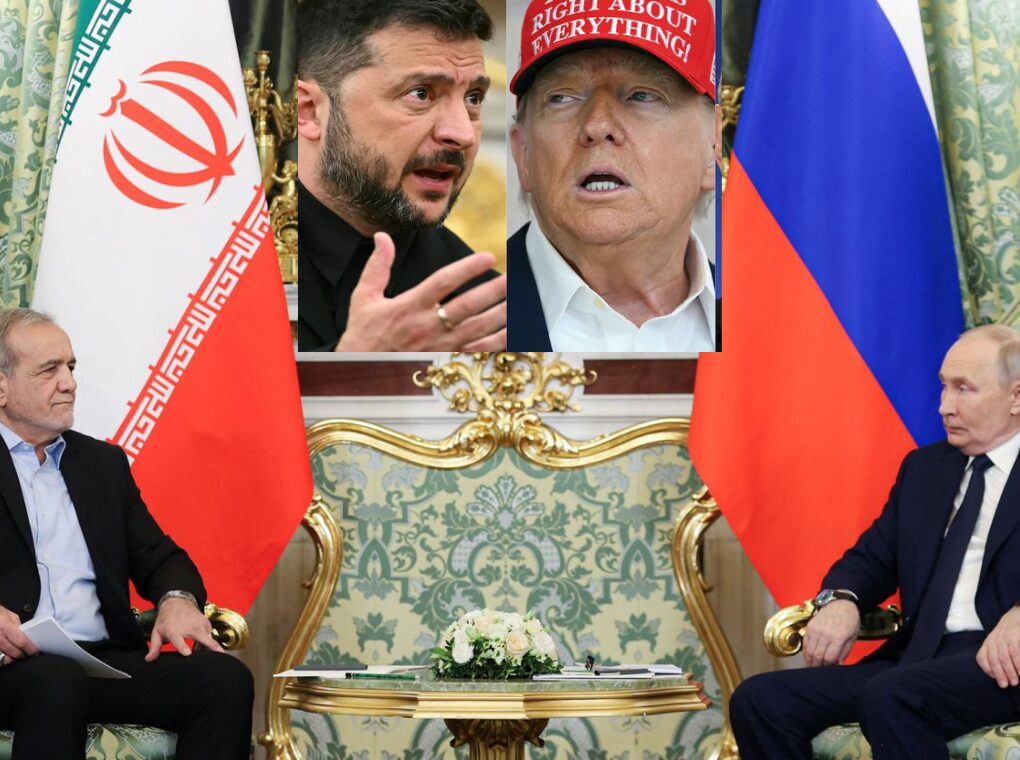
The escalating conflict involving Iran, Israel, and the United States is rapidly reshaping global geopolitics, with Russia openly declaring support for Tehran and warning against Western attempts to blame Iran for the ongoing crisis. As oil prices surge past $100 per barrel and energy infrastructure across the Middle East faces repeated attacks, analysts warn the conflict could trigger a broader global economic and political shock.
In a striking statement that signals Moscow’s growing involvement, Russian Ambassador to the United Kingdom Andrei Kelin said Russia is “not neutral” in the conflict.
“We support Iran. We take the current situation very badly and we do not understand the Western logic that consists of holding Iran responsible for everything,” Kelin said in an interview, highlighting Moscow’s frustration with Western narratives surrounding the war.
The remarks come amid intensifying fighting across the region following Israeli airstrikes on Iranian targets and Tehran’s retaliatory missile and drone attacks on Israeli and U.S.-linked assets in the Middle East. The conflict has already sent shockwaves through global energy markets and raised concerns that the crisis could evolve into a wider geopolitical confrontation involving multiple major powers.
Oil Prices Surge As Energy Infrastructure Targeted
One of the most immediate impacts of the conflict has been a sharp spike in global oil prices. Crude oil surged above $100 per barrel as fears of supply disruptions spread across markets.
The Middle East remains the world’s most important energy hub, and any escalation threatens critical supply routes, particularly the Strait of Hormuz, through which nearly one-fifth of global oil supplies pass.
Recent strikes on energy infrastructure have heightened these fears. Iranian oil depots were targeted in Israeli strikes, while Iranian retaliation has reportedly focused on energy and strategic infrastructure across the region, including facilities linked to the Saudi energy giant Saudi Aramco.
Energy analysts warn that repairing damaged oil infrastructure could take months, potentially keeping prices elevated and fueling inflation across global markets.
Russia’s Strategic Position
Russia’s open backing of Iran has fueled speculation that the Kremlin may view the Middle East crisis as an opportunity to counter Western influence. Moscow has long accused the United States and NATO of supporting Ukraine in a prolonged conflict designed to weaken Russia.
Now, some geopolitical observers suggest the Kremlin could support Iran diplomatically or strategically in ways that complicate U.S. military and economic objectives in the region.
While Russia has not confirmed any direct military assistance to Tehran in the current conflict, Western officials have expressed concerns about intelligence sharing and broader strategic cooperation between the two countries.
Russian officials have also warned that continued escalation could lead to nuclear proliferation in the region, as countries seek stronger deterrence amid rising tensions.
U.S.–Israel Differences Emerge
Another development drawing attention is a reported disagreement between Washington and Tel Aviv over the targeting of Iranian oil infrastructure.
According to media reports, Israeli strikes on around 30 Iranian fuel depots caught some U.S. officials off guard. While the United States had been notified about the operations, the scale of the attacks reportedly went further than expected.
The concern in Washington centers on the potential global economic fallout of an “oil war.” Large-scale destruction of energy infrastructure could trigger severe supply shortages and push oil prices even higher, increasing economic pressure on the United States and its allies.
For Israel, however, crippling Iran’s economic and logistical capacity may be seen as a key strategic objective in weakening Tehran’s regional influence.
Global Alliances and Economic Fallout
The widening conflict is also reshaping global alliances. While Russia has openly backed Iran, China has called for restraint but continues to strengthen its energy partnerships with both Iran and Russia.
China has secured long-term energy supplies through infrastructure projects such as the Power of Siberia pipeline, giving Beijing a strategic buffer against potential oil supply shocks affecting Western economies.
Meanwhile, Gulf countries—many of which host U.S. military bases—are facing increasing security concerns as energy infrastructure becomes a target in the conflict.
The United States has responded by increasing military readiness in the region. Reports indicate that the U.S. has deployed the Boeing E-6B Mercury, a specialized aircraft designed to maintain communications with U.S. nuclear forces during extreme crises, underscoring the seriousness of the situation.
A Conflict with Global Implications
With oil markets under pressure, major powers aligning behind rival sides, and energy infrastructure increasingly targeted, the Iran-Israel conflict is rapidly evolving into a crisis with global implications.
The key question now facing policymakers is whether diplomatic channels can prevent further escalation or whether the conflict will deepen into a prolonged geopolitical confrontation affecting global energy supplies, financial markets, and international security.
As the situation unfolds, the world is watching closely—aware that what began as a regional war could reshape the global balance of power.