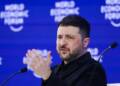

European leaders have released their most comprehensive security guarantees yet for Ukraine following two days of intensive negotiations in Berlin, a diplomatic effort hailed by Ukrainian President Volodymyr Zelenskyy as a step forward in ending a cycle of Russian aggression that has stretched for more than a decade.
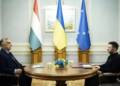
The talks brought together senior European leaders and United States representatives, including US special envoys Steve Witkoff and Jared Kushner, who met President Zelenskyy on Sunday. While progress was acknowledged on several fronts, key challenges remain—particularly on the future status of occupied territories and the precise operational role the United States would play in enforcing security guarantees.
A Framework for Long-Term Security
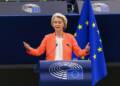
In a joint statement released Monday evening, European leaders outlined a multi-layered security framework designed to deter future Russian attacks and stabilize Ukraine over the long term. The statement was signed by leaders from Germany, France, the United Kingdom, Italy, Poland, the Netherlands, Denmark, Sweden, Norway, and the European Union’s top institutions, with the option left open for additional countries to endorse the plan.
At the heart of the proposal is a commitment to “sustained and significant support” for Ukraine’s armed forces. Under the plan, Ukraine would maintain a standing military of up to 800,000 troops even in peacetime—an unprecedented scale aimed at ensuring credible deterrence against any renewed aggression.
Complementing this force would be a European-led “multinational force” operating on Ukrainian soil. Built around the existing “Coalition of the Willing” chaired by France and the United Kingdom, this force would support the restoration and modernization of Ukraine’s armed forces, protect Ukrainian airspace, and help secure maritime routes. Operations inside Ukraine are explicitly left on the table.
The Role of the United States
One of the most notable outcomes of the Berlin talks is the explicit inclusion of the United States as a central pillar of the security architecture. According to European officials familiar with the negotiations, Washington has agreed to act as a “backstop,” providing intelligence, air support capabilities, and high-end military coordination that European states currently cannot fully replicate.
Under the proposed framework, the US would lead a mechanism to monitor and verify any future ceasefire, working alongside international partners. This monitoring role is seen as crucial, given Russia’s repeated refusal to agree to or uphold ceasefires since the full-scale invasion began.
A source close to the talks told Euronews that the expected response to any renewed Russian attack would be “multi-domain,” covering land, sea, air, cyber, and space—signaling a shift toward a more integrated and automatic response model rather than ad hoc assistance.
Legally Binding Guarantees and Automatic Response
European leaders emphasized that the security guarantees would be legally binding. Any future armed attack on Ukraine would automatically trigger a coordinated response that could include military action, intelligence sharing, economic measures, and diplomatic pressure. Importantly, each participating country would retain the right to decide how it contributes to the response, preserving national sovereignty while ensuring collective action.
“In any deal, nothing is agreed until everything is agreed,” the leaders said, stressing that negotiations must lead to a durable peace rather than a temporary pause in fighting.
Territories and Referendum Question
Despite the progress, territorial issues remain the most contentious part of the negotiations. President Zelenskyy acknowledged that significant disagreements persist with Moscow, which continues to seek control over additional Ukrainian land.
European leaders made clear that any decision on territory must ultimately rest with the Ukrainian people and should only take place once “robust security guarantees are effectively in place.” They pledged to support Zelenskyy should he choose to hold a referendum on territorial questions.
“International borders must not be changed by force,” the statement said, reaffirming a core principle of European security.
Reconstruction, Russian Assets, and EU Accession
Beyond immediate security, the Berlin framework also addresses Ukraine’s long-term recovery. European leaders committed to investing in Ukraine’s reconstruction and keeping the assets of the Russian Central Bank frozen within the EU. These immobilized funds are increasingly seen as a potential source of financing for Ukraine’s rebuilding and military needs.
However, disagreements persist within the EU over a proposed €90 billion zero-interest loan backed by these frozen assets. Belgium, which holds a significant portion of the funds, along with Italy, Bulgaria, Malta, and the Czech Republic, has expressed reservations—casting uncertainty over how quickly the financing plan can be approved.
On Ukraine’s European future, leaders reaffirmed their support for Kyiv’s accession to the European Union as a cornerstone of long-term security. While no fixed date was set—despite earlier speculation about 2027—the commitment was framed as “merit-based,” dependent on Ukraine’s reforms and progress.
A Diplomatic Turning Point, With Limits
Zelenskyy welcomed the outcome of the Berlin talks, noting that certain proposals he viewed as “destructive” had been removed from draft documents. “This matters, because dignity matters,” he said, adding that Ukraine would continue working to secure clear answers on security guarantees, territories, and reconstruction funding.
European leaders urged Russia to demonstrate seriousness about peace by agreeing to the White House-backed peace plan and establishing a ceasefire—steps President Vladimir Putin has so far resisted.
As EU leaders prepare for a crucial summit in Brussels to decide how to fund Ukraine through 2027, the Berlin talks mark a significant diplomatic moment. While far from resolving all disputes, the newly published security guarantees signal a stronger, more structured European and transatlantic commitment to Ukraine’s defense—and a clear warning to Moscow that any future aggression would meet a unified response.