As the Russia–Ukraine war grinds on with staggering human and economic costs, a fierce political battle is unfolding behind the scenes—not on the battlefield, but in Washington, Brussels, and major Western capitals.
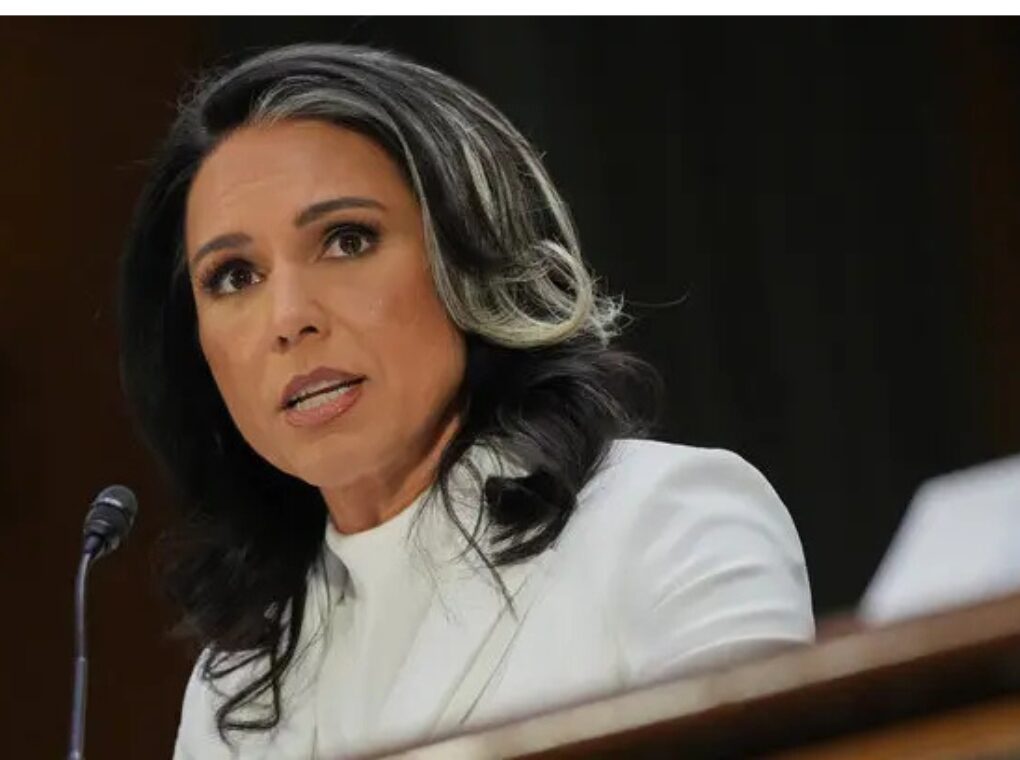
At the center of this controversy is a blunt accusation from U.S. Director of National Intelligence Tulsi Gabbard, who has publicly claimed that elements within the EU, NATO, and the U.S. “Deep State” are actively obstructing peace efforts and pushing the United States toward a dangerous confrontation with Russia.
Gabbard’s statements, delivered through social media and interviews, have ignited intense debate. She argues that powerful interests within Western institutions are deliberately promoting fear, leaking selective intelligence, and shaping media narratives to justify continued escalation of the war—despite mounting casualties and clear risks of a wider conflict.
“Dragging the U.S. Into War With Russia”
According to Gabbard, the underlying objective of these actors is clear: to pull the U.S. military directly into a war with Russia.
“They do so to pull the US military into a conflict with Russia, which is ultimately what the EU and NATO want,” she warned. “We cannot allow this to happen.”
She accused entrenched bureaucratic forces—often referred to as the “Deep State”—of sabotaging every serious attempt at negotiation. Whenever diplomatic progress appears possible, she claims, leaks to sympathetic mainstream media outlets emerge, pushing alarmist narratives about Russia’s supposed ambitions to invade Europe.
“These war-mongers foment fear and hysteria,” Gabbard said, “as a way to justify the continuation of war and to undermine President Trump’s efforts toward peace.”
Intelligence vs. Public Narrative
One of the most striking aspects of Gabbard’s intervention is her assertion that public rhetoric does not align with actual U.S. intelligence assessments.
She stated that U.S. intelligence agencies have briefed policymakers—both Democrats and Republicans—that Russia seeks to avoid a direct war with NATO. Moreover, intelligence assessments reportedly conclude that Russia lacks the current capability to conquer and occupy all of Ukraine, let alone launch a large-scale invasion of Europe.
“The truth,” Gabbard wrote, “is that Russia does not even have the capability to conquer and occupy Ukraine, what to speak of invading and occupying Europe.”
This directly contradicts the dominant narrative promoted by many European leaders and media outlets, which frequently frame the war as an existential struggle to prevent Russian tanks from rolling into NATO capitals.
Trump’s Peace Push and Political Resistance
Gabbard framed the controversy as part of a broader effort to undermine President Donald Trump’s renewed push for peace negotiations. According to her, critics are intentionally misrepresenting intelligence findings to erode public support for diplomacy and force continued military engagement.
She accused Trump’s opponents of exploiting fear to gain backing for pro-war policies, stating that they are “dangerously promoting a false narrative” to justify escalation.
Her remarks come amid reports that the United States has proposed a new, expanded format for peace talks, potentially involving Ukraine, Russia, the U.S., and European representatives.
Zelensky Confirms New Negotiation Format
Ukrainian President Volodymyr Zelensky confirmed on Saturday that Washington has floated a new diplomatic framework. While details remain unclear, Zelensky suggested the talks could involve parallel U.S.–Russia discussions alongside broader multilateral negotiations.
“The US said they would have a separate meeting with representatives of Russia,” Zelensky said, “and they proposed the following format: Ukraine, America, Russia, and probably Europe.”
Zelensky emphasized that Kyiv has not yet committed to the format and will decide based on the outcome of ongoing bilateral talks with U.S. negotiators.
Europe’s War Anxiety and Escalation Fears
Despite intelligence assessments suggesting Russia is not poised to invade Europe, anxiety remains high across EU and NATO states. Military budgets are rising, conscription debates have resurfaced, and media speculation about a wider European war continues to dominate headlines.
Critics argue that this atmosphere benefits defense contractors, political hardliners, and institutions whose influence expands during prolonged conflict. Gabbard’s supporters believe her statements expose a disconnect between strategic reality and political messaging.
A Critical Moment for Peace—or Escalation
With over a million casualties reported across both sides, the war has reached a point where diplomacy may be the only viable path forward. Gabbard’s intervention has forced uncomfortable questions into the open: Who benefits from continued war, and who truly wants peace?
As negotiations hang in the balance, the choices made by Washington, Brussels, and Kyiv in the coming months may determine whether Europe moves toward de-escalation—or slides closer to a catastrophic great-power confrontation.