
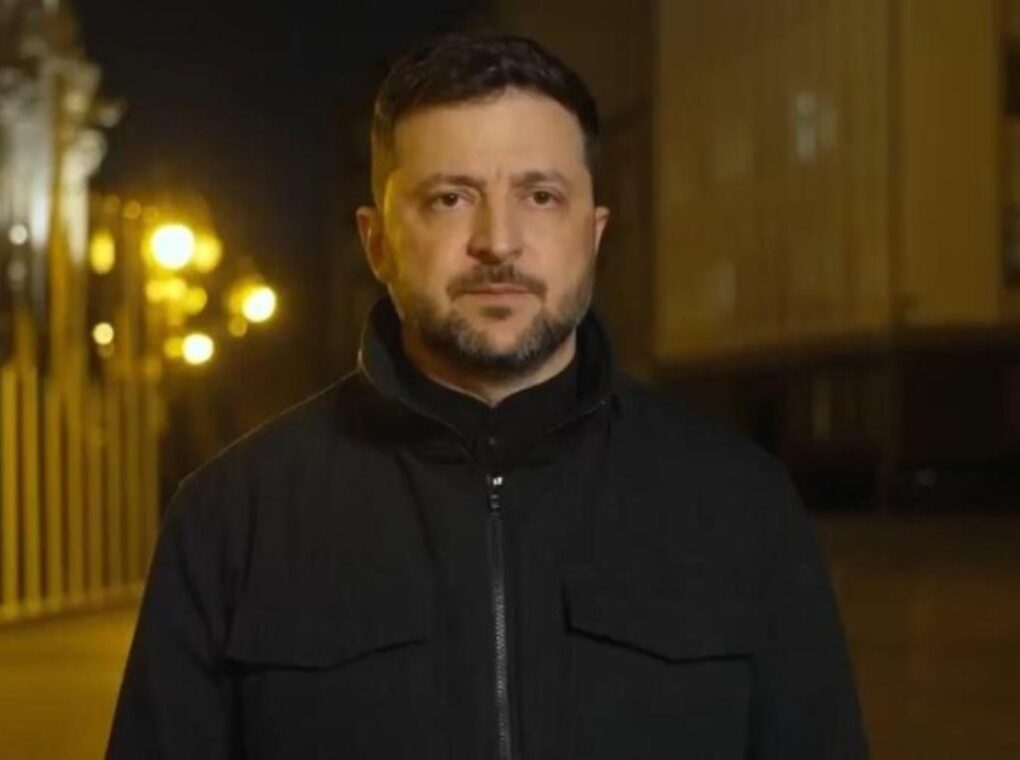
On December 24, 2025, Ukrainian President Volodymyr Zelensky publicly revealed, for the first time in full, all 20 points of Ukraine’s revised peace plan aimed at ending Russia’s nearly four-year full-scale invasion.
The document, developed closely with the United States and discussed with European partners, represents Kyiv’s most comprehensive and detailed roadmap yet for a negotiated end to the war. Zelensky described it as a “foundational framework” that balances Ukraine’s red lines on sovereignty and security with difficult compromises intended to stop the fighting and prevent future aggression.
The announcement comes amid intensified U.S.-led diplomacy, with Washington pushing for momentum toward a settlement. Zelensky acknowledged that while broad convergence exists on most points, two issues—territorial arrangements in eastern and southern Ukraine and the future of the Zaporizhzhia Nuclear Power Plant (ZNPP)—remain deeply contentious and will likely require leader-level negotiations.
Core Principles: Sovereignty and Security
At its heart, the plan reaffirms Ukraine’s sovereignty and territorial integrity as non-negotiable principles. The very first point demands formal confirmation of Ukraine’s sovereignty, followed by a binding non-aggression pact between Russia and Ukraine. To deter any future conflict, the framework includes robust security guarantees from the United States, NATO, and European partners that would function similarly to NATO’s Article 5. Under this model, any renewed Russian invasion would automatically trigger a coordinated military response and the reimposition of sanctions.
Ukraine also proposes maintaining a peacetime armed force capped at 800,000 personnel—significantly smaller than its wartime mobilization but far larger than earlier proposals that envisioned a heavily demilitarized Ukraine. Zelensky framed this as a necessary deterrent, especially given Ukraine’s experience since 2014.
In parallel, Russia would be required to enshrine a policy of non-aggression toward Ukraine and Europe into its domestic legislation, reinforcing the permanence of the settlement.
Integration with the West and Economic Guarantees
The plan strongly anchors Ukraine in the Western political and economic system. Kyiv seeks European Union membership within predetermined timelines, including a fixed accession date—an unprecedented level of clarity compared to past enlargement processes. To bolster economic recovery, the framework calls for a U.S.–Ukraine free trade agreement and the creation of a global development package defined through a separate investment accord.
Perhaps most ambitious is the proposal to establish several reconstruction funds totaling $800 billion. These would combine grants, loans, and private investments to rebuild Ukraine’s devastated infrastructure, cities, and industrial base. Zelensky emphasized that long-term stability is impossible without economic recovery and international investment.
Ukraine also reiterates its commitment not to pursue nuclear weapons, aligning with its obligations under existing non-proliferation treaties.
Zaporizhzhia Nuclear Power Plant: A Major Flashpoint
One of the most sensitive issues is the Zaporizhzhia Nuclear Power Plant, Europe’s largest nuclear facility, currently under Russian control. Kyiv insists on “no compromise” regarding Ukrainian sovereignty over the plant. The United States has proposed trilateral management involving Ukraine, Russia, and the U.S., with a key role for Washington to ensure safety. Ukraine, however, prefers joint U.S.–Ukraine management on a parity basis, rejecting any arrangement that legitimizes Russian control.
Territory: The Hardest Question
Point 14, dealing with territory, is widely seen as the most difficult and politically explosive element of the plan. Ukraine proposes that Russia withdraw from Dnipropetrovsk, Mykolaiv, Sumy, and Kharkiv regions. In the heavily contested Donetsk, Luhansk, Zaporizhzhia, and Kherson regions, Kyiv suggests freezing the conflict along current lines under the principle “we stay where we are.”
Russia, by contrast, demands Ukraine’s full withdrawal from Donetsk region. As a potential compromise, the U.S. has floated the idea of a free economic zone or special arrangement in disputed areas. Zelensky stated that if no agreement is reached on freezing current positions, such an option could only be approved through a nationwide Ukrainian referendum, in which the entire peace agreement would be put to a vote.
Humanitarian, Political, and Legal Measures
The framework includes an all-for-all prisoner exchange, covering prisoners of war, detained civilians, children, and political prisoners. Russia would also commit not to obstruct Ukraine’s commercial use of the Dnipro River and the Black Sea, while the strategically sensitive Kinburn Spit would be demilitarized.
Ukraine pledges to hold elections as soon as possible after the agreement is signed, restoring full democratic processes disrupted by martial law. Educational programs aimed at promoting tolerance, intercultural understanding, and combating racism and prejudice are also included, signaling a post-war focus on social cohesion.
Legally, the agreement would be binding and monitored by a “Peace Council” chaired by the U.S. President, giving Washington a central enforcement role. Once all parties agree to the terms, a full and immediate ceasefire would come into effect.
A Fragile Path Forward
Zelensky acknowledged that the plan involves concessions that are painful for Ukraine but argued that the security guarantees and international oversight offered are unprecedented. Reactions remain mixed: Western observers see the proposal as Zelensky’s most flexible position yet, while Russian commentators criticize it as demanding sweeping concessions from Moscow while locking Ukraine into the Western security architecture.
Ultimately, the plan places the onus on Russia to respond. With the war approaching its fourth anniversary, Zelensky’s 20-point framework represents Ukraine’s clearest attempt to define a viable endgame—one that seeks to end the bloodshed without sacrificing the country’s sovereignty or future. Whether it becomes the basis for peace will depend on Moscow’s willingness to engage and on whether global powers can bridge the remaining, formidable gaps.