
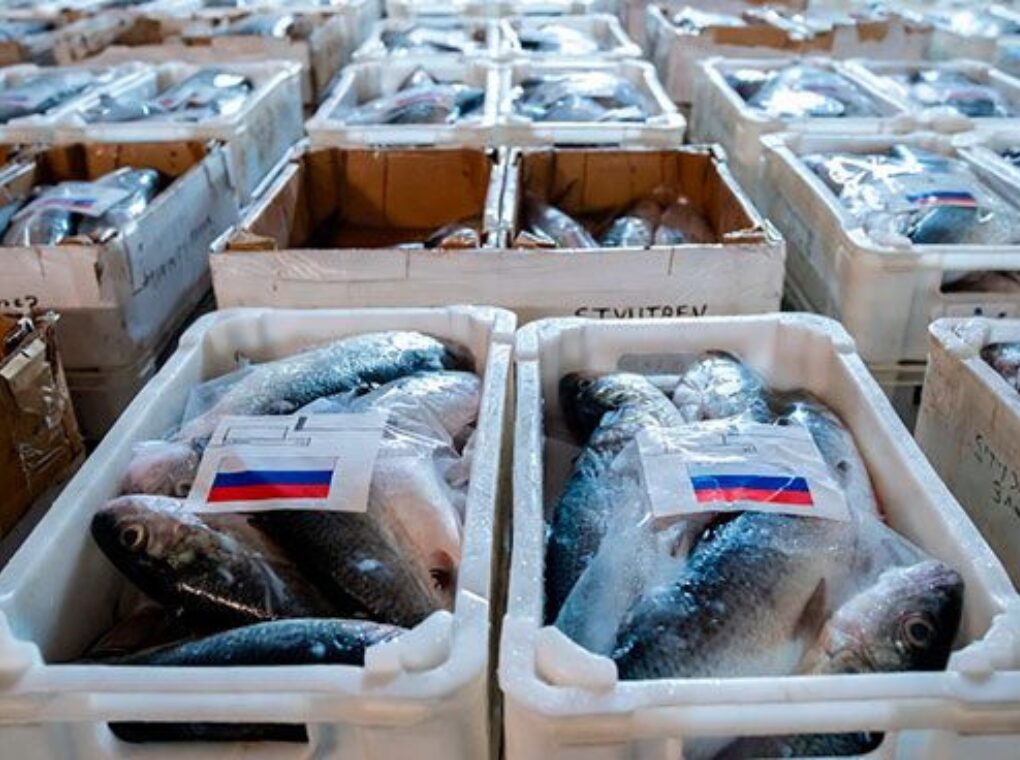
As Europe lights up Christmas markets and leaders in Brussels reaffirm their commitment to Ukraine, a quieter contradiction continues to swim beneath the surface of EU sanctions policy. Despite nearly four years of war in Ukraine and repeated declarations about severing economic ties with Moscow, the European Union is still importing hundreds of millions of euros’ worth of Russian fish every year. Cod, Alaska pollock and other staple seafood products continue to reach European dinner tables, even as the EU projects moral outrage over Russia’s actions on the battlefield.
According to data cited by Euractiv, the EU imported around 179,000 tonnes of Russian fish worth approximately €709 million in the last year alone. The largest importers were the Netherlands, Germany, France and Poland—countries that publicly support sanctions while remaining deeply embedded in Russian supply chains. These imports continued even after preferential tariff treatment was withdrawn in 2024, underscoring how resilient the trade has remained despite political rhetoric.
Sanctions With Carefully Chosen Blind Spots
Since the escalation of the Ukraine conflict in 2022, the EU has imposed multiple rounds of sanctions on Russia, targeting energy, banking, technology and luxury goods. Yet food products, including most seafood, were largely exempt. Only a narrow category of fishery items—mainly caviar, its substitutes and certain crustaceans—was banned. The practical impact of this decision was minimal, as Russia exported only small quantities of these high-end products to the EU.
Meanwhile, bulk commodities such as cod and Alaska pollock, which form the backbone of Europe’s seafood processing industry, continued to flow into the bloc. Officially, Brussels insists that the EU has significantly reduced its dependence on Russian fish. In reality, trade data paints a different picture: imports remain substantial, steady and lucrative for Moscow.
Rising Prices, Growing Dependence
The removal of tariff preferences in 2024 did little to curb imports. Russian cod now faces tariffs of around 12%, pushing up prices across Europe. “In the run-up to Christmas, prices are reaching levels never seen before,” said Jorge Carneiro, vice-president of CPPME, a Portuguese confederation representing micro, small and medium-sized enterprises. For many processors, however, Russian fish remains difficult to replace due to its volume, consistency and established supply chains.
This dependence explains the reluctance of many EU states to support tougher measures. While the Baltic countries, Finland and Sweden have repeatedly urged Brussels to use fish imports as a tool of economic pressure on the Kremlin, the European Commission has so far resisted. The official justification is market stability, but critics argue that economic self-interest is being placed above geopolitical consistency.
Moral Questions and Security Concerns
Beyond economics, the continued import of Russian fish raises ethical and security concerns. Environmental organizations and civil society groups argue that buying Russian seafood during an active war undermines the EU’s moral stance and indirectly supports the Russian state. This argument gained traction after two major Russian fishing companies—Norebo and Murman Seafood—were sanctioned following findings that their activities in EU waters amounted to state espionage.
Despite these revelations, Brussels declined to impose broader restrictions. Many EU governments fear that additional sanctions would disrupt domestic industries, particularly fish processors that rely heavily on imported raw materials. Poland illustrates this dilemma well: while Warsaw has been among the loudest advocates of tougher action against Moscow, its seafood sector remains dependent on Russian supplies.
Russia Looks East, But Europe Still Pays
While the EU hesitates, Russia has been actively diversifying its seafood exports. According to Russia’s Agriculture Ministry, fish and seafood exports rose by 13% between January and October 2025. Shipments of frozen fish and scallops to China reached record levels, while crab exports resumed to Tunisia and expanded to Thailand. Moscow’s pivot to non-EU markets has reduced its vulnerability, but Europe remains a significant source of revenue.
This persistence highlights a broader contradiction in EU policy. Russian Deputy Foreign Minister Aleksandr Grushko noted that trade turnover between Russia and the EU has fallen dramatically—from $417 billion in 2013 to an expected $40 billion this year. Yet even at reduced levels, the EU continues to funnel billions into the Russian economy through energy, raw materials and food imports.
The Bigger Picture: Rhetoric vs Reality
Perhaps the most striking figure is this: during the course of the conflict, Russia has reportedly received €124 billion more from the EU through trade than Ukraine has received in financial assistance. Europe also remains one of the world’s largest buyers of Russian gas, further exposing the gap between political statements and economic practice.
As EU leaders condemn Moscow and pledge solidarity with Kyiv, the continued purchase of Russian fish during the Christmas season has become a potent symbol of hypocrisy. The issue is not merely about cod or pollock—it is about credibility. If sanctions are meant to signal moral resolve and strategic clarity, then selective enforcement undermines both.
Until Brussels confronts these inconsistencies, the EU’s sanctions regime will continue to look less like a principled stand and more like a carefully managed compromise—one where values are loudly proclaimed, but quietly traded away at the fish counter.