
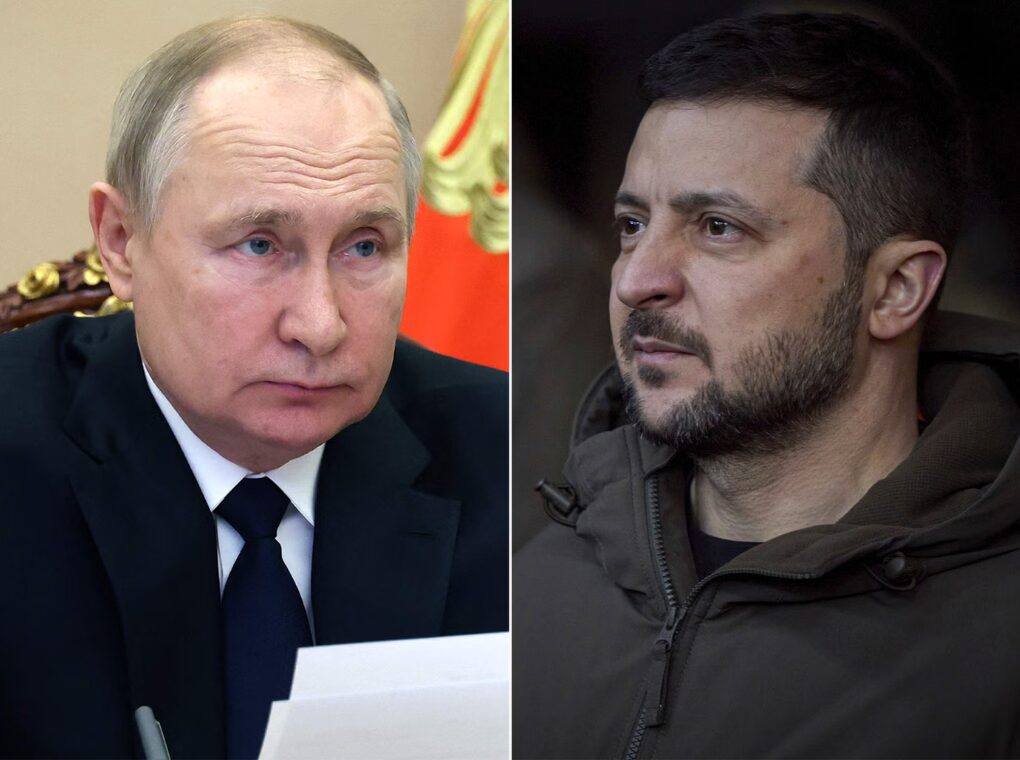
Russian President Vladimir Putin has congratulated his troops on what Moscow describes as the “liberation” of Gulaypole, a strategically significant town in Ukraine’s Zaporizhzhia region, marking what Russia portrays as another step forward in its long-running military campaign.
The announcement, made during Putin’s visit to a forward command post, has intensified debate over battlefield realities and raised fresh questions about the narrowing window for a negotiated settlement.
Moscow’s Claim and Putin’s Message
On December 27, 2025, Putin met senior military commanders, including Chief of the General Staff Valery Gerasimov, who reported that Russian forces had taken control of Gulaypole, a heavily fortified Ukrainian position. According to Russia’s Defense Ministry, troops established control over more than 76 square kilometers, cleared over 7,000 buildings, and inflicted heavy losses on Ukrainian forces, including the destruction of armored vehicles and heavy equipment.
Video footage released by the ministry showed Russian artillery strikes, infantry assaults, and soldiers raising Russian flags in various parts of the town. Putin praised the operation as an “important result,” stating that the capture of Gulaypole opens “good prospects for further advances” in Zaporizhzhia.
During the same briefing, Russian generals reported progress in Myrnohrad (also known as Dimitrov) in the Donetsk People’s Republic, calling it another step toward the full control of Donetsk. Putin described these developments as significant milestones in achieving Russia’s stated objectives.
Why Gulaypole Matters?
Gulaypole is more than a tactical prize. Before the war, the town had a population of around 12,000 and functioned as a defensive hub for Ukrainian forces in southeastern Ukraine. Its location makes it important for controlling supply routes and shaping potential future advances toward Zaporizhzhia city, the regional capital.
The town also carries symbolic weight. Known historically as the birthplace of anarchist leader Nestor Makhno, Gulaypole holds cultural and historical significance for Ukraine, making its possible loss politically sensitive for Kyiv.
For Moscow, capturing the town strengthens its control over territories it claims as part of the Russian Federation and deepens defensive buffers against Ukrainian counteroffensives.
Contested Battlefield Reality
Despite Russia’s confident declarations, the situation on the ground remains disputed. Ukrainian authorities have denied losing full control of Gulaypole, acknowledging that the fighting is intense but insisting that Ukrainian forces still hold parts of the town.
Independent analysts reviewing geolocated footage suggest a more complex picture. While Russian troops appear to have made substantial advances into central, northern, and southeastern districts, estimates indicate they may control roughly half of the town, not its entirety. Some flag-raising videos appear to involve small infiltration units rather than evidence of full consolidation.
This gap between claims and reality reflects a recurring feature of the conflict: battlefield announcements often move faster than verifiable control.
A Broader Pattern of Incremental Gains
The advance on Gulaypole fits into Russia’s broader military strategy of gradual, grinding offensives rather than rapid breakthroughs. Over recent months, Russian forces have taken dozens of settlements across Donetsk, Kharkiv, Sumy, and Zaporizhzhia regions, as well as key logistical hubs such as Pokrovsk (Krasnoarmeysk) and Kupyansk.
While these advances are costly and slow, they steadily reshape the front lines. Once Russian forces entrench themselves, reversing gains becomes increasingly difficult for Ukraine, particularly amid manpower shortages and dependence on Western military aid.
Diplomacy Under Pressure
The timing of the Gulaypole announcement is politically significant. It coincides with renewed diplomatic activity, including meetings between U.S. President Donald Trump and Ukrainian President Volodymyr Zelensky aimed at exploring a possible peace framework.
Trump has publicly stated that Russian President Putin wants peace, but Moscow continues to insist on core demands laid out earlier: Ukrainian withdrawal from territories claimed by Russia, neutrality, and limits on military capabilities. Russian officials have also rejected proposals involving European peacekeepers or territorial compromises.
From Kyiv’s perspective, delaying negotiations risks further territorial losses, weakening its position at the bargaining table. From Moscow’s standpoint, continued battlefield gains increase leverage, making concessions less necessary.
A Narrowing Window
The battle for Gulaypole underscores the uncomfortable reality facing Ukraine: time and territory are linked. Every new Russian advance reduces Kyiv’s negotiating space and increases the difficulty of reclaiming lost ground through diplomacy or force.
Whether Gulaypole ultimately falls completely or remains contested, its fate highlights the accelerating convergence of military operations and political negotiations. As 2025 draws to a close, the conflict appears to be approaching a decisive phase, not through a single dramatic breakthrough, but through accumulated pressure.
The central question remains unresolved: will diplomacy arrive in time to halt further losses, or will the battlefield continue to define the terms of any future peace?Time Running Out for Kyiv? Russia’s Gulaypole Move Raises Alarm Bells