
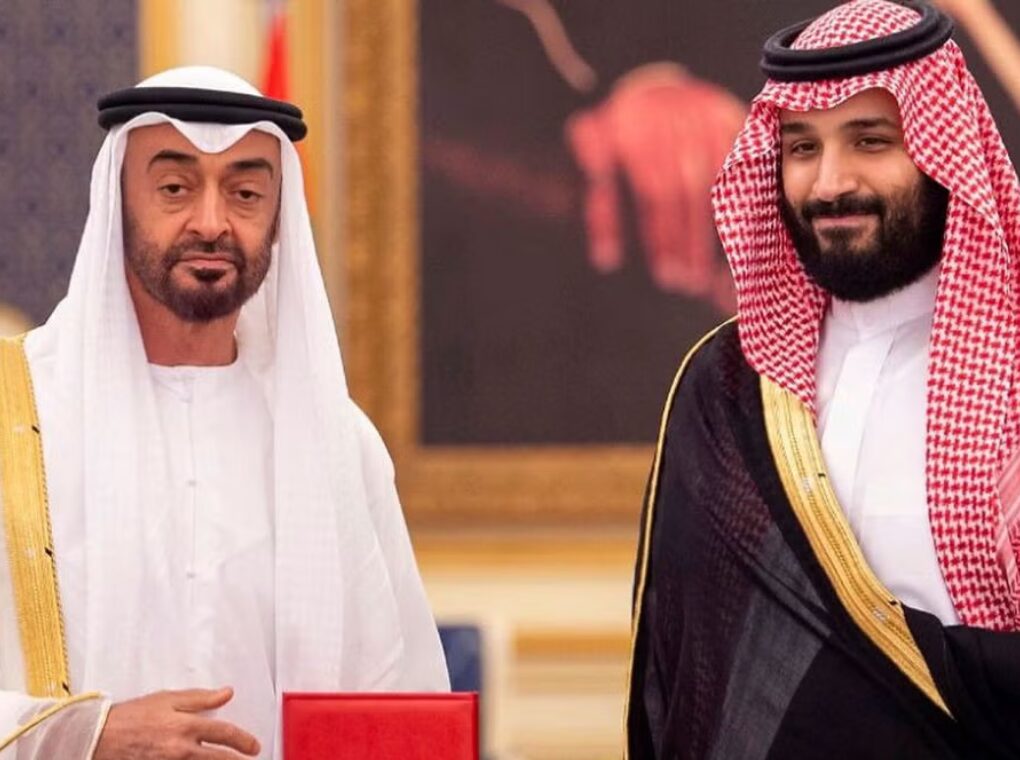
For decades, Saudi Arabia and the United Arab Emirates (UAE) have been portrayed as the backbone of Arab unity in the Gulf. As leading members of the Gulf Cooperation Council (GCC), the two oil-rich monarchies cooperated closely on security, economic integration, and regional diplomacy.
Together, they countered Iranian influence, suppressed Islamist movements after the Arab Spring, and led military interventions across the Middle East. Yet beneath this outward unity, a strategic rivalry has steadily intensified—one that has now spilled into open confrontation in Yemen.
The most dramatic illustration of this growing rift came on December 30, 2025, when Saudi Arabia carried out airstrikes on Yemen’s eastern port city of Mukalla. Riyadh stated that it had targeted a shipment of weapons and armored vehicles intended for Yemeni separatist forces and made an explosive allegation: the weapons shipment had originated from the UAE. The strike marked a dangerous escalation between two countries that are technically allies, raising serious questions about the future of Gulf cooperation.

From Strategic Brotherhood to Competitive Ambition
Historically, Saudi Arabia functioned as the undisputed leader of the Arab Gulf, with the UAE often aligning itself with Riyadh’s regional priorities. The formation of the GCC in 1981 symbolized this collective approach, particularly in countering Iran following its 1979 Islamic Revolution. For years, Saudi-Emirati relations were defined by coordination rather than competition.
However, leadership transitions in the 2010s changed the dynamic. Saudi Crown Prince Mohammed bin Salman (MBS) and UAE President Mohammed bin Zayed (MBZ) both emerged as assertive, reform-minded leaders with expansive ambitions. While their modernization programs—Saudi Arabia’s Vision 2030 and the UAE’s long-term diversification strategies—shared similarities, they also placed the two states on a collision course for influence, investment, and regional leadership.
Differences became more pronounced during the Arab Spring. The UAE adopted a zero-tolerance stance toward political Islam, particularly the Muslim Brotherhood, while Saudi Arabia showed tactical flexibility in certain contexts. Over time, what had been complementary roles evolved into strategic competition.
Yemen: A Shared War, Divergent Goals
The Yemen conflict became the primary arena where this rivalry played out. When the Saudi-led coalition intervened in 2015 against the Iran-aligned Houthi movement, the UAE was a key partner, providing ground forces and logistical support. Initially, both states sought to restore Yemen’s internationally recognized government and limit Iranian influence.
Yet their objectives soon diverged. Saudi Arabia prioritized Yemen’s territorial unity and border security, fearing prolonged instability along its southern frontier. The UAE, by contrast, focused on maritime security, counterterrorism operations against Al-Qaeda in the Arabian Peninsula, and cultivating influence in southern Yemen.
This led Abu Dhabi to support the Southern Transitional Council (STC), a separatist group advocating for an independent South Yemen. With UAE backing, the STC gained control over strategic ports, islands such as Socotra, and parts of the oil-rich Hadhramaut region. Clashes between UAE-backed separatists and Saudi-supported government forces in 2019 exposed the coalition’s internal fractures.
The Mukalla Bombing and Its Implications
The December 2025 airstrike in Mukalla marked a significant escalation. Saudi Arabia claimed the attack targeted a weapons shipment destined for STC forces and alleged that the arms had been supplied by the UAE. According to Riyadh, this constituted a violation of coalition understandings and undermined Yemen’s unity.
Mukalla’s strategic importance cannot be overstated. Located in Hadhramaut, a region containing the majority of Yemen’s oil reserves, the port is vital for both economic activity and humanitarian aid. The strike disrupted port operations and raised alarms among international aid organizations already struggling with Yemen’s humanitarian crisis.
The UAE denied the accusations, describing them as unfounded and warning against further escalation. Nevertheless, satellite imagery and local reports suggested that Saudi aircraft struck areas linked to UAE-backed forces, making it one of the rare instances of direct Saudi military action against Emirati-aligned actors.
Economic and Geopolitical Dimensions of the Feud
Beyond Yemen, economic rivalry has deepened tensions. Disputes within OPEC+, particularly over production quotas, highlighted the UAE’s willingness to challenge Saudi leadership in global oil markets. Competition has also intensified in technology, tourism, aviation, and foreign investment, with both states seeking to position themselves as the region’s premier business hub.
Geopolitically, the rift threatens GCC cohesion. Saudi Arabia has moved to normalize relations with Qatar, once blockaded alongside the UAE, while Abu Dhabi has pursued deeper ties with Israel following the Abraham Accords. Iran, meanwhile, stands to benefit from Gulf disunity, particularly through its leverage in Yemen via the Houthis.
A Rivalry with Regional Consequences
The Saudi-UAE feud represents more than a bilateral dispute; it reflects a broader realignment of power in the Middle East. The Mukalla bombing—and Saudi Arabia’s claim that the weapons originated from the UAE—underscores how far relations have deteriorated.
While both states continue to share concerns about Iran and regional instability, trust has eroded significantly. Whether this rivalry hardens into a prolonged cold conflict or is eventually managed through diplomacy will shape not only the future of Yemen but also the balance of power across the Gulf and beyond.