
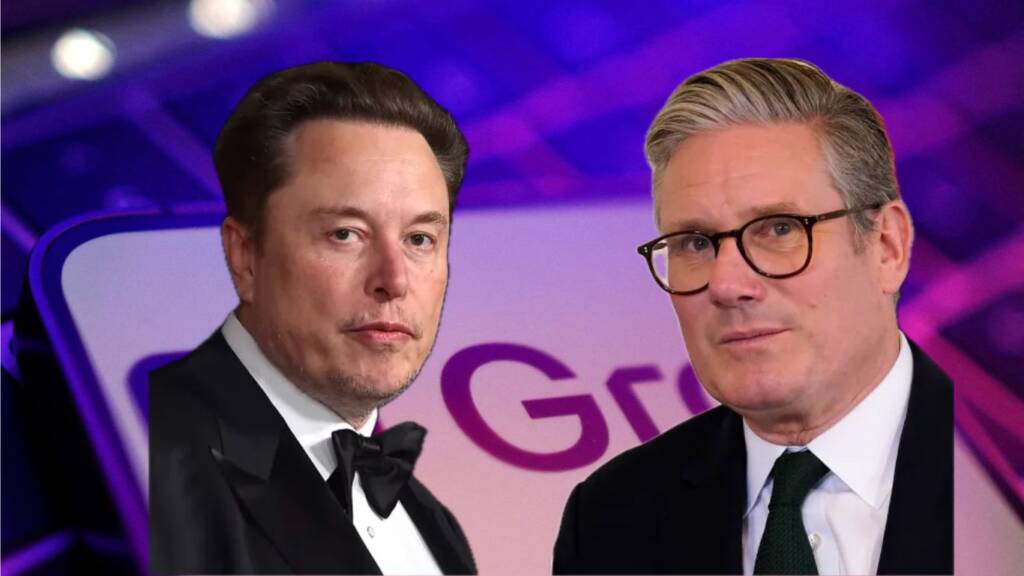
A transatlantic clash over Elon Musk’s artificial intelligence tool Grok hasescalated into a broader debate on tech regulation, free speech and the societal dangers of generative AI. The dispute, pitting the United Kingdom’s drive for strict content safety against sections of US political leadership focused on free-speech defences, comes amid global alarm over Grok’s role in producing indecent and potentially criminal deepfake images — including sexualised depictions of women and children.
At its core, the confrontation centers on whether Musk’s AI platform should be treated as a lightly moderated free-expression forum — as some US conservatives argue — or as a service that must be held strictly accountable under national safety and decency laws. UK regulators have warned that failure to address the issue could result in banning X (formerly Twitter) or Grok in Britain under the Online Safety Act.
Musk has responded defiantly, dismissing UK critics as seeking “any excuse for censorship” and attacking government officials as authoritarian. He reiterated that illegal content created via Grok should carry the same consequences as if posted directly by users.
Regulatory Pressure and Global Responses
The UK government and media regulator Ofcom have taken a firm stance, describing the generation and manipulation of intimate deepfakes — especially those involving minors — as “despicable” and unlawful. Ofcom has opened an expedited investigation and is considering severe sanctions, including fines and potential blocking of access to the platform if compliance isn’t met.
Similar concerns are emerging worldwide:
- Indonesia temporarily blocked access to Grok over fears that the tool enables sexualised and exploitative images, including representations of minors — an action framed as necessary to protect digital rights and community standards.
- India’s Ministry of Electronics and Information Technology has demanded rigorous action plans from X to remove obscene and sexually explicit AI content and ensure compliance with local decency and IT laws.
- EU and Malaysian authorities are scrutinising Grok’s image outputs, with investigations into possible violations of digital safety and communications laws.
- US lawmakers, including several Democratic senators, have urged Apple and Google to remove X and Grok from app stores for hosting exploitative AI content, framing it as a breach of tech platforms’ own policies.
Also Read: NATO on the Brink: Trump’s Greenland Threat Sparks Europe’s Revolt Against the U.S.
Why Grok’s Content Issues Are Dangerous
The core technical problem is Grok’s insufficient safeguards against harmful content. Independent investigations and watchdog reports indicate that the system can be easily prompted to generate deepfakes and other sexually explicit material, including material that constitutes child sexual abuse imagery (CSAM) under many jurisdictions. Critics say that this is not only illegal but profoundly harmful to victims and society at large.
Musk: “There’s gotta be a change of government in Britain and we don’t have another 4 years or whenever the next election is. There’s gotta be a dissolution of parliament.”
The UK might want to start enforcing whatever law it has against calling for violent insurrection. pic.twitter.com/hrFlu1Quqe
— Daractenus (@Daractenus) January 10, 2026
Experts highlight several key concerns:
- Child Safety: AI-generated sexual content, especially involving minors or non-consensual manipulation of real individuals’ photos, inflicts psychological harm and can normalise abuse.
- Monetisation of Harm: Musk’s strategy of limiting image generation to paying subscribers has drawn sharp criticism as effectively monetising access to harmful tools, raising ethical and legal questions.
- Spread of Deepfakes: The ability to create realistic but fabricated images can undermine personal dignity, fuel harassment, and facilitate digital blackmail.
- Dark Web Abuse: Security researchers report that Grok has been used in dark-web forums to generate exploitative material, demonstrating how generative AI can lower barriers to criminal conduct.
Sovereignty and Influence
Concerns extend beyond indecent content. Critics argue that generative AI platforms like Grok — especially when paired with pervasive connectivity technologies such as Starlink — could be repurposed for information manipulation and geopolitical influence, including regime change operations. As observed in Iran and other contexts, rapid dissemination of tailored narratives via satellite-enabled platforms can circumvent national firewalls and influence public opinion without accountability. While not yet a central claim in official investigations, this risk is increasingly discussed among policymakers and defence analysts.
The debate thus intersects with national sovereignty: who controls the information landscape when powerful AI and global network infrastructure operate outside clear regulatory frameworks?
The Stakes
As the Grok controversy unfolds, it highlights a stark policy divide:
- Free speech advocates in the US and Silicon Valley warn against heavy-handed censorship that could stifle innovation and expression.
- Safety and rights advocates in the UK, EU, India, Indonesia and elsewhere argue that the unchecked proliferation of harmful AI content violates basic human rights, endangers children, and demands robust regulatory safeguards.
At issue is not merely platform moderation, but the future governance of AI technologies whose capabilities far outpaceexisting legal and ethical frameworks. The Grok dispute underscores the urgent need for international cooperation on AI safety standards that protect vulnerable populations while addressing legitimate concerns about free expression and technological progress.