Tensions in the Middle East have intensified after an Iranian explosive boat attack struck a US-owned crude oil tanker inside Iraqi territorial waters, killing an Indian crew member and raising fears that the entire Persian Gulf could become a high-risk zone for international shipping.
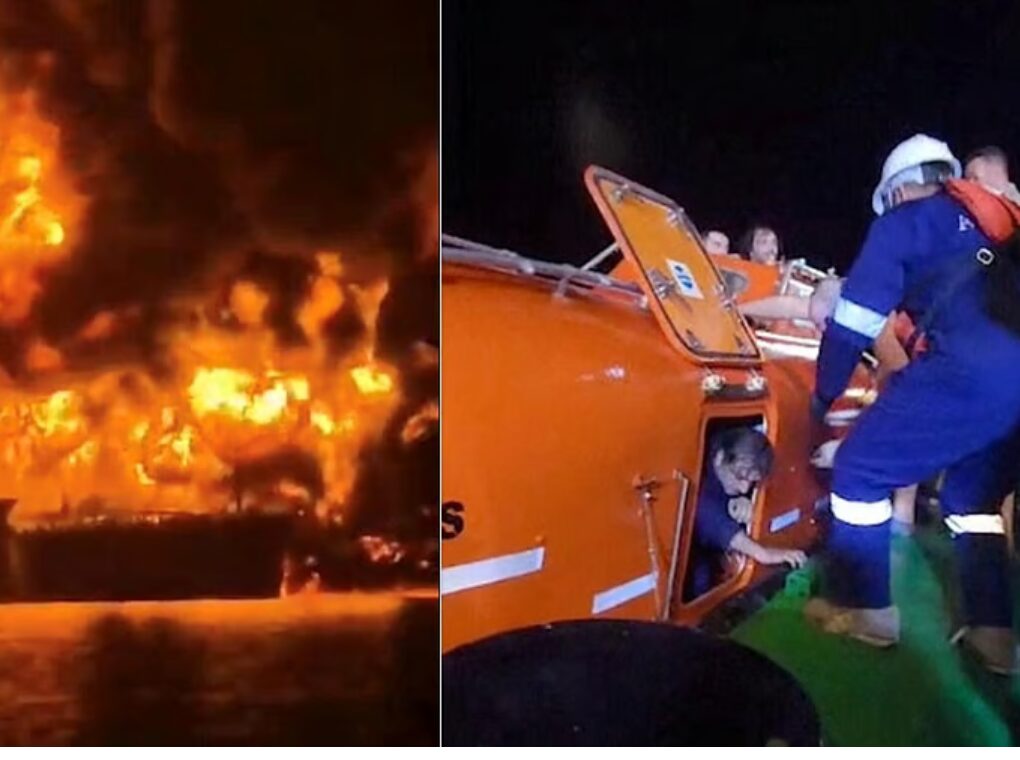
The vessel targeted was the crude oil tanker Safesea Vishnu, which was operating near Khor Al Zubair Port, close to the southern Iraqi city of Basra. The tanker, owned by the US-based company Safesea Transport Inc., was reportedly hit by explosive-laden Iranian “suicide boats,” triggering fires on board.
According to Iraqi authorities, the attack occurred late Wednesday night and caused significant panic among the crew. One Indian national working aboard the vessel was killed in the explosion. His identity has not yet been publicly released as officials are still notifying his family. The remaining crew members were rescued and transported safely to Basra.
Second Tanker Also Targeted
The Safesea Vishnu was not the only vessel targeted in the attack. Officials confirmed that another tanker, the Malta-flagged Zefyros, was also struck during the same operation. Both ships caught fire following the explosions, although authorities confirmed there were no reports of a major oil spill or sinking.
Emergency crews and Iraqi maritime authorities responded quickly to the incident, evacuating sailors and bringing the situation under control. However, the attack has significantly heightened fears about maritime security in the region.
Iran Expands Maritime Attacks Across the Gulf
The latest strike marks a dangerous escalation in Iran’s maritime tactics. Previously, attacks by Iran’s Islamic Revolutionary Guard Corps were largely concentrated in the Strait of Hormuz, one of the world’s most critical oil transit routes.
Roughly 20 percent of global oil shipments pass through the narrow strait every day. However, recent incidents suggest Iran is now expanding its operations across the wider Persian Gulf, including Iraqi territorial waters.
Reports indicate additional vessels have faced attacks or attempted sabotage near Dubai, as well as near the coasts of Bahrain and Saudi Arabia. The widening range of incidents has sparked concerns that the Gulf could become increasingly unsafe for commercial shipping.
In response to the attacks, Iraqi authorities temporarily suspended operations at several oil export terminals in Basra to prevent further incidents and ensure maritime safety.
Oil Prices Surge as Energy Markets React
The escalating conflict has already begun to impact global energy markets. Crude oil prices surged sharply following the latest maritime attacks, with benchmark prices rising above $100 per barrel. Some markets briefly approached $120 earlier in the week as traders reacted to the growing instability in the region.
Iranian officials and sources linked to the IRGC have reportedly indicated that the strategy behind the attacks is to disrupt oil transportation through the Gulf and drive global oil prices significantly higher.
The G7 nations have begun releasing crude oil from strategic petroleum reserves in an attempt to stabilize global markets. However, Tehran has dismissed these efforts as temporary measures that cannot offset prolonged supply disruptions.
Iran Sets Conditions for Ending the Conflict
As tensions continue to rise, Iran has also laid out conditions for ending the ongoing confrontation with the United States and its allies. Iranian President Masoud Pezeshkian has reportedly communicated three key demands through intermediaries, including Russia and Pakistan.
First, Iran wants international recognition of what it calls its “legitimate rights” in the region. Second, Tehran is demanding financial reparations for damages caused by recent US and Israeli military strikes on Iranian territory. Third, Iran seeks written security guarantees from both the United States and Israel to prevent future attacks.
However, geopolitical analysts believe these demands are unlikely to be accepted by Washington or Jerusalem, making a diplomatic resolution difficult in the near term.
Global Economic Concerns Grow
The continued attacks on shipping have triggered widespread concern among governments, investors, and shipping companies. Insurance premiums for vessels operating in the Persian Gulf have risen sharply as insurers classify the region as a high-risk conflict zone.
Global stock markets have also reacted negatively, with investors increasingly worried about prolonged supply disruptions and rising energy costs.
For India, the situation carries particular significance. India imports a large portion of its crude oil from the Gulf region, meaning sustained high oil prices could increase fuel costs and inflation domestically.
Additionally, Indian nationals make up a significant share of the global maritime workforce. The death of the Indian sailor aboard the Safesea Vishnu highlights the risks faced by seafarers caught in the middle of escalating geopolitical tensions.
Uncertain Path Ahead
The attack on the Safesea Vishnu underscores the growing complexity of the Middle East conflict and the potential for further escalation. With maritime attacks expanding beyond the Strait of Hormuz into the wider Persian Gulf, the threat to global energy supply chains is increasing.
Whether the United States escalates its military response or seeks a diplomatic off-ramp remains uncertain. For now, however, the Persian Gulf — one of the world’s most vital energy corridors — appears to be entering a period of heightened instability, with potentially far-reaching consequences for global markets and international security.