
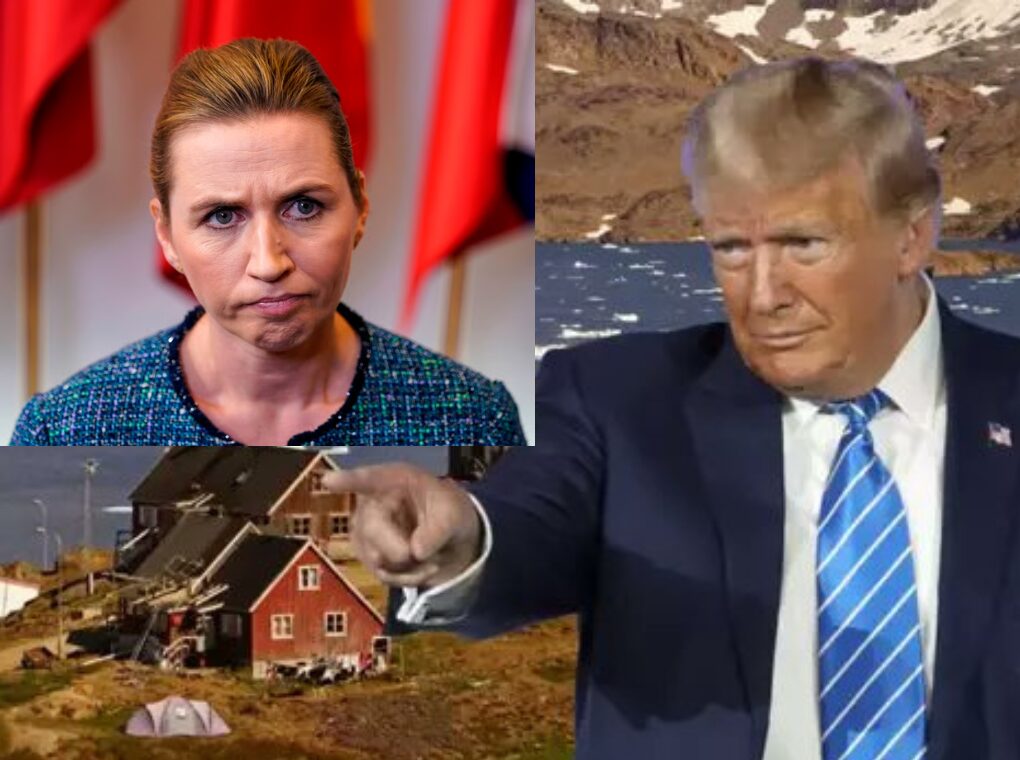
US President Donald Trump has reignited international controversy by declaring that “anything less” than United States control over Greenland would be “unacceptable,” arguing that American ownership of the Arctic territory is essential for national security and NATO’s future effectiveness. His remarks have intensified diplomatic tensions with Denmark, Greenland’s self-governing authority, and several European allies.
Trump made the comments in a Truth Social post on Wednesday, ahead of a high-level White House meeting hosted by Vice President JD Vance with the Danish foreign minister, Greenland’s foreign affairs representative, and US Secretary of State Marco Rubio. In his post, Trump asserted that NATO would become “far more formidable and effective” if Greenland were under US control, adding that failure to secure the territory could allow Russia or China to expand their influence in the Arctic.
Greenland is a self-governing territory within the Kingdom of Denmark and is home to around 57,000 people. While Denmark manages its foreign affairs and defense, Greenland has significant autonomy over internal matters. Both Greenlandic and Danish leaders have consistently rejected the idea of the island being transferred to the United States.
Trump linked his Greenland ambitions to the “Golden Dome,” a US missile defense system currently under development by the Pentagon. He argued that Greenland’s geographic position is vital for early warning systems and missile defense coverage in the Arctic, a region gaining strategic importance as climate change opens new shipping routes and access to natural resources.
“NATO should be leading the way for us to get it,” Trump wrote, adding that without US military strength, the alliance would not be an effective deterrent. He suggested that NATO leaders should support American control of Greenland rather than oppose it.
Firm Pushback from Greenland and Denmark
Greenland’s Premier Jens-Frederik Nielsen responded firmly to Trump’s remarks, reiterating that Greenland does not want to be owned, governed, or incorporated into the United States. Speaking at a joint press conference with Danish Prime Minister Mette Frederiksen in Copenhagen, Nielsen stated that Greenland would choose Denmark, NATO, and the European Union if forced to choose between alliances.
Trump dismissed Nielsen’s comments, saying he did not know the Greenlandic leader and warning that his opposition could become “a big problem.” The remarks have drawn criticism for their tone and have deepened resentment among Greenlanders, many of whom view the rhetoric as dismissive and colonial in nature.
Local leaders in Nuuk, Greenland’s capital, reported rising anxiety among residents. Mayor Avaaraq S. Olsen said Trump’s repeated statements have caused frustration and anger, adding that Greenlanders do not want to be treated as an object for purchase or coercion.
Rising Military Activity in the Arctic
Amid the escalating rhetoric, Denmark announced an increase in military activity in and around Greenland, citing growing security tensions. Danish armed forces confirmed deployments of aircraft, naval vessels, and troops, including participation from NATO allies. Sweden has also sent troops to Greenland at Denmark’s request.
The expanded military presence includes exercises focused on protecting critical infrastructure, assisting Greenlandic authorities, and conducting air and naval patrols. While Danish officials emphasized that the moves are defensive and routine, they underscore growing concern in Europe about the implications of Trump’s statements.
European leaders have publicly rejected Trump’s position. French President Emmanuel Macron warned that any attempt to undermine the sovereignty of a European and NATO ally would have “unprecedented” consequences. European Commission President Ursula von der Leyen reiterated that Greenland’s future must be decided by its people and Denmark, not external powers.
Strategic Importance and Political Reality
Greenland’s strategic value lies in its location between North America and Europe, its proximity to Arctic shipping lanes, and its potential reserves of rare earth minerals, oil, and gas. While Trump has publicly emphasized security concerns over economic ones, members of his administration have previously highlighted Greenland’s mineral wealth as a key factor.
Despite this, public opinion in Greenland remains strongly opposed to joining the United States. Polls conducted ahead of last year’s parliamentary election showed that around 85 percent of Greenlanders opposed leaving the Danish realm to align with the US. While some residents support eventual independence, Trump’s rhetoric appears to have reduced enthusiasm for closer ties with Washington.
Several Greenlanders interviewed by international media said the language used by Trump and his allies has eroded trust and goodwill toward the United States. Even those open to independence expressed discomfort with the confrontational approach.
Limited Diplomatic Options
Trump has suggested that the US could pursue ownership of Greenland with or without an agreement and has refused to rule out military action. However, opposition from European allies, bipartisan resistance in the US Congress, and firm rejection from Greenland’s leadership limit his options.
While some US officials are reportedly exploring incentives for a future referendum, analysts warn that aggressive rhetoric may make such efforts less viable. As diplomatic resistance hardens, Trump’s renewed push risks transforming a strategic debate into a broader confrontation within the NATO alliance.
For now, Greenland and Denmark remain united in their stance: the island is not for sale, and its future will be decided by its people—not external pressure.