In mid-January 2026, already strained relations between the United States and Iran entered a more volatile phase after Iranian state television aired a message widely interpreted as a direct threat against U.S. President Donald Trump. The broadcast featured an image of Trump taken from the July 2024 campaign rally in Butler, Pennsylvania—where he survived an assassination attempt—accompanied by a stark Persian-language caption translating to: “This time, the bullet won’t miss the target.”
The imagery and wording quickly spread across social media platforms and international news outlets, triggering alarm among political analysts and foreign policy experts. While Iran has not issued any formal clarification or official statement explaining the broadcast, its content has raised serious questions about intent, escalation, and the risk of miscalculation between Washington and Tehran.
No Evidence Linking Iran to the 2024 Assassination Attempt
Despite the alarming nature of the message, there is no credible evidence linking Iran to the 2024 assassination attempt on Donald Trump. U.S. law enforcement and intelligence agencies have never publicly suggested Iranian involvement in that incident, and any claims implying Tehran’s role remain speculative and unproven.
However, the absence of evidence has not diminished concern over the tone and symbolism of the broadcast. Analysts emphasize that Iranian state television is not an independent media outlet but operates under the supervision of the Iranian government, making its messaging politically significant.
A Pattern of Hostile Rhetoric Since 2020
Iranian officials and state-aligned media have repeatedly used hostile rhetoric toward Trump since January 2020, when the United States killed Iranian General Qassem Soleimani in a drone strike ordered during Trump’s first presidency. That strike marked a major turning point in U.S.–Iran relations, triggering missile attacks on U.S. bases in Iraq and setting the stage for years of heightened tensions.
The January 2026 broadcast is being viewed by analysts as one of the most explicit and provocative messages to date, particularly because it referenced physical harm and visually connected the threat to a real assassination attempt.
Timing Amid Iran’s Internal Crisis
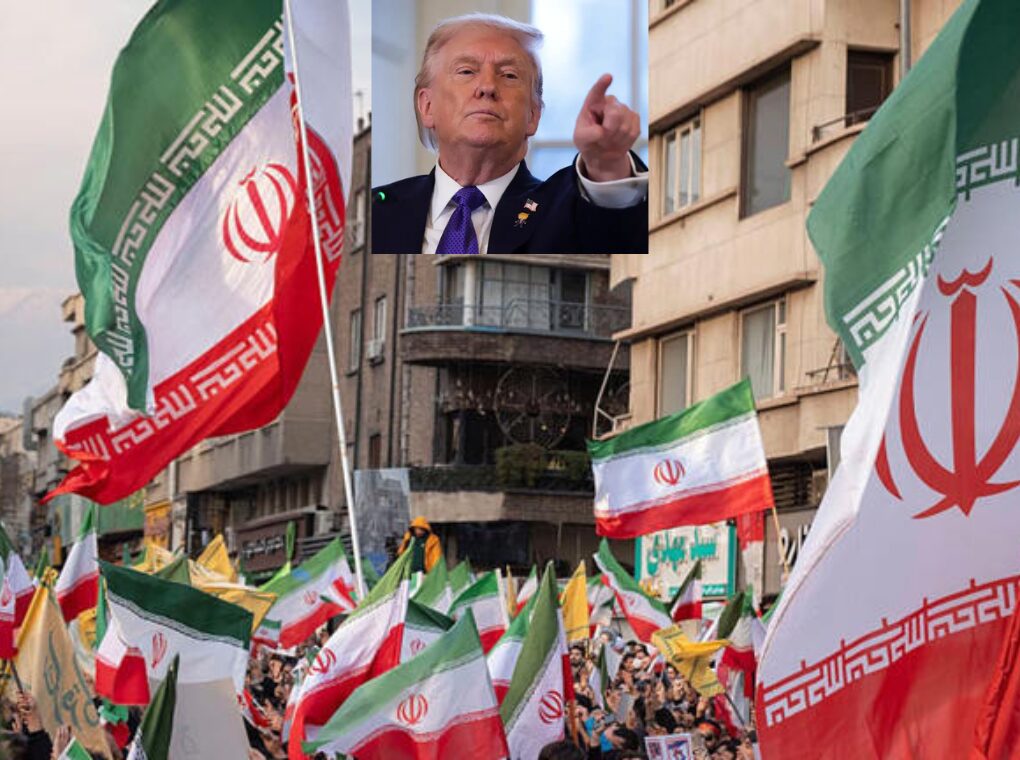
The timing of the broadcast is widely seen as significant. Iran is currently facing its most severe internal unrest since the 1979 Islamic Revolution. Nationwide protests, fueled by economic collapse, political repression, and widespread public anger, have shaken the country for months.
Human rights organizations report mass arrests, alleged executions, and extensive restrictions on internet access, reportedly aimed at preventing information from reaching the outside world. Activist groups claim that thousands of protesters may have been killed, though independent verification remains difficult.
One case has drawn particular international attention: Erfan Soltani, a 26-year-old protester, was reportedly sentenced to death. His case has prompted global condemnation and public warnings from President Trump, who has stated that executions of protesters would trigger “very strong action” by the United States.
Domestic Signaling and External Deterrence
Political analysts argue that the threatening broadcast may be aimed less at Trump personally and more at domestic signaling. By projecting defiance toward the United States, Iranian authorities may be attempting to rally nationalist sentiment and shift public focus away from internal unrest.
At the same time, such rhetoric carries serious risks. From Washington’s perspective, threats broadcast by state-controlled media against a sitting U.S. president are not easily dismissed as symbolic. U.S. officials reportedly viewed the message as a psychological escalation, even though Tehran has not formally claimed responsibility.
Rising Risk of Escalation
Trump has previously warned that any successful assassination attempt linked to Iran would result in devastating consequences. He has stated publicly that contingency plans exist that would “destroy Iran” if such an event occurred. Combined with Tehran’s messaging, these statements contribute to a dangerous cycle in which rhetoric alone narrows diplomatic space.
Regional tensions are already high. Iran has warned that any U.S. or Israeli attack on Iranian territory would be met with retaliation against American military bases across the Middle East. Several countries have reportedly advised their citizens to leave Iran, citing growing security concerns.
Meanwhile, Trump has posted warnings on social media suggesting heightened military readiness, though no official confirmation of imminent action has been provided.
Is War Inevitable?
While no direct military confrontation has begun, the situation remains highly unstable. The convergence of assassination imagery, internal unrest, public threats, and military posturing has reduced the margin for error to a dangerous minimum. A misinterpreted signal, a rogue action, or a single violent incident could rapidly escalate into open conflict.
For now, Iran continues its internal crackdown, the United States maintains pressure while keeping diplomatic channels nominally open, and the international community watches closely. The central question is no longer just about rhetoric, but whether restraint can prevail before words turn into irreversible action.