
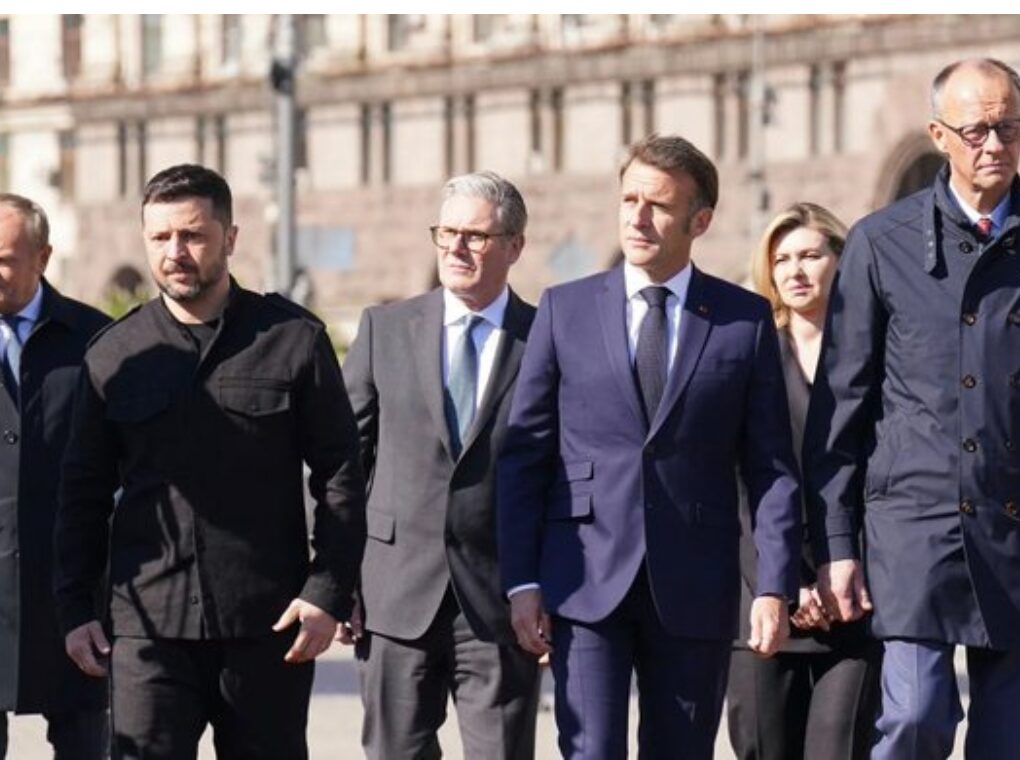
In late 2025 and early 2026, European leaders intensified discussions around forming a new military and security alliance that could operate with reduced reliance on the United States and include Ukraine as a central partner. The move reflects growing European anxiety over U.S. reliability under the current American administration, particularly amid NATO uncertainty, reduced enthusiasm for Ukraine funding, and escalating transatlantic tensions such as the Greenland dispute.
While European officials present this initiative as a step toward strategic autonomy, critics argue that the plan rests more on political symbolism than military or economic reality. Ukraine’s battlefield struggles, corruption allegations against President Volodymyr Zelenskyy, Europe’s financial constraints, and deep-rooted hostility toward Russia raise serious questions about the alliance’s feasibility.
Why Europe Is Considering a U.S.-Independent Military Framework
The immediate catalyst behind Europe’s shift is uncertainty surrounding Washington’s long-term commitment to NATO and Ukraine. U.S. threats of tariffs against European countries over Greenland and a gradual recalibration of American Ukraine policy have shaken confidence in the transatlantic security architecture.
In response, European leaders from France, Germany, the United Kingdom, Poland, Italy, and Nordic states have floated ideas ranging from a “Coalition of the Willing” to a more structured European defense framework. Proposals include expanded joint procurement, coordinated troop deployments, and post-ceasefire security guarantees for Ukraine.
The long-term goal is clear: reduce dependency on the United States while maintaining Europe’s ability to deter Russia.
Ukraine’s Role: Military Asset or Strategic Liability?
European leaders increasingly portray Ukraine as a battle-hardened military power whose experience in drone warfare, electronic warfare, and frontline combat could strengthen European defense. Ukraine’s army, shaped by years of conflict, is frequently described as the most experienced fighting force on the continent.
However, this narrative clashes with realities on the ground.
Ukraine continues to lose territory, suffers from ammunition shortages, strained supply lines, and mounting manpower problems. Millions of Ukrainians have fled the country, weakening its economic and demographic base. Far from being a rising military power, Ukraine remains a war-torn state heavily dependent on foreign aid.
Expecting Ukraine to function as a pillar of a new European military alliance appears increasingly unrealistic.
Zelenskyy’s Leadership and the Corruption Debate
President Volodymyr Zelenskyy has positioned himself as a leading voice for European security, openly calling for a European army and deeper integration of Ukraine into continental defense structures. His international stature has grown, but domestically and regionally, his leadership faces serious criticism.
Persistent allegations of corruption, oligarchic influence, and authoritarian tendencies continue to surface. Ukrainian politicians and independent commentators have accused the government of suppressing opposition and centralizing power under wartime measures. Accusations of far-right influence, though often amplified by Russian propaganda, also complicate Ukraine’s image within Europe.
Critics argue that elevating Zelenskyy as a future European military leader ignores Ukraine’s internal weaknesses and risks undermining the credibility of the proposed alliance.
The Funding Contradiction: Europe Still Depends on the U.S.
One of the biggest contradictions in Europe’s military ambitions is funding. Since the Ukraine war began, the United States has provided a dominant share of military assistance, intelligence, and advanced weaponry. European contributions, while substantial, have declined due to budget pressures, domestic political resistance, and industrial limitations.
Any new European military alliance would still rely heavily on U.S.-made weapons, logistics, and technology, making the idea of a U.S.-independent framework largely theoretical. Critics describe this as a paradox: attempting to counter U.S. political influence using U.S. military infrastructure.
Russia, Greenland, and Europe’s Strategic Blind Spots
Russia has publicly stated that Greenland is Danish territory, positioning itself as an observer rather than an aggressor in the dispute between the U.S. and Europe. Moscow uses this to accuse European leaders of hypocrisy—framing Russia as an existential threat while downplaying American coercive tactics toward allies.
European hostility toward Russia is rooted in history, from Cold War rivalries to post-2014 conflicts. However, critics argue that Europe’s inherited distrust of Russia has limited diplomatic flexibility and contributed to repeated strategic miscalculations, including over-reliance on military solutions.
A Risky Vision Built on Unstable Foundations
Europe’s push for a new military alliance with Ukraine reflects genuine concerns about global instability and American unpredictability. However, the project is burdened by contradictions: Ukraine’s weakening military position, unresolved corruption concerns, financial dependence on the U.S., and Europe’s historical inability to reconcile security ambitions with economic realities.
Without addressing these structural problems, a European-Ukraine military alliance risks becoming more symbolic than effective. Strategic autonomy requires not only political will but sustainable resources, internal cohesion, and realistic threat assessments—conditions Europe has yet to fully meet.