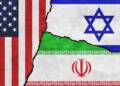
As the Middle East edges toward one of its most volatile moments in years, Israel, the United States, Iran, and now China appear locked in a dangerous strategic convergence. Israeli Defense Forces (IDF) Chief of Staff Lt. Gen. Eyal Zamir’s declaration that Israel is ready to act “against any enemy” comes amid escalating regional tensions driven by Iran’s internal unrest, U.S. military posturing, and reports of an unprecedented Chinese military airlift into Iran.
Israel Prepares for “Surprise War”
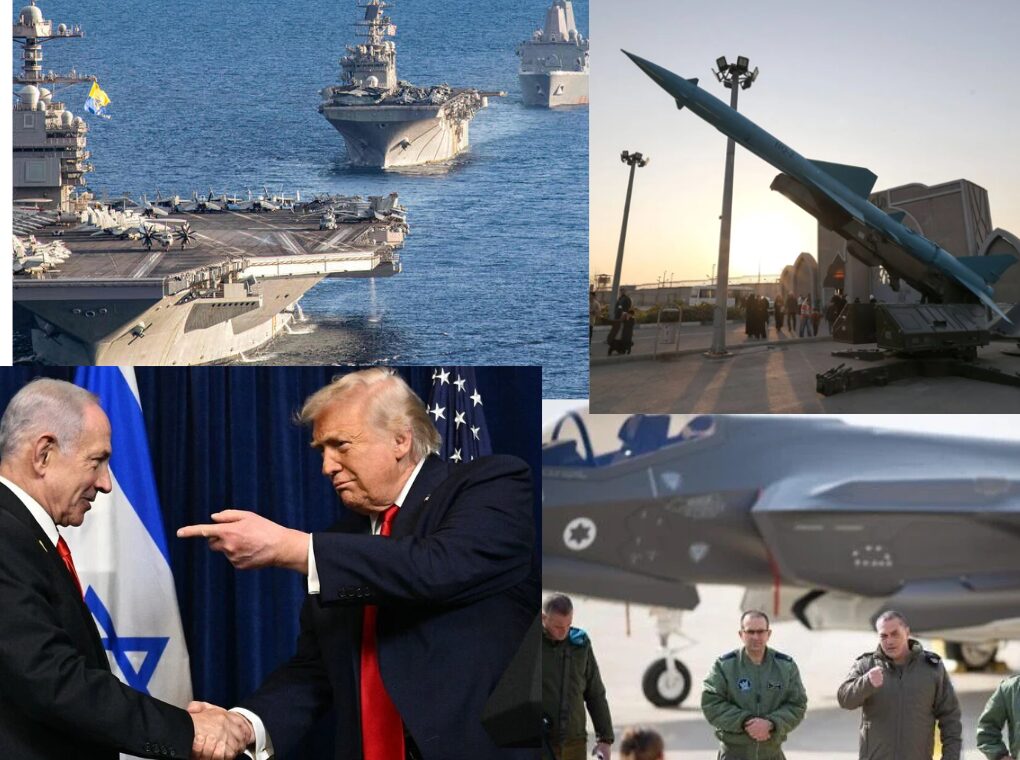
Speaking at the Nevatim Airbase in southern Israel on January 21, IDF Chief Lt. Gen. Eyal Zamir emphasized that the Israeli military stands ready to strike “in any arena against any enemy that threatens the security of the State of Israel.” His remarks came as the Israeli Air Force inducted three new F-35I stealth fighters, raising Israel’s fleet to 48—one of the most advanced air forces in the world.
Zamir underscored the Air Force’s strategic role, citing the experience gained during the 12-day war with Iran in June 2025. According to the IDF chief, that conflict provided “operational experience unparalleled anywhere in the world,” lessons from which have already been integrated into Israel’s military planning.
Earlier in the week, during a visit to the Home Front Command, Zamir warned that Israel is preparing for “multifront threats” and even the possibility of a “surprise war.” He stressed that Israel’s civilian defense infrastructure remains on high alert, capable of responding to attacks across multiple fronts while the military maintains “offensive capabilities unprecedented in their power.”
Iran’s Internal Crisis Fuels Regional Anxiety
These warnings come as Iran grapples with its deadliest wave of internal unrest in decades. Protests that erupted in late December over economic hardship quickly spread nationwide, prompting a sweeping crackdown by Iranian security forces.
The U.S.-based Human Rights Activists News Agency reports at least 4,519 deaths, a figure that could rise as information continues to emerge despite a prolonged government-imposed internet shutdown. More than 26,300 people have reportedly been arrested, with fears mounting that some detainees may face execution.
Iran’s Supreme Leader Ayatollah Ali Khamenei acknowledged that “several thousand” people had been killed—his first public admission of the scale of the violence—while blaming the United States for fomenting unrest.
The unrest has revived memories of the chaos surrounding Iran’s 1979 revolution and has injected extreme unpredictability into an already fragile regional security environment.
Trump Orders “Armada” Toward Iran
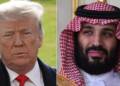
Against this backdrop, U.S. President Donald Trump has dramatically escalated Washington’s rhetoric and military posture. Speaking aboard Air Force One after attending the World Economic Forum in Davos, Trump confirmed that a U.S. naval “armada” is heading toward Iran.
“We have a lot of ships going that direction, just in case,” Trump said, while adding that he hopes force will not be necessary.
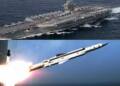
According to U.S. officials, the aircraft carrier USS Abraham Lincoln, accompanied by guided-missile destroyers, is expected to arrive in the Middle East in the coming days. The Pentagon is also considering deploying additional air defense systems to protect U.S. bases from potential Iranian retaliation.
Trump has repeatedly warned Tehran that any resumption of its nuclear program or mass executions of protesters would trigger decisive U.S. action. While claiming that his threats halted nearly 840 planned executions—assertions not independently verified—Trump has left open the option of renewed military strikes on Iranian nuclear facilities.
Iran, for its part, has warned that any U.S. attack would prompt retaliation against both American and Israeli targets across the region.
China’s Shadowy Military Airlift Raises Alarms
Adding a new and potentially destabilizing layer to the crisis are reports that China may have conducted the largest military airlift to Iran in history. Flight-tracking data indicates that 16 large military cargo planes landed in Iran over a span of just 56 hours—an extraordinary tempo that has set off alarm bells among Western intelligence agencies.
The precise contents of the cargo remain unverified, but analysts suspect the shipments could include missiles, drones, or other advanced military equipment. Iran briefly closed its airspace during the reported airlift, while aircraft linked to China and Iran’s sanctioned Mahan Air continued operating—further fueling suspicions.
Mahan Air has long been accused by the United States of transporting weapons and supporting military operations, and its involvement during moments of crisis is often viewed as a warning sign of imminent escalation.
Neither Beijing nor Tehran has officially commented on the reported airlift, allowing China to maintain plausible deniability. Experts believe Beijing may be quietly bolstering Iran to counter U.S. influence, protect its energy interests, and test Washington’s red lines without direct confrontation.
A Dangerous Convergence
The timing of the alleged Chinese airlift is particularly concerning. U.S. naval forces are converging on the Middle East, Israel is openly preparing for a potential surprise war, Iran’s leadership is under severe internal pressure, and regional actors are bracing for fallout.
Turkey has publicly opposed foreign intervention in Iran, while Israeli Prime Minister Benjamin Netanyahu has convened high-level security discussions focused on Iran, Gaza, and broader regional developments.
Though the United Kingdom has eased some travel warnings to Israel, it continues to advise against travel near Gaza, Lebanon, Syria, and parts of the West Bank—an acknowledgment that the risk of sudden escalation remains high.
On the Brink
Taken together, these developments point to one of the most perilous moments in Middle Eastern geopolitics in recent years. Whether China’s reported airlift proves to be routine logistics or covert war preparation, its scale and timing suggest a strategic message.
With Israel signaling readiness for decisive action, the United States positioning overwhelming force, Iran under internal and external pressure, and China operating in the shadows, the margin for miscalculation has narrowed dangerously.
As diplomats scramble and militaries mobilize, the region stands at a crossroads—where a single spark could ignite a far wider conflict.