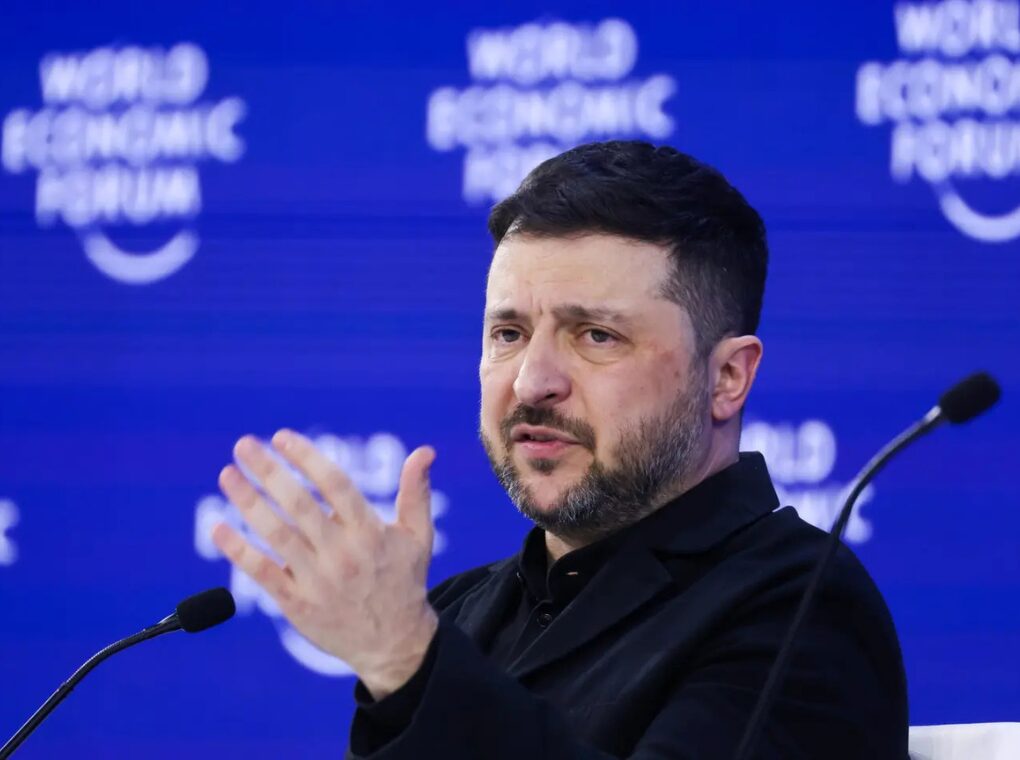
Ukraine’s ambition to join the European Union by 2027 has taken center stage after President Volodymyr Zelensky publicly called for a clear accession timeline and stronger backing from Western partners. Framing EU membership as a critical pillar of long-term security, Zelensky argued that Ukraine’s integration into the bloc would benefit not only Kyiv but the entire European continent.
The proposal, however, has triggered mixed reactions inside the EU, highlighting political divisions over enlargement, financial commitments, and the broader geopolitical consequences of bringing a war-affected country into the union on an accelerated schedule.
EU Membership as a Security Shield
For Ukraine, EU accession is no longer just about trade, mobility, or economic modernization. Zelensky has presented membership as a strategic security guarantee, suggesting that deeper political and institutional integration with Europe would make Ukraine more resilient against future aggression and firmly anchor it within the Western democratic sphere.
Since receiving EU candidate status, Ukraine has pursued reforms aimed at aligning its laws and institutions with European standards. Anti-corruption efforts, judicial reforms, and regulatory adjustments have all been emphasized as part of the accession pathway. By setting 2027 as a target year, Kyiv is signaling urgency and seeking to lock in political momentum while international support remains strong.
Zelensky’s messaging also reflects a broader argument: that Ukraine’s future lies unmistakably in Europe, and that delaying membership could leave the country in a prolonged gray zone of insecurity.
Why the Timeline Is Controversial
Despite Ukraine’s determination, EU membership is a lengthy and complex process. Countries must meet strict criteria covering democratic governance, rule of law, economic stability, and the adoption of thousands of pages of EU legislation. Negotiations are divided into numerous policy chapters, each requiring technical alignment and unanimous approval from existing member states.
Some European leaders caution that fast-tracking Ukraine could undermine the credibility of the accession system. Other candidate countries have spent many years — even decades — working toward membership. Granting Ukraine an unusually rapid pathway may be viewed as politically motivated rather than merit-based, potentially creating tensions within the enlargement framework.
There are also practical challenges. Ukraine’s economy has been heavily affected by war, infrastructure damage, and displacement. Integrating such a large country would have major implications for EU agricultural policy, regional development funds, and labor mobility.
Divisions Within the European Union
The debate over Ukraine’s EU bid has exposed clear fault lines among member states. Some governments strongly support deeper integration, seeing Ukraine as a frontline defender of European values and security. Others are more cautious, emphasizing the need to fully meet accession criteria before any membership date is set.
Hungary has been one of the most outspoken skeptics. Its leadership has argued that admitting Ukraine too quickly could draw the EU into deeper confrontation with Russia and place a heavy financial burden on existing members. Concerns have also been raised about governance reforms and the long-term economic costs of reconstruction.
Austria and several other countries have signaled that while they support Ukraine’s European future, they oppose a “fast lane” approach that bypasses standard procedures. This reflects a broader sentiment in parts of Europe that enlargement must remain rules-based rather than driven solely by geopolitical urgency.
The Reconstruction and Funding Factor
Ukraine’s EU ambitions are closely linked to discussions about postwar reconstruction. Large-scale rebuilding efforts are expected to require hundreds of billions of euros over the coming decade. Some proposals circulating in diplomatic circles reportedly connect reconstruction funding with gradual integration into EU structures.
This linkage has made certain governments uneasy, not because they oppose helping Ukraine rebuild, but because tying financial commitments directly to political milestones like EU accession raises questions about conditionality, oversight, and fairness to other member states.
For supporters of Ukraine’s bid, however, reconstruction and integration go hand in hand. They argue that rebuilding Ukraine according to EU standards — in infrastructure, governance, and industry — would naturally accelerate the accession process.
Russia, NATO, and the Geopolitical Context
Interestingly, while Russia has long opposed Ukraine’s movement toward NATO, its official stance on EU membership has been less confrontational. Nevertheless, many European policymakers recognize that Ukraine’s accession would still carry major geopolitical weight, symbolizing a decisive shift in the continent’s political landscape.
For the EU, bringing Ukraine into the bloc would significantly expand its eastern border and reshape its security and foreign policy priorities. It would also send a strong message about the union’s willingness to integrate countries emerging from conflict.
What Happens Next
The path to EU membership ultimately depends on two things: Ukraine’s reform progress and unanimous political approval from all EU member states. Even with strong support from key European powers, resistance from a handful of countries could slow negotiations.
Zelensky’s call for a 2027 accession date is therefore as much a political strategy as a technical forecast. By putting a specific year on the table, Kyiv is trying to turn a distant aspiration into a concrete objective — one that European leaders must now openly debate.
Whether the timeline proves realistic or overly ambitious, one thing is clear: Ukraine’s EU membership push has become a defining issue for Europe’s future, testing the bloc’s unity, values, and readiness to expand in an era of geopolitical uncertainty.