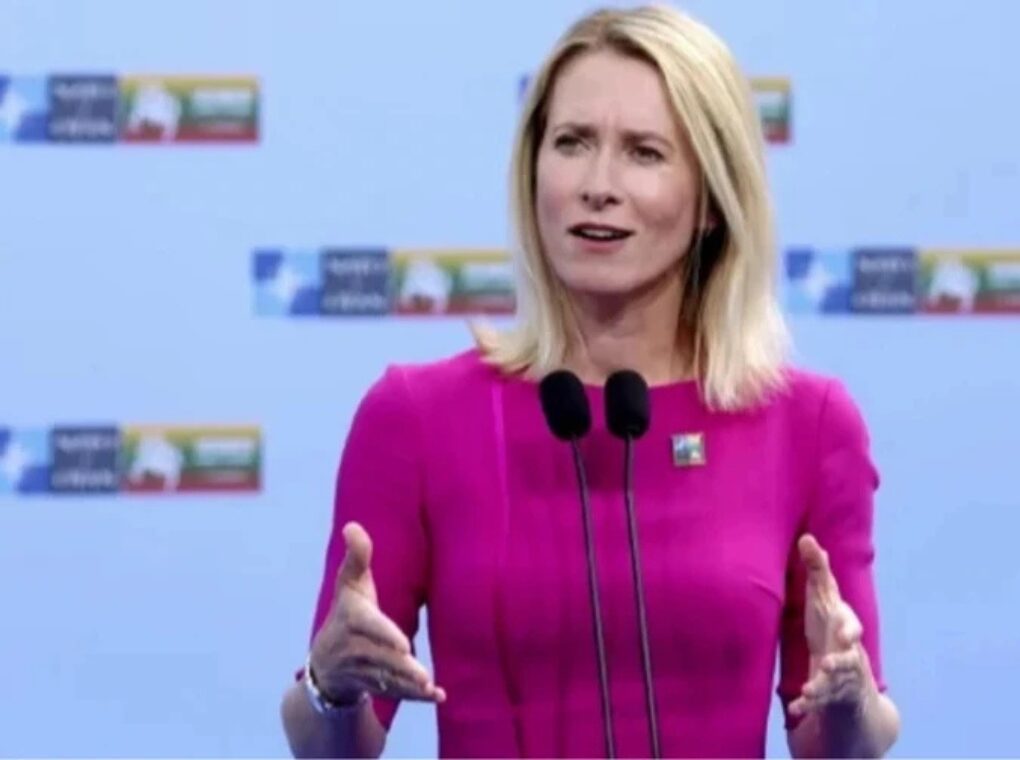
The European Union’s foreign policy machinery is facing one of its most significant debates in years. In a bold proposal, EU High Representative for Foreign Affairs and Security Policy Kaja Kallas has called for phasing out individual EU member states’ veto powers in favour of broader use of qualified majority voting (QMV) on key foreign and defence decisions. Her argument centers on the need for a more agile, responsive and unified European Union that can act decisively in a complex global environment.
Why the Debate Over Veto Powers Matters
Under the EU’s current rules, many foreign and security decisions require unanimous agreement from all 27 member states. This means a single country can block action — even when the rest of the bloc is in favour. While unanimity has long been seen as a way to protect national sovereignty and ensure all members’ voices are heard, critics argue it has become a major roadblock in responding to crises swiftly.
Kallas’s proposal seeks to challenge this status quo. She believes that over-reliance on unanimity slows down EU decision-making, particularly when urgent action is needed on security, sanctions, defence cooperation, or responses to geopolitical threats.
What is Qualified Majority Voting?
Qualified majority voting is a system where decisions are adopted not by unanimity but by a specified majority — typically a combination of a majority of member states and a majority of the EU population. This system already applies to many EU policies, such as internal market regulations, competition law, and budget matters.
Extending QMV to foreign and security policy matters would represent a significant shift in how the EU operates. It would allow decisions to pass even if one or two countries object, provided the majority criteria are met. This is seen by supporters as essential for an EU that aspires to be a global player with strategic autonomy.
Kallas’s Vision for a Stronger EU
Kallas has laid out a vision in which the EU does not remain paralysed by internal disagreements. She argues that:
Unanimity often prevents timely action on urgent foreign policy matters.
Qualified majority voting would enhance EU cohesion, enabling a stronger collective voice on the world stage.
The EU must build shared defence and security capabilities, potentially including coordinated military assets supported by member states.
Responsiveness and relevance are key to addressing modern geopolitical challenges.
Her vision goes beyond procedural reform — it implies a more integrated and assertive EU that can act with strategic intent and credibility.
Growing Tensions Within the EU
Not all member states share Kallas’s enthusiasm for reducing veto powers. Several governments — particularly those with traditional ties to Russia or high dependence on Russian energy — have expressed strong opposition. In their view, extending QMV into core sovereign matters like energy policy or defence undermines national autonomy and could force countries into policies they strongly disagree with.
These tensions have manifested politically and legally, with some governments preparing legal challenges against EU measures adopted by QMV that directly affect their national interests. The disagreements highlight how contentious the balance between national sovereignty and collective European action has become.
The Energy Policy Flashpoint
One of the latest flashpoints is the EU’s decision to phase out certain energy imports. The move was adopted by qualified majority, prompting pushback from member states that fear economic and social consequences. Opponents labelled the measure as impractical and harmful to domestic industries.
The ensuing dispute has sharpened the focus on how QMV is used and whether it should be applied to areas traditionally safeguarded by unanimity. This clash illustrates the broader conflict between deeper integration and respect for individual states’ choices.
Advantages of Reducing Veto Powers
Proponents of phasing out veto rights point to several potential benefits:
Faster decision-making on foreign and security issues.
More unified EU positions in global diplomacy.
Reduced potential for strategic blackmail, where individual states block action for political leverage.
Greater collective credibility with allies and rivals alike.
In a world defined by fast-moving crises — from geopolitics to economic shocks — the ability to act swiftly can be a decisive advantage.
Concerns About National Sovereignty
Critics, however, warn that removing veto powers risks alienating member states and eroding confidence in the EU’s governance. They argue that:
National interests could be overridden by the majority’s preferences.
Smaller countries may lose influence compared to larger states with more voting weight.
Public trust in the EU could decline if citizens feel decisions are out of their reach.
These concerns reflect deeper anxieties about democratic legitimacy and the future shape of European integration.
What Lies Ahead
The debate over phasing out veto powers is likely to continue at the highest political levels. Any formal reform to extend qualified majority voting in foreign and security policy would itself require significant negotiation — and ironically, unanimous backing under current treaty rules.
What is clear is that the EU is at a crossroads. The tension between speed and unity on one hand, and sovereignty and consensus on the other, will shape the bloc’s future direction. Whether Kallas’s bold push leads to concrete change — or triggers further division — remains to be seen.