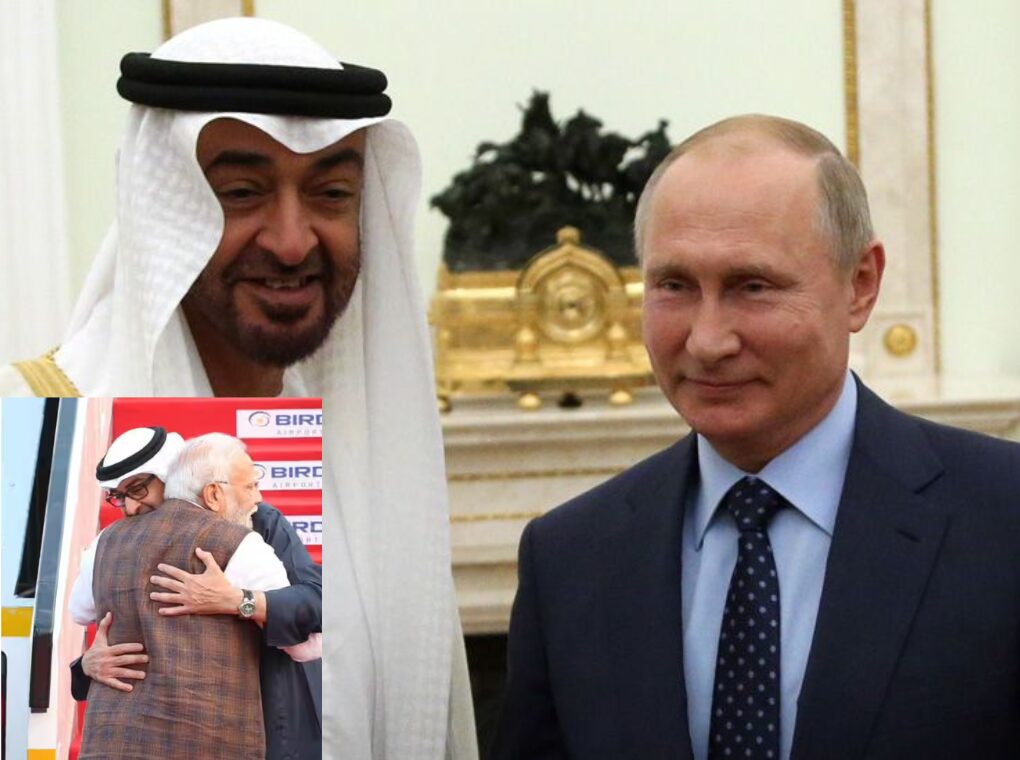
A brief diplomatic visit can sometimes say more than a summit declaration. When UAE President Sheikh Mohammed bin Zayed made a short, tightly scheduled stop in India to meet Prime Minister Narendra Modi before flying directly to Russia for talks with President Vladimir Putin, the symbolism was hard to miss. Add to that the quiet shelving of a planned airport management deal with Pakistan, and the message becomes clearer: global power alignments are shifting — and energy politics sit at the center of the change.
At the heart of this transformation is the global oil market, which is moving into an era defined less by simple supply and demand, and more by geopolitical competition, strategic leverage, and competing spheres of influence.
Venezuela: The Spark That Reignited Energy Rivalries
The recent geopolitical developments surrounding Venezuela have acted as a catalyst for this new phase of energy competition. With the world’s largest proven oil reserves, Venezuela has long been viewed as a dormant energy giant. Years of sanctions, underinvestment, and political turmoil had crippled its production, but renewed external involvement in its oil sector has reopened the question of who controls one of the planet’s most strategic energy reserves.
The significance is not just about barrels returning to the market. It is about influence. Whoever shapes Venezuela’s oil recovery gains leverage over future supply flows, export routes, and pricing dynamics. That leverage is especially valuable in a market already saturated with production from U.S. shale and OPEC+ members.
The result is a paradox: prices remain relatively stable, but the strategic stakes are rising sharply.
Russia’s Eastward Energy Pivot
Since the imposition of Western sanctions over the Ukraine conflict, Russia has steadily redirected its oil exports toward Asia. India and China, driven by energy security and cost considerations, have become major buyers of discounted Russian crude. This shift has reshaped global trade flows and weakened the dominance Middle Eastern producers once held in Asian markets.
For India, the logic is straightforward: affordable energy supports economic growth. For China, diversified supply chains reduce vulnerability to maritime chokepoints and Western pressure. For Russia, Asian demand provides an economic lifeline and a geopolitical bridge to the non-Western world.
But this realignment has unsettled traditional energy powers — especially Saudi Arabia.
Saudi Arabia’s Strategic Dilemma
Saudi Arabia has long relied on its role as a stable, central supplier to Asia to maintain both economic strength and geopolitical influence. Discounted Russian oil undercuts that position, eroding Riyadh’s market share in its most important export destinations.
In response, Saudi strategy has grown more assertive. The Kingdom is not only managing oil output within OPEC+ but also investing in maritime security and regional defense frameworks to protect critical trade corridors such as the Red Sea and Bab al-Mandab Strait. These moves are about more than security — they are about maintaining relevance in a world where energy influence increasingly equals political power.
At the same time, Riyadh is seeking greater strategic autonomy, balancing its long-standing partnership with Washington against a more independent regional posture.
Saudi–UAE Friction Adds Another Layer
Complicating matters further is the quiet but growing divergence between Saudi Arabia and the UAE. Once tightly aligned, the two Gulf powers now differ on oil production policy, regional conflicts, and long-term economic visions.
The UAE has pushed for greater flexibility to expand its oil output and strengthen its own global partnerships. Saudi Arabia, by contrast, prioritizes centralized coordination to stabilize prices and preserve collective OPEC+ leverage. These differences have surfaced in production quota disputes and in opposing alignments in regional conflicts.
This rivalry does not mean a rupture, but it does weaken the unified Gulf front that once played a decisive role in global oil management.
India’s Rising Strategic Weight
India’s role in this evolving landscape is increasingly pivotal. As one of the fastest-growing major energy consumers, it has become a key destination for producers seeking stable, long-term demand. New Delhi’s strategy is pragmatic: diversify suppliers, avoid overdependence, and resist being drawn fully into any single geopolitical camp.
Its deepening energy and investment ties with the UAE, continued purchases of Russian oil, and engagement with Western economies reflect a careful balancing act. India is positioning itself not as a follower in the energy order, but as a swing power whose choices influence global flows.
The UAE President’s swift visit to New Delhi underscores this reality. Energy cooperation, investment security, and geopolitical coordination are now tightly interwoven.
Iran and the Ever-Present Risk Factor
Hovering over all these shifts is Iran. Any major destabilization there would send shockwaves through global energy markets, especially via the Strait of Hormuz — one of the world’s most critical oil transit chokepoints. Even the perception of risk in the region can move markets and reshape diplomatic calculations.
Iran’s position reinforces a key truth of the current era: geopolitical flashpoints, not just production data, increasingly shape oil market expectations.
The Emergence of a Multipolar Oil World
Taken together, these trends point toward a more fragmented and competitive energy order. No single producer or bloc can dominate the market as decisively as in past decades. Instead, influence is distributed among several major players — the United States, Saudi Arabia, Russia, China, India, and the UAE — each pursuing overlapping but not identical goals.
Control over supply chains, shipping routes, refining capacity, and long-term contracts is becoming as important as control over oil fields themselves. Energy is no longer just a commodity; it is a tool of statecraft.
What began as a series of regional disruptions has accelerated the transition to a multipolar energy landscape. Prices may not yet reflect the tension, but the structure of power beneath the surface is shifting rapidly.
In this new era, oil remains central to global politics — but the ability to shape its flow, price, and strategic use is now contested like never before.