
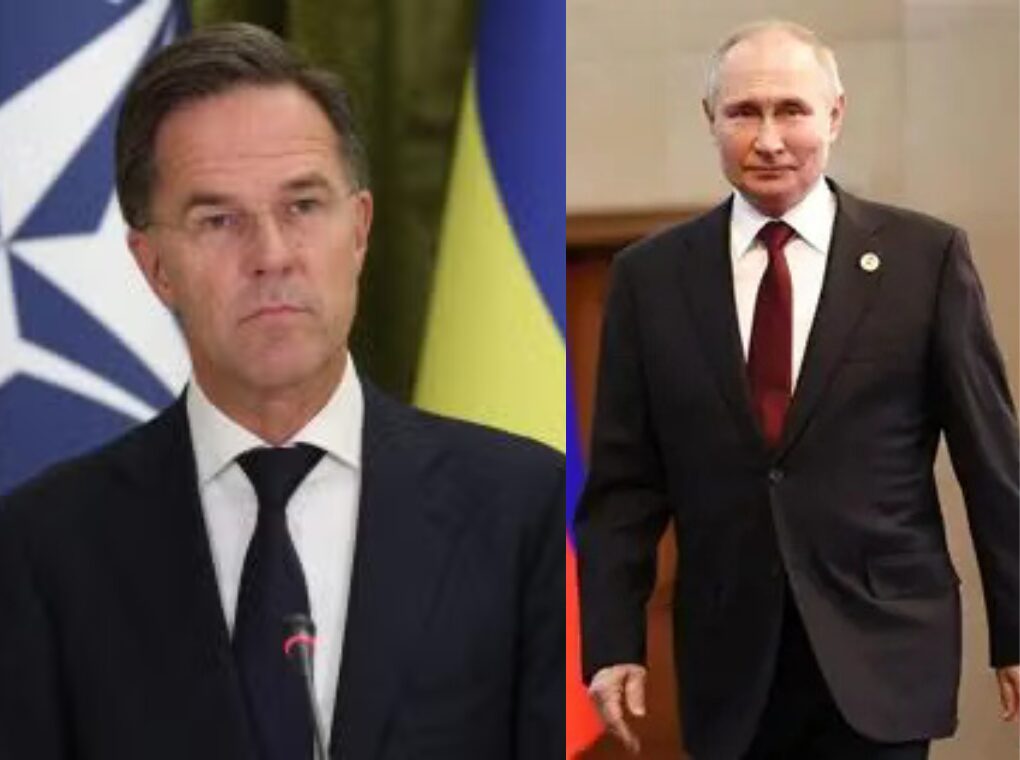
NATO member states are reportedly exploring the creation of a new financial institution aimed at dramatically increasing defense investment across the alliance, a move that reflects growing security anxieties in Europe and mounting pressure to prepare for long-term strategic rivalry with Russia. The proposed institution, informally described as a Defense, Security, and Resilience Bank, would be designed to help participating nations fund military expansion, modernize armed forces, and strengthen collective defense capabilities.
The initiative comes at a time when many NATO governments are under pressure to raise military spending to levels not seen since the Cold War. With the war in Ukraine reshaping Europe’s threat perceptions and defense planning cycles, political leaders across the alliance have emphasized the need for faster procurement, deeper industrial cooperation, and more sustainable funding mechanisms for large-scale military programs.
A Financial Tool for a Military Buildup
The proposed bank would function as a multilateral financial platform capable of mobilizing both public and private capital for defense-related projects. One of its core purposes would be to help countries meet new NATO spending expectations, which now go far beyond the long-standing 2% of GDP benchmark. Some leaders have called for defense and security-related investments to rise toward 5% of GDP, a level that would require hundreds of billions of dollars in additional spending over the next decade.
Under the reported framework, countries could treat paid-in capital to the institution as part of their defense expenditure totals. The bank would also be able to issue bonds, provide long-term loans, and structure financing packages that make it easier for governments to invest in major military programs without placing immediate strain on annual budgets. By spreading costs over longer time horizons, the model aims to make defense spending more politically and economically manageable.
Another key goal is to attract private investors into the defense sector. For years, military manufacturing and weapons production have faced investment restrictions and reputational concerns in parts of the financial world. A dedicated security bank could provide standardized risk frameworks and guarantees, making defense projects more attractive to institutional investors while strengthening NATO’s industrial base.
Standardization and Joint Procurement
Beyond financing, the initiative is expected to promote centralized procurement and standardization of weapons systems. NATO has long struggled with fragmentation, as member states operate dozens of different tank models, aircraft types, and missile systems. A shared financing platform could encourage countries to buy interoperable equipment in larger quantities, reducing costs and improving battlefield coordination.
Supporters argue that this would help close critical capability gaps in air defense, long-range fires, logistics, cyber defense, and ammunition production. The war in Ukraine exposed how quickly stockpiles can be depleted in high-intensity conflict, forcing NATO planners to rethink industrial capacity and supply chain resilience.
Political Divisions Inside the Alliance
Despite the strategic logic behind the proposal, not all NATO members are equally enthusiastic. Some governments prefer to rely on existing European or national financing tools rather than creating a new institution. Concerns include governance structure, decision-making authority, and whether the bank could weaken domestic parliamentary control over military budgets.
There are also debates about whether such a financial structure could blur the line between defensive deterrence and offensive capability development. While NATO officially frames its military posture as defensive, critics worry that large new funding streams could fuel an arms buildup that further escalates tensions with Moscow.
Russia at the Center of Strategic Planning
The timing of the proposal underscores how deeply Russia now factors into NATO’s long-term planning. Western military assessments increasingly describe Moscow as a persistent strategic challenger with the capacity to reconstitute its forces over the coming years. Although Russia denies any intention of attacking NATO territory, alliance planners are preparing for scenarios that require faster mobilization, heavier equipment, and stronger eastern defenses.
In this context, financial innovation is being treated as a security necessity. Military modernization is no longer viewed as a short-term response to the Ukraine conflict but as part of a broader, decades-long shift in Europe’s defense posture.
What Happens Next?
If the plan moves forward, the bank’s legal framework and charter could be finalized within the next year, with bond issuance and operational activity beginning before the end of the decade. Headquarters location, governance rules, and participation terms are still under discussion, and membership may extend beyond NATO to include close partner countries.
Whether the institution ultimately becomes a cornerstone of Western defense financing or remains a contested proposal will depend on political consensus inside the alliance. What is clear, however, is that NATO countries are searching for new ways to fund a sustained military buildup — and financial strategy is now as central to deterrence as tanks, missiles, and troops.