
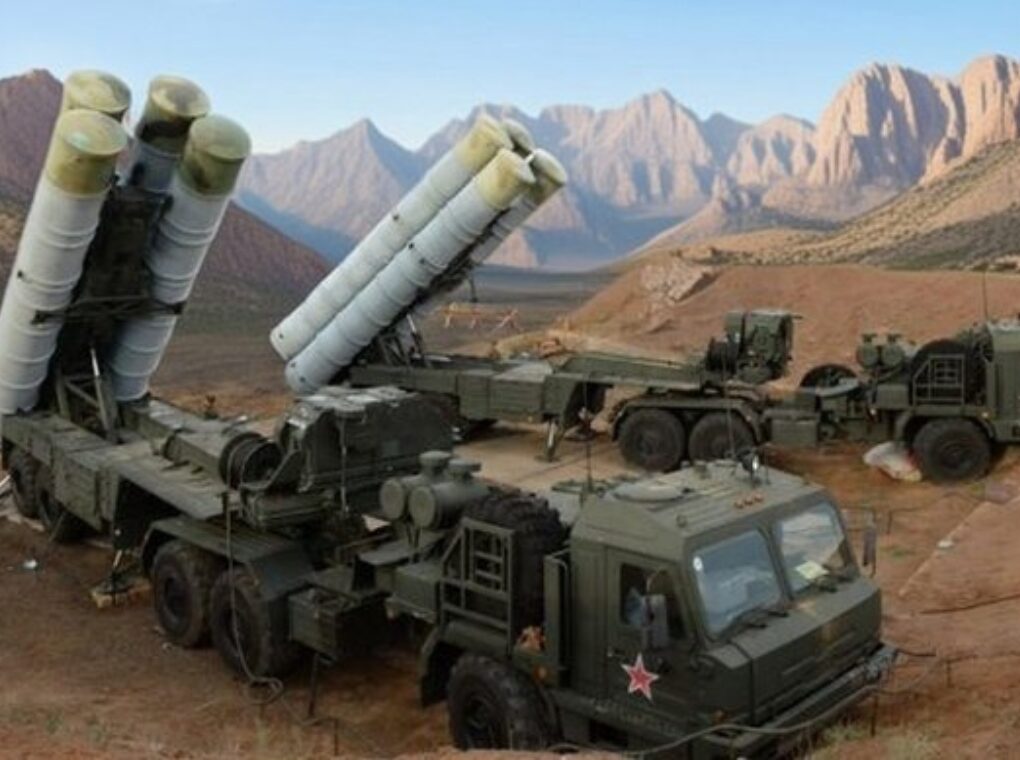
Russia’s push to localize production of advanced microwave microchips is emerging as a major development for India’s future air defence and combat aviation capabilities. With Moscow announcing that full-cycle domestic manufacturing of microwave monolithic integrated circuits (MMICs) could begin by 2027, long-standing concerns about Russian dependence on Chinese electronics in high-end defence systems may soon ease.
This matters directly to India, which operates the S-400 Triumf air-defence system and is in advanced discussions regarding deeper cooperation on the Su-57 fifth-generation fighter aircraft.
What Russia Is Building — And Why It’s Important
Authorities in Russia’s Sverdlovsk region have confirmed that construction is underway for the country’s first facility capable of serial production of microwave microchips across the entire manufacturing cycle. The plant is expected to produce up to 2,000 silicon wafers annually and will focus on high-frequency chips used in radar, missile guidance, electronic warfare, and secure communications.
These are not ordinary semiconductors. Microwave MMICs operate at extremely high frequencies — from hundreds of megahertz into the gigahertz range — allowing radars to track targets, filter signals, resist jamming, and process data in real time. They are core components inside Active Electronically Scanned Array (AESA) radars and modern air-defence sensors.
Such chips are believed to be used in:
Su-57’s N036 Byelka AESA radar
S-400 and S-500 long-range surveillance and fire-control radars
Advanced electronic warfare and identification systems
Until now, analysts widely believed Russia relied partly on imported manufacturing tools and foreign materials — often routed via third countries — to keep production running under sanctions. The new plant aims to remove those bottlenecks by localizing design, fabrication, and packaging.
Addressing the “China Dependency” Debate
Since 2022, speculation has grown that Russia may have leaned heavily on Chinese supply chains for advanced microelectronics used in military systems. Reports suggested that China became a major conduit for dual-use electronics and components that Russia could no longer obtain directly from Western markets.
This sparked concerns in India about potential risks:
Cybersecurity fears that third-party chips could contain vulnerabilities
Supply chain disruptions affecting spares or future deliveries
Strategic leverage if another country indirectly influences critical systems
However, Moscow’s move toward full-cycle domestic MMIC production directly addresses these issues. By controlling the entire process — from wafer fabrication to the finished microwave chip — Russia reduces reliance on external suppliers in one of the most sensitive technology areas in modern weapons.
For India, this means future S-400 units, upgrades, and any potential Su-57 cooperation would increasingly rely on Russian-made high-frequency electronics rather than components sourced through complex international channels.
Why Microwave Chips Matter So Much
Modern air warfare depends on sensors more than ever before. AESA radars, such as the Su-57’s Byelka system, use thousands of transmit/receive modules built around microwave semiconductors. These enable:
Long-range detection of stealth and conventional aircraft
Simultaneous tracking of dozens of airborne and ground targets
Resistance to jamming in contested electronic environments
Precision missile guidance
Similarly, the powerful radars paired with the S-400 and next-generation S-500 systems rely on high-frequency chips to detect ballistic missiles, hypersonic threats, aircraft, and drones at vast distances.
Without a reliable MMIC supply, performance, upgrades, and long-term maintenance of such systems become uncertain. That is why domestic production is a strategic milestone, not just an industrial one.
Implications for India’s Air Defence and Fighter Plans
India has already inducted multiple S-400 squadrons, which form a key layer of its long-range air and missile defence network. Additional acquisitions and potential local integration work have been under consideration.
At the same time, discussions between the Indian and Russian aerospace industries regarding cooperation on the Su-57 have gained renewed attention. Any future partnership would depend heavily on secure access to advanced avionics and radar technologies.
Russia’s semiconductor localization strengthens confidence that these platforms will not be constrained by fragile external supply routes in the coming decade.
India’s Own Semiconductor Ambitions Add Another Layer of Security
India is not standing still. Under the India Semiconductor Mission, New Delhi is investing in domestic chip fabrication, compound semiconductor research, and high-frequency technologies such as gallium nitride (GaN) and silicon carbide (SiC). International partnerships aimed at advanced defence-grade semiconductor production are also progressing.
Over time, this could open the door to Indian participation in producing or supporting microwave components used in future radar and electronic warfare systems.
The Bottom Line
Russia’s effort to domestically manufacture microwave microchips by 2027 marks a critical step toward technological self-reliance in advanced defence electronics. For India, it reduces fears of hidden vulnerabilities, supply disruptions, or geopolitical complications tied to third-party semiconductor sources.
As air defence networks and stealth combat aircraft become ever more dependent on sophisticated sensors, control over the tiny chips inside them is proving just as important as the missiles and airframes they support.