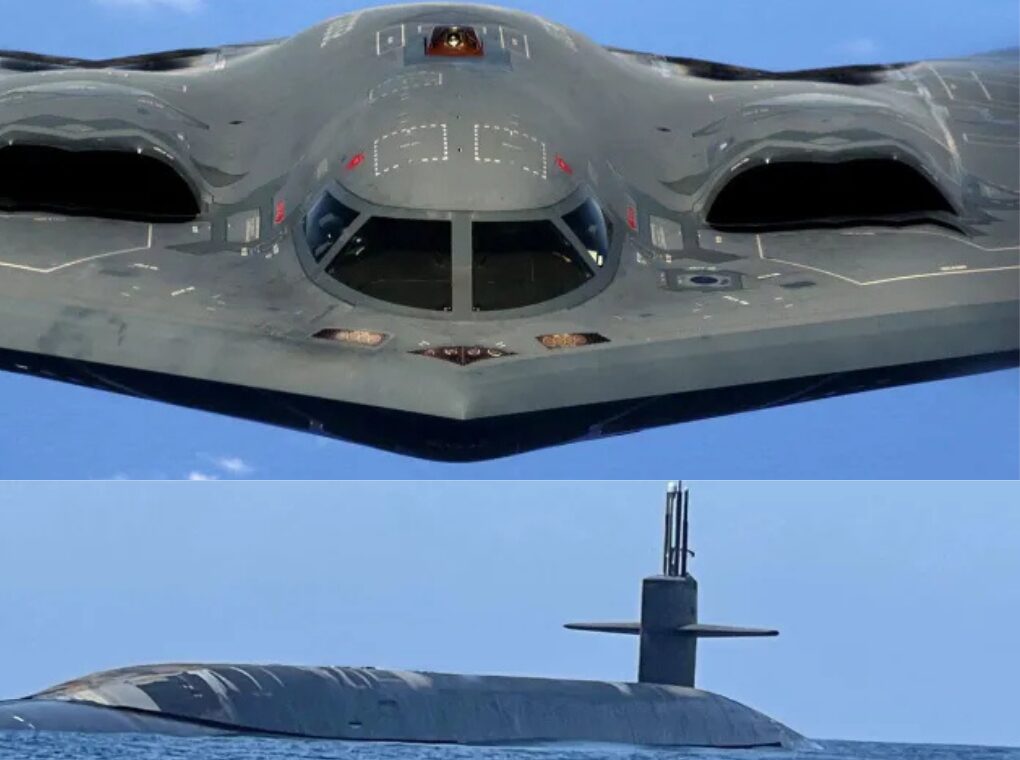
Australia’s ambitious plan to acquire nuclear-powered submarines under the AUKUS security partnership is facing growing skepticism, as industrial bottlenecks in both the United States and the United Kingdom cast doubt over delivery timelines. With projected costs ranging between $240 billion and $368 billion, and no submarines yet in sight, defense analysts are increasingly debating whether alternative strategic assets — including long-range stealth bombers — could provide a more immediate deterrent in the Indo-Pacific.
AUKUS Pillar One Under Pressure
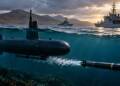
Signed in 2021, AUKUS was designed to transform Australia’s defense posture, with nuclear-powered attack submarines (SSNs) forming the core of its first pillar. The plan calls for Australia to receive at least three U.S. Virginia-class submarines in the early 2030s, before transitioning to a jointly developed SSN-AUKUS class built with British design leadership and American technology.
However, the submarine industrial base in both partner countries is already under severe strain.
The United States is struggling to meet its own naval requirements. Its shipyards are dealing with maintenance backlogs, workforce shortages, and production delays. Current output of Virginia-class submarines remains below the level needed to replace aging vessels while also building the next-generation Columbia-class ballistic missile submarines. American law further complicates any transfer, requiring presidential certification that selling submarines abroad will not weaken U.S. undersea readiness — a difficult standard at a time when operational availability is already stretched.
The United Kingdom faces parallel challenges. Once a dominant submarine builder, Britain’s industrial capacity has shrunk significantly since the Cold War. Maintenance delays and workforce shortages have reduced the number of deployable submarines in the Royal Navy. While London has pledged billions of pounds to expand facilities and accelerate SSN-AUKUS development, critics question whether skilled labor, engineering depth, and dockyard infrastructure can scale quickly enough to meet both British and Australian needs.
Rising Political and Strategic Concerns in Australia
Within Australia, debate is intensifying over whether the country committed too early to a program whose timelines are slipping and whose costs continue to climb. Former leaders and defense specialists have warned that Canberra could end up paying billions into foreign shipyards without seeing submarines until the late 2030s — or even later.
Submarines are uniquely valuable for deterrence because of their stealth and survivability, but they are also among the most complex machines ever built. Delays of a decade or more would leave Australia dependent on aging conventional submarines at a time when China’s naval power is expanding rapidly.
This gap between strategic need and delivery reality is fueling interest in interim or alternative deterrence options.
The Bomber Alternative: B-2 or B-21?
Some defense commentators have floated the idea of Australia acquiring long-range stealth bombers as a faster and potentially more flexible means of projecting power.
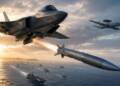
The argument centers on the B-2 Spirit — the U.S. stealth bomber capable of penetrating advanced air defenses and delivering both conventional and nuclear payloads. As the U.S. transitions to the next-generation B-21 Raider, a small number of retiring B-2s could, in theory, be transferred or made accessible to close allies.
For Australia, which retired its F-111 long-range strike aircraft in 2010, a stealth bomber fleet would restore deep-strike capability. Operating from northern Australian bases with aerial refueling, such aircraft could reach key strategic zones across the Indo-Pacific. Their speed and flexibility would allow rapid response to emerging crises — something submarines, which require lengthy patrol cycles, cannot always provide.
There are, however, major hurdles. The B-2 is one of the most sensitive platforms in the U.S. arsenal, with extreme maintenance demands and security requirements. Export approval would be politically and technologically complex. A more realistic long-term pathway could involve Australia partnering in the B-21 Raider ecosystem, though that program is still ramping up and remains tightly controlled.
Different Tools, Different Deterrence
Submarines and bombers serve different strategic roles. Nuclear-powered submarines provide persistent, covert presence, ideal for intelligence gathering and sea denial. Stealth bombers offer visible, rapid strike capability, which can act as a powerful signal in crises.
Rather than replacing submarines outright, bombers could function as a bridging deterrent — strengthening Australia’s strike reach while the submarine program matures. Such a move would also diversify Australia’s military options, reducing reliance on a single, high-risk acquisition pathway.
AUKUS Pillar Two Moves Ahead
While submarine timelines remain uncertain, the second pillar of AUKUS — focused on advanced technologies — is progressing more steadily. Joint work is underway on quantum navigation, hypersonic testing, undersea robotics, artificial intelligence, and deep-space radar systems in Australia. These projects aim to strengthen long-term interoperability and technological edge among the three partners.
Still, advanced sensors and AI cannot substitute for the hard power symbolized by nuclear-powered submarines.
The Strategic Crossroads
Australia now faces a crucial defense planning question: stay the course with AUKUS submarines despite delays, or hedge with additional long-range strike capabilities to cover the gap.
The answer may ultimately be a hybrid approach. If submarine delivery slips into the 2040s, pressure will grow for Canberra to pursue complementary assets that enhance deterrence sooner. In an Indo-Pacific security environment defined by speed, reach, and resilience, relying on a single, decades-long procurement gamble may no longer be enough.