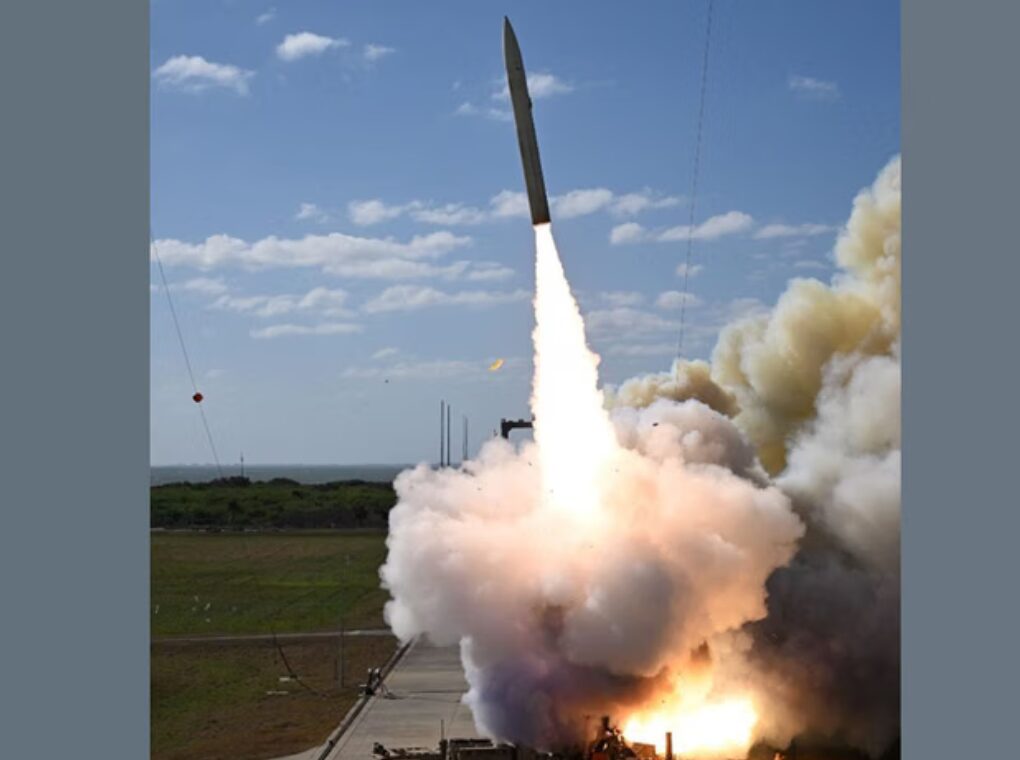
As tensions simmer between the United States and Iran, reports that Donald Trump is weighing the deployment of the Dark Eagle hypersonic missile have sparked global attention. If approved, it would mark the first operational use of a US ground-based hypersonic weapon in a live conflict—potentially redefining the rules of modern warfare.
But how deadly is this missile? And what impact could it have on the evolving geopolitical situation?
What is the Dark Eagle Missile?
The Dark Eagle, formally known as the Long-Range Hypersonic Weapon (LRHW), is one of the most advanced strike systems developed by the US military. Built by Lockheed Martin, the missile is designed to deliver long-range, high-precision strikes against heavily defended and time-sensitive targets.
Unlike conventional ballistic missiles, Dark Eagle uses a hypersonic glide vehicle (HGV) that travels at speeds exceeding Mach 5—more than five times the speed of sound. It can also maneuver mid-flight, making its trajectory unpredictable and significantly harder to intercept.
With a reported range of approximately 2,700 kilometres, the missile allows US forces to strike deep inside enemy territory without needing forward deployment of troops or aircraft.
Why Is It Considered So Deadly?
The lethality of Dark Eagle lies not just in its explosive payload but in its combination of speed, maneuverability, and precision.
At hypersonic speeds, the missile can reach its target in minutes, drastically reducing reaction time for enemy defense systems. Traditional air defenses are designed to track predictable ballistic paths—but Dark Eagle’s ability to change direction mid-flight makes interception extremely difficult, if not impossible in many scenarios.
This makes it particularly effective against:
Hardened military installations
Missile launch platforms
Air defense systems
Command-and-control centers
Such targets are often heavily fortified or mobile, requiring weapons that can strike quickly and accurately. In military doctrine, these are referred to as “high-value, time-sensitive targets.”
In essence, Dark Eagle provides the US military with a first-strike capability against critical enemy infrastructure—potentially neutralizing threats before they can respond.
Why Is the US Considering Deployment?
The reported consideration of Dark Eagle’s deployment comes amid concerns that Iranian military assets have been repositioned beyond the range of existing US strike systems, such as shorter-range precision missiles.
This has created a capability gap. By deploying a long-range hypersonic weapon, the US could regain the ability to target strategic assets located deep inside Iranian territory, even in heavily defended zones.
Additionally, the move signals increasing pressure from Washington as diplomatic negotiations remain fragile. A potential deployment could serve both as a military option and a strategic deterrent, aimed at compelling Iran to return to negotiations on terms favorable to the US.
Not Fully Operational Yet
Despite its advanced capabilities, Dark Eagle is not without limitations.
The system has faced years of development delays and has only recently achieved what officials describe as “initial operational capability.” This means it may not yet be fully tested under real combat conditions.
Using such a weapon in an active conflict would therefore carry a degree of uncertainty, particularly regarding performance under battlefield conditions.
High Cost and Limited Availability, another significant factor is cost.
Each Dark Eagle missile is estimated to cost around $15 million, while a complete battery—including launch systems and support infrastructure—can reach approximately $2.7 billion.
Moreover, the number of missiles currently available is believed to be limited, which restricts its use to only the most critical targets.
This raises important strategic questions:
>Is it worth deploying such an expensive and scarce weapon in the Iran conflict?
>Or should it be reserved for potential high-end conflicts with major powers?
Part of a Global Hypersonic Arms Race
The development of Dark Eagle is also tied to a broader global competition.
Both Russia and China have already fielded operational hypersonic weapons. Russia’s Kinzhal missile has reportedly been used in combat, while China’s DF-17 system is considered highly advanced.
The United States has been working to catch up, making Dark Eagle a critical component of its efforts to maintain technological and strategic parity.
A potential deployment in the Iran conflict would therefore not only address immediate military concerns but also demonstrate US capabilities on the global stage.
Will It Change the Iran Conflict?
While Dark Eagle would undoubtedly enhance US strike capabilities, experts caution against viewing it as a game-changing weapon.
Its limited numbers, high cost, and lack of combat testing mean that it is more likely to serve as a tactical advantage rather than a decisive factor in the conflict.
However, its deployment would mark a significant escalation and could set a precedent for the use of hypersonic weapons in future wars.
The Dark Eagle hypersonic missile represents a major leap in military technology—combining speed, precision, and survivability in ways that challenge existing defense systems.
If deployed against Iran, it could expand US strike options and increase pressure on Tehran. At the same time, it raises critical questions about escalation, cost, and the future of warfare.
One thing is clear that the consideration of Dark Eagle’s use signals that modern conflict is entering a new era—where seconds matter, defenses struggle, and the fastest weapon may decide the outcome.