
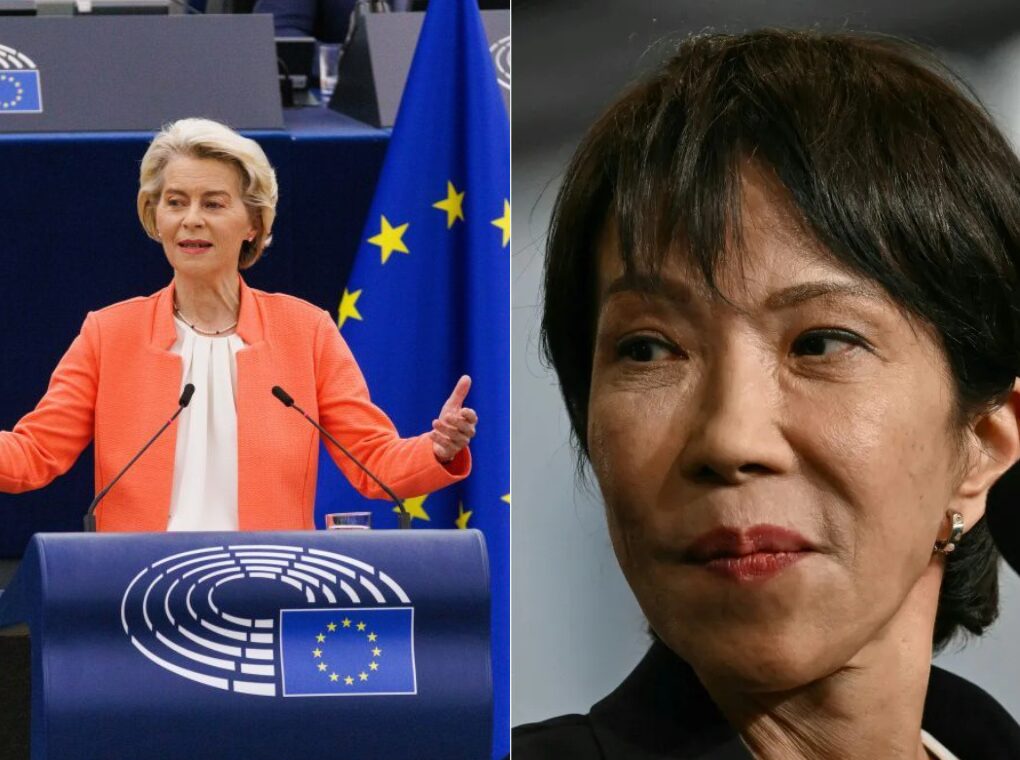
In a development that has sent quiet shockwaves through diplomatic circles, Japan has signaled a clear departure from a major European Union initiative and moved closer to the United States on a key issue tied to Ukraine and global security. The decision, seen by many as a rejection of European Commission President Ursula von der Leyen’s long-advocated vision for coordinated EU-led action, has raised serious questions about Europe’s influence and the future direction of Western alliances.
While disagreements among allies are nothing new, the symbolism of this moment is significant. Japan is not just another partner — it is a G7 power, a leading democracy in Asia, and a crucial player in global economic and security networks. When Tokyo shifts position, the ripple effects are felt far beyond Europe.
The EU’s Ambitious Plan and Why It Mattered
At the center of the divide is a European push to take a more assertive and coordinated financial approach to supporting Ukraine. European leaders, led by Ursula von der Leyen, have been promoting mechanisms that would allow Western nations to leverage frozen Russian state assets to help fund Ukraine’s defense and reconstruction.
For Brussels, this was about more than money. It was about demonstrating that the European Union could act as a serious geopolitical force, capable of leading complex international initiatives in times of crisis. The plan relied heavily on unity among G7 nations. Broad participation would help distribute legal, financial, and political risks while presenting a strong and united Western front.
Japan’s participation was considered especially important. As a major economy holding significant Russian assets and a respected global actor, Tokyo’s backing would have added both legitimacy and strength to the EU’s proposal.
Japan’s Decision Changes the Equation
Instead of joining the EU-led framework, Japan chose to step back and signal closer alignment with the United States’ approach. This caught many European officials off guard. For years, Japan has carefully balanced its relationships, maintaining strong ties with both Europe and Washington while supporting Western sanctions on Russia.
This new stance suggests that when faced with a strategic choice, Tokyo prioritized alignment with U.S. thinking over European leadership. The move does not mean Japan is turning away from Ukraine. Japan continues to support Kyiv through financial aid and sanctions. However, it appears unwilling to commit to the specific financial and legal mechanisms proposed by Brussels.
Why Tokyo Is Being Cautious
Japan’s hesitation is rooted in several key concerns.
First, there are legal risks. Using frozen sovereign assets in aggressive financial structures could create international precedents that might one day affect Japan itself. In a region where China’s power is growing and tensions over Taiwan and the Korean Peninsula remain high, Tokyo is extremely cautious about weakening legal norms around state assets and sovereignty.
Second, Japan’s national security framework is deeply intertwined with the United States. The U.S.–Japan alliance is central to Japan’s defense strategy. When Washington signals skepticism about a European-led financial initiative and favors a different approach, Tokyo has strong incentives to stay aligned with its primary security partner.
Third, Japan has a strong interest in maintaining global financial stability. Tokyo is one of the world’s largest economies and benefits greatly from a predictable, rules-based financial system. Any move that appears to blur the line between asset freezing and asset seizure raises concerns about long-term consequences for international markets.
A Blow to European Influence
For the European Union, Japan’s decision is both a practical and symbolic setback. Practically, it reduces the chances of building a fully unified G7 approach, increasing the burden and exposure on Europe if it proceeds alone. Symbolically, it challenges the EU’s ambition to act as a leading strategic power on the global stage.
Ursula von der Leyen has worked to position the EU as a central actor in geopolitical crises, not just a regulatory and economic bloc. But when a major partner like Japan chooses to lean toward Washington’s position rather than Brussels’, it highlights the limits of European influence in hard security matters.
This moment reinforces a broader reality: in times of major geopolitical tension, many allies still look first to the United States for strategic direction.
The Bigger Picture: Shifting Alliance Dynamics
Japan’s move reflects a wider transformation in global politics. Alliances remain strong, but they are no longer automatically unified on every issue. Countries are increasingly guided by national interest, legal caution, and regional security priorities.
For Europe, this is a wake-up call. Leadership on the world stage requires not only bold ideas but also the ability to bring partners along — especially when risks are high. For Japan, the decision underscores a foreign policy that is pragmatic, security-focused, and closely tied to its alliance with the United States.
Ultimately, this episode is about more than a single financial proposal. It is a signal that global power dynamics are evolving. Influence is being tested, alliances are being recalibrated, and the balance between Brussels and Washington is shifting in subtle but meaningful ways.
As the war in Ukraine continues and global tensions remain high, decisions like Japan’s will play a crucial role in shaping not only the future of the conflict but also the future structure of international partnerships.