
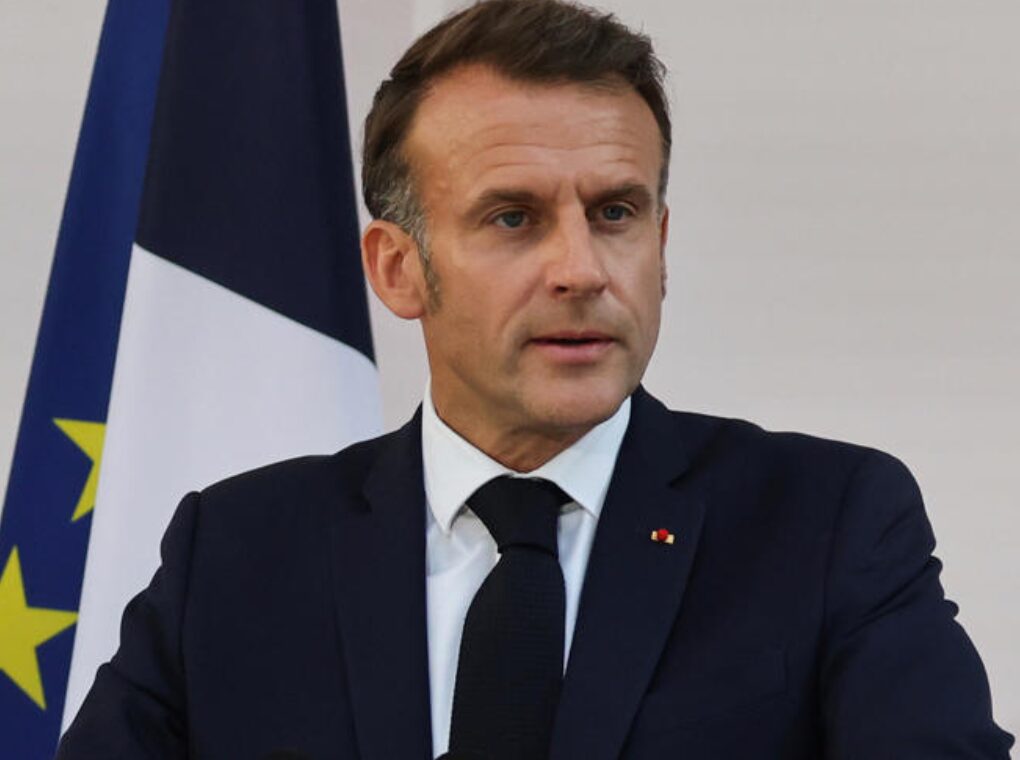
In recent weeks, the French government has repeatedly described online claims linking President Emmanuel Macron to Jeffrey Epstein as the work of Russian disinformation networks. Official statements have emphasized coordinated bot activity, fake websites, and fabricated documents designed to damage Macron’s reputation.
Yet documents released by the U.S. Department of Justice containing Epstein’s emails show several references to Macron — some dating back to 2016 when he was France’s economy minister, and others from 2018 after he became president. This contrast has prompted growing questions: how much of the story is manufactured, and how much rests on real correspondence?
Epstein’s Network and Early Macron References (2016)
During the spring of 2016, Emmanuel Macron served as Minister of the Economy, Industry and Digital Affairs. At that time, several individuals connected to Epstein were discussing business opportunities in France. One notable email exchange involved a prominent international businessman who reported having lunch at the Élysée Palace and holding a “nice conversation” with Minister Macron about investment projects in France.
The message was not sent directly by Macron, nor does it suggest any personal or improper relationship. Instead, it reflects the kind of discussion that frequently occurs when a government is actively seeking foreign direct investment — exactly what Macron’s economic team was doing at the time. Still, the fact that Epstein was copied on or privy to this kind of correspondence shows how wide his contact list had become, even reaching into the orbit of rising European political figures.
The 2018 Messages — Claims of Direct Interest
The most discussed references appear in emails dated 2018, after Macron had won the presidency. In several messages, Epstein told different contacts that the French president was asking for his thoughts on a range of topics: governance of international institutions, relations between public and private sectors, socio-economic policy innovations, and even science policy.
One message in particular quotes what Epstein presented as Macron’s own words, asking for ideas on how to “rethink, rebuild and invent” new forms of global cooperation and more “progressist” economic instruments. Another email claims that Macron wanted Epstein’s input “on almost everything,” including institutions, policies, and scientific matters, with the apparent ambition of positioning France as a leader in Europe and beyond.
These are not messages from Macron to Epstein. They are Epstein reporting — or perhaps exaggerating — what he claimed were requests coming from the French presidency. Whether these requests were real, whether they came through intermediaries, or whether they were simply Epstein boasting to enhance his own standing remains unclear. What is clear is that the name “Macron” appears repeatedly in Epstein’s 2018 correspondence in a way that suggests at least some level of perceived access or interest.
France’s Official Line: A Russian Information Operation
French authorities have consistently framed the entire controversy as foreign interference. They point to the rapid spread of sensational accusations — including fabricated stories about parties, underage individuals, and direct criminal involvement — that began circulating shortly after batches of Epstein-related files became public. Investigators identified websites mimicking legitimate French news outlets, accounts pushing identical narratives across platforms, and patterns of activity associated with known disinformation actors.
The government has described these efforts as classic hybrid warfare tactics: take a kernel of real information (in this case, the mere appearance of Macron’s name in released documents), inflate it into scandalous fiction, and then flood social media to create the impression of widespread outrage. French officials argue that the goal is not simply to embarrass one politician, but to deepen internal divisions in Western societies at a time when geopolitical tensions remain high.
Why the “Russian Bots” Explanation Doesn’t Fully Satisfy Everyone
Skeptics note a basic problem with the official narrative: the most talked-about emails are not forgeries. They exist in the public domain, released under U.S. transparency measures. While the most extreme accusations (secret parties, direct criminal complicity, etc.) appear to be inventions, the underlying references to Macron are not.
This has led some observers to ask whether the “disinformation” label is being used — at least in part — to avoid discussing the legitimate questions raised by Epstein’s own records. Why was a financier with a criminal record claiming advisory-level conversations with the office of a sitting European president? Were any of those claims grounded in reality, even if only at the level of informal outreach through mutual contacts? And if the contacts were purely innocent, why did Epstein feel confident enough to brag about them so openly?
The Bigger Picture
The Macron-Epstein story sits at the intersection of several uncomfortable realities:
Epstein deliberately built an image of unparalleled access to global elites, often exaggerating relationships to maintain influence and attract new ones.
High-level politicians routinely meet international investors, philanthropists, scientists, and thinkers — some of whom later turn out to have troubling backgrounds.
Modern information warfare frequently mixes verifiable facts with outright lies, making it difficult for the public to separate signal from noise.
Governments facing reputational attacks often prefer to highlight foreign interference rather than engage with messy, ambiguous details.
As long as the released documents remain public, the emails will continue to circulate. Whether they represent nothing more than Epstein’s self-promotion, a handful of indirect or one-off contacts, or something more significant is still a matter of interpretation. What is no longer in dispute is that Macron’s name appears in Epstein’s correspondence more than once — and that reality cannot be entirely explained away by bots.
The coming months will likely bring more document releases, more leaks, and more competing narratives. For now, the most honest assessment may be the simplest: the story is neither pure fabrication nor proven scandal. It sits in the gray, uncomfortable zone where real names, real emails, and real questions meet the machinery of modern disinformation — and where the full truth remains difficult to pin down.