
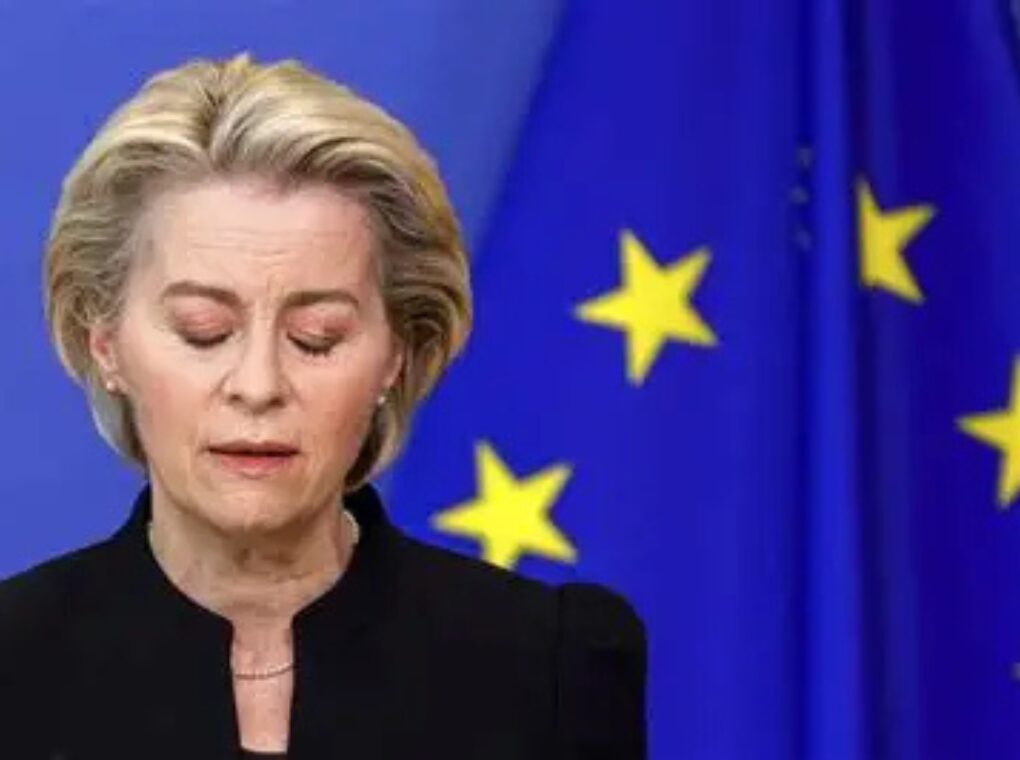
The European Union’s top leadership is facing renewed scrutiny after European Commission President Ursula von der Leyen reportedly scaled back plans to establish a centralized intelligence unit under her direct authority. The proposal, initially framed as a move to strengthen the bloc’s ability to counter hybrid threats such as cyberattacks, foreign interference, and sabotage, has instead triggered political resistance and institutional tension inside Brussels.
What was once envisioned as a new intelligence coordination cell operating across EU institutions now appears set to become a more limited security-focused structure. The shift reflects deeper concerns about power centralization, institutional balance, and the sensitive nature of intelligence cooperation among EU member states.
A Plan Born From Rising Security Fears
The idea for a stronger EU-level intelligence capability emerged against the backdrop of growing geopolitical instability. Since Russia’s invasion of Ukraine, European governments have warned about increasing cyber operations, disinformation campaigns, and covert influence activities targeting European infrastructure and democratic systems. These so-called “hybrid threats” pushed EU leaders to consider whether existing coordination mechanisms were sufficient.
Von der Leyen’s proposed intelligence unit was meant to improve how threat information is assessed and shared within the European Commission. Supporters argued that faster, more integrated analysis at the EU level could help policymakers respond more effectively to cross-border risks. The initiative also aligned with broader EU ambitions to become more strategically autonomous in defense and security matters.
However, intelligence is one of the most sensitive areas of national sovereignty. Member states guard their security services closely, and intelligence-sharing at EU level is largely voluntary. This political reality quickly complicated the Commission president’s plans.
Institutional Turf Wars in Brussels
One of the most significant sources of resistance came from within the EU’s own institutional framework. The European External Action Service (EEAS) — the EU’s diplomatic arm — already oversees the bloc’s Intelligence and Situation Centre, which analyzes information shared by national intelligence agencies. Critics of the new proposal argued that creating a separate unit under the Commission risked duplicating work and blurring institutional responsibilities.
Tensions reportedly grew between von der Leyen and senior EU foreign policy figures who saw the move as an encroachment on their domain. The dispute was not only about efficiency but about authority. Who should control the EU’s security analysis — the Commission presidency or the established foreign policy structures?
These internal disagreements turned the intelligence unit into a symbol of a broader debate over leadership style and governance within the European Union.
Concerns Over Centralization of Power
Von der Leyen has increasingly been portrayed by critics as favoring a more centralized, presidential model of EU leadership. Detractors argue that key decisions have become concentrated in the Commission president’s office, sometimes at the expense of broader consultation with commissioners, member states, and the European Parliament.
In this context, the intelligence unit proposal was viewed by some officials as part of a wider trend: strengthening the authority of the Commission presidency in policy areas traditionally shared across institutions or controlled by national governments.
For smaller member states in particular, any perception that Brussels is accumulating more direct control over intelligence matters raises red flags. Intelligence cooperation relies heavily on trust, and national governments may hesitate to share sensitive data if they feel decision-making is becoming overly centralized.
Political Pressure From Multiple Directions
The controversy over the intelligence unit also unfolded during a period of political strain for von der Leyen. Her second term as Commission president has been marked by growing polarization within the European Parliament, where she has faced criticism from both ends of the political spectrum.
Some lawmakers argue that the Commission has not been sufficiently transparent in its decision-making, especially in areas involving security and defense spending. Others say the EU is moving too slowly in strengthening its defenses. This divided environment makes ambitious institutional reforms even harder to implement.
At the same time, public trust in EU institutions remains fragile in several member states. Populist and Euroskeptic parties often frame Brussels initiatives as power grabs that undermine national sovereignty. Against that backdrop, the idea of an EU-level intelligence body reporting directly to the Commission president was politically sensitive from the start.
What the Scaled-Back Plan Means
The apparent decision to downgrade the intelligence unit into a more limited security coordination body suggests a pragmatic retreat. Rather than creating a powerful new structure, the Commission is likely to focus on improving internal security procedures, risk monitoring, and protection of EU institutions themselves.
This outcome preserves the primary role of existing intelligence-sharing mechanisms under the EEAS while still allowing the Commission to strengthen its own analytical capacity in a narrower sense. It also signals that major institutional changes in sensitive areas like intelligence require broad political backing — something that was not fully in place.
A Broader Lesson for EU Integration
The episode highlights a recurring tension at the heart of the European project: how far integration should go in areas tied closely to national sovereignty. Defense, intelligence, and internal security remain domains where member states are cautious about transferring authority to Brussels.
Von der Leyen’s retreat does not mean the EU will stop trying to enhance its collective security. On the contrary, cooperation on cybersecurity, counterterrorism, and resilience against foreign interference continues to expand. But the path forward is likely to be incremental, built on consensus rather than rapid institutional innovation.
Ultimately, the scaling back of the EU intelligence unit proposal underscores the limits of centralization in a union of 27 nations with diverse political traditions and security priorities. It also serves as a reminder that leadership in Brussels depends not only on vision, but on careful navigation of institutional balance and national sensitivities.