
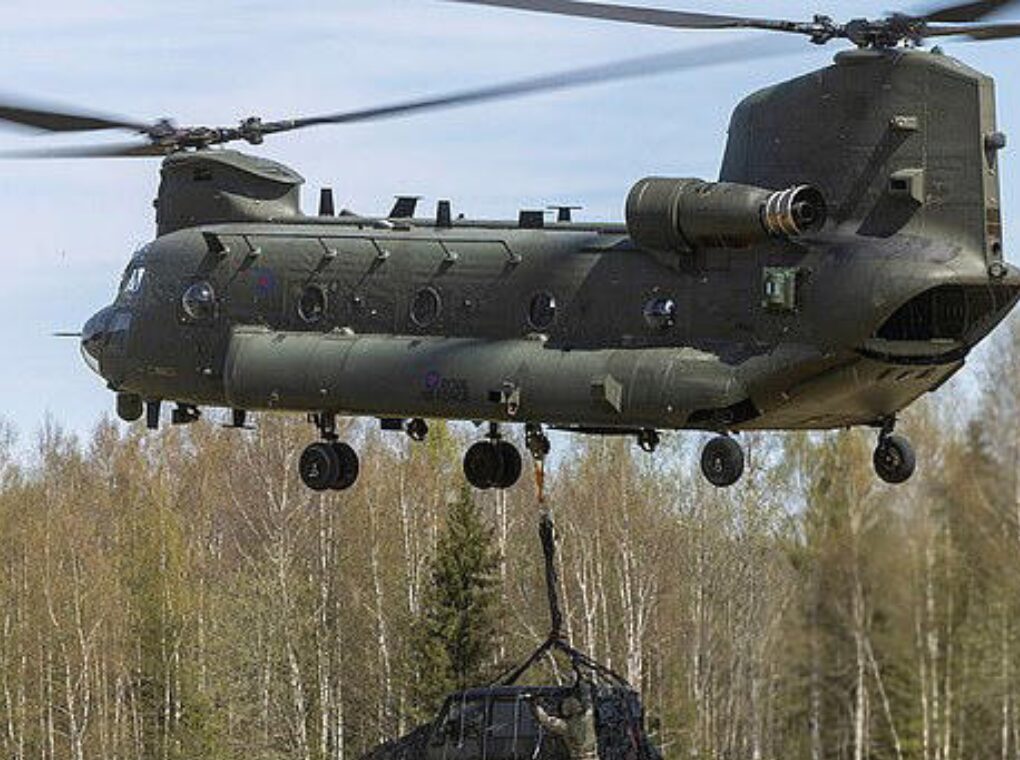
A dramatic NATO battlefield simulation in Estonia has exposed the brutal realities of modern drone warfare, after a Ukrainian team playing the enemy reportedly “destroyed” a British brigade and an Estonian division during Exercise Hedgehog 2025.
The large-scale military drill, known as Exercise Hedgehog, involved more than 16,000 troops from 12 NATO countries and was designed to simulate high-intensity combat conditions on Europe’s eastern flank. But the results were sobering for the alliance.
A ‘Horrible’ Result for NATO
During the simulation, a British brigade alongside an Estonian division formed a battle group of thousands of troops. Facing them was a small Ukrainian unit acting as the adversary.
According to Estonian defence officials, the Ukrainian side conducted around 30 mock drone “strikes” within half a day, disabling 17 armoured vehicles. Two battalions were effectively eliminated in a single day.
Aivar Hanniotti, an Estonian systems coordinator who led a unit opposing NATO forces in one scenario, described the outcome as “horrible” for the alliance.
“We quite easily found cars and mechanised units, and we were able to take them out quite fast with strike drones,” he said, adding that the units were no longer combat-capable after the simulated assault.
One commander reportedly reacted bluntly after observing the drill: “We are f****d.”
The Drone Advantage: Delta System and AI
Central to the Ukrainian team’s success was the use of Delta, a battlefield management system that integrates real-time intelligence gathering with artificial intelligence to coordinate strikes, identify targets, and analyze data.
Unlike traditional manoeuvre warfare, where tanks and infantry advance across relatively open terrain, the exercise recreated a battlefield saturated with unmanned aerial systems. Lt Col Arbo Probal, head of the unmanned systems programme for the Estonian Defence Forces, said the aim was to introduce friction and cognitive overload rapidly.
“The aim was really to create stress for units and cognitive overload as soon as possible,” he explained.
The scenario mirrored the early years of the Ukraine war, when armoured advances were more common, rather than the largely static trench warfare seen along current front lines.
Drones: The Defining Weapon of the Ukraine War
The simulation underscored what analysts have increasingly concluded: drones are now the dominant weapon on the modern battlefield. Some estimates suggest unmanned systems are responsible for roughly 70% of casualties in the Ukraine conflict.
This transformation has forced European militaries to rethink doctrine. Following the lessons learned in Estonia, several NATO members have accelerated domestic drone production and expanded training in unmanned warfare.
Ukrainian President Volodymyr Zelensky recently unveiled the first strike drone jointly produced by Ukraine and Germany, describing it at the Munich Security Conference as “modern Ukrainian technology, battle-tested, powered by AI.”
Britain has also pledged £2 billion in drone investment to ensure its forces are “battle-ready,” and its latest defence review formally acknowledged that drones are now “an essential component of land warfare.”
Strategic Context: War and Diplomacy
The wargame results come as diplomatic efforts intensify to end the conflict between Russia and Ukraine. US President Donald Trump has recently urged Kyiv to move swiftly toward negotiations, setting a June deadline for peace talks and claiming Russia is prepared to reach a deal.
Meanwhile, new rounds of negotiations between Washington and Moscow are scheduled in Geneva, with Russian presidential aide Vladimir Medinsky leading Moscow’s delegation. Ukraine’s delegation will be headed by Rustem Umerov and Kyrylo Budanov.
However, skepticism remains high, particularly after past negotiations stalled amid deep disagreements over territorial and historical claims.
A Wake-Up Call for NATO
Exercise Hedgehog 2025 may not have been a real battle, but its implications are real. The rapid “destruction” of heavily equipped NATO units by a small, tech-enabled force highlights a shift in military power dynamics.
Massed armour and traditional battlefield formations, once symbols of overwhelming strength, now face existential threats from cheap, AI-guided drones and real-time digital coordination systems.
For NATO, the message from Estonia is clear: adapt rapidly to the age of unmanned warfare—or risk being outmatched on tomorrow’s battlefield.