The recent developments at the Munich Security Conference mark a significant shift in European security thinking, as Germany and France engage in high-level discussions on bolstering continental nuclear deterrence amid growing doubts about long-term U.S. reliability under the current administration.
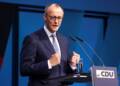
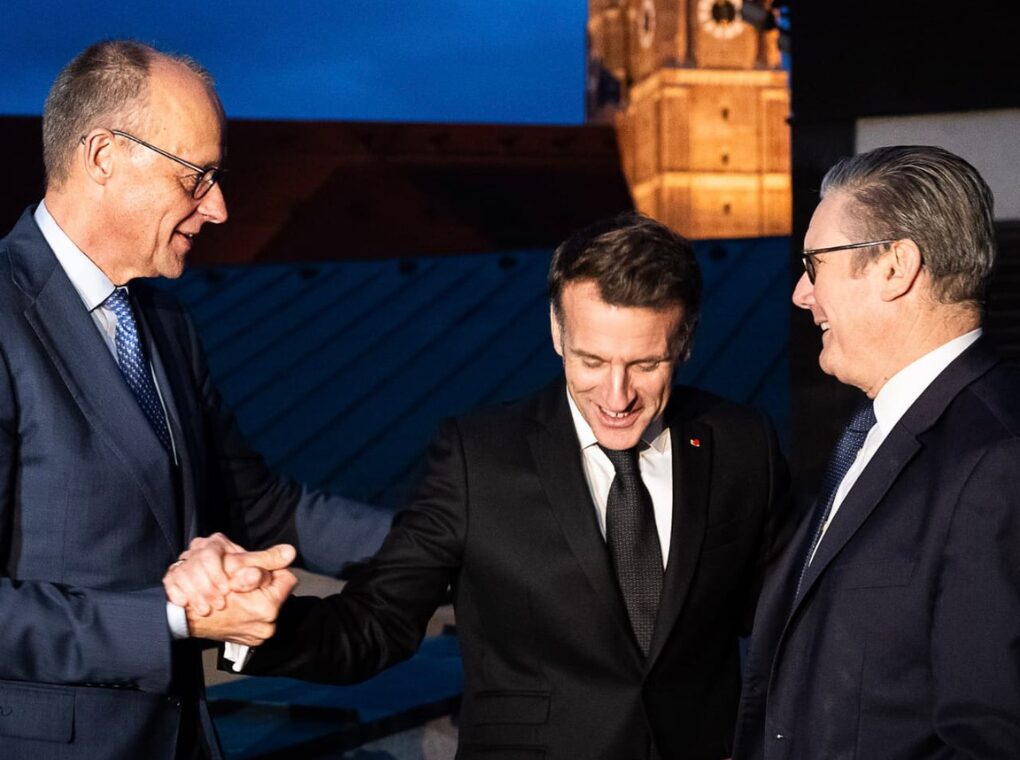
German Chancellor Friedrich Merz confirmed during his opening speech at the conference that Berlin has initiated “confidential talks” with French President Emmanuel Macron on European nuclear deterrence. Merz emphasized that these discussions remain firmly within the framework of NATO’s nuclear sharing arrangements and Germany’s legal obligations, which prohibit it from developing its own nuclear weapons.
He stressed the goal of avoiding “zones of differing security” across Europe while building a stronger, more self-reliant European pillar within the alliance. Merz described the talks as part of a broader effort to “reset” transatlantic relations, urging the U.S. to “repair and revive trust” in an era where American leadership is seen as challenged or even “lost.” He warned that the rules-based international order “no longer exists in the way it once did,” and Europe’s freedom is now “under threat” in a world of great-power rivalry.
Macron, speaking at the same venue, was more explicit about the need for Europe to redefine its security independently. He advocated for a “holistic” approach to nuclear deterrence that integrates national doctrines with shared European interests, describing ongoing strategic dialogues with Merz and other leaders to articulate France’s nuclear posture in a way that converges with allies’ needs. Macron framed this as essential for Europe to emerge as a geopolitical power, especially given Russia’s persistent threat and direct U.S.-Russia negotiations (potentially on Ukraine).
He implicitly critiqued perceptions of Europe as weak or sidelined, pushing back against narratives that vilify the continent and calling for a “more positive mindset” toward European unity. Macron hinted at upcoming details in a planned speech later in February, focusing on how France’s independent nuclear force could play a broader role without fully replacing U.S. extended deterrence.
These talks represent the most serious Franco-German dialogue on nuclear matters since the Cold War, driven by several converging factors:
U.S. policy uncertainties — Reports of temporary halts in intelligence sharing with Ukraine and rhetoric emphasizing Europe’s need to shoulder more defense burdens have heightened fears that Washington might prioritize deals with Russia over European interests.
Russia’s aggression — The ongoing war in Ukraine and Moscow’s nuclear saber-rattling have exposed Europe’s reliance on the U.S. “nuclear umbrella” (via NATO deployments and commitments).
Capability gaps — Europe lacks equivalent conventional deep-strike options to Russia, making nuclear elements more critical in any balanced deterrent.
While both leaders downplayed any immediate break from NATO—Merz explicitly tied discussions to alliance structures—the conversations signal a pivot toward greater European strategic autonomy. France, as the EU’s sole nuclear power (with around 290 warheads), has long positioned its force de frappe as potentially extendable to allies, though details on sharing, command, or financing remain sensitive and unresolved. Germany, bound by non-proliferation commitments, appears focused on consultation and convergence rather than acquiring weapons.
Experts at the conference, including a new report from the European Nuclear Strategy Group, highlighted a potential “deterrence gap” and evaluated options like enhancing French/British roles, a common European deterrent, or even new national programs—though the latter faces major legal and political hurdles.
This Franco-German initiative could reshape transatlantic security if it progresses, fostering a more balanced NATO where Europe contributes more decisively. However, it also risks internal divisions if perceived as fragmenting unity or challenging U.S. primacy. For now, the talks reflect a pragmatic response to a rapidly changing geopolitical landscape, where Europe seeks to hedge against over-reliance on any single partner while navigating life alongside a revanchist Russia.