
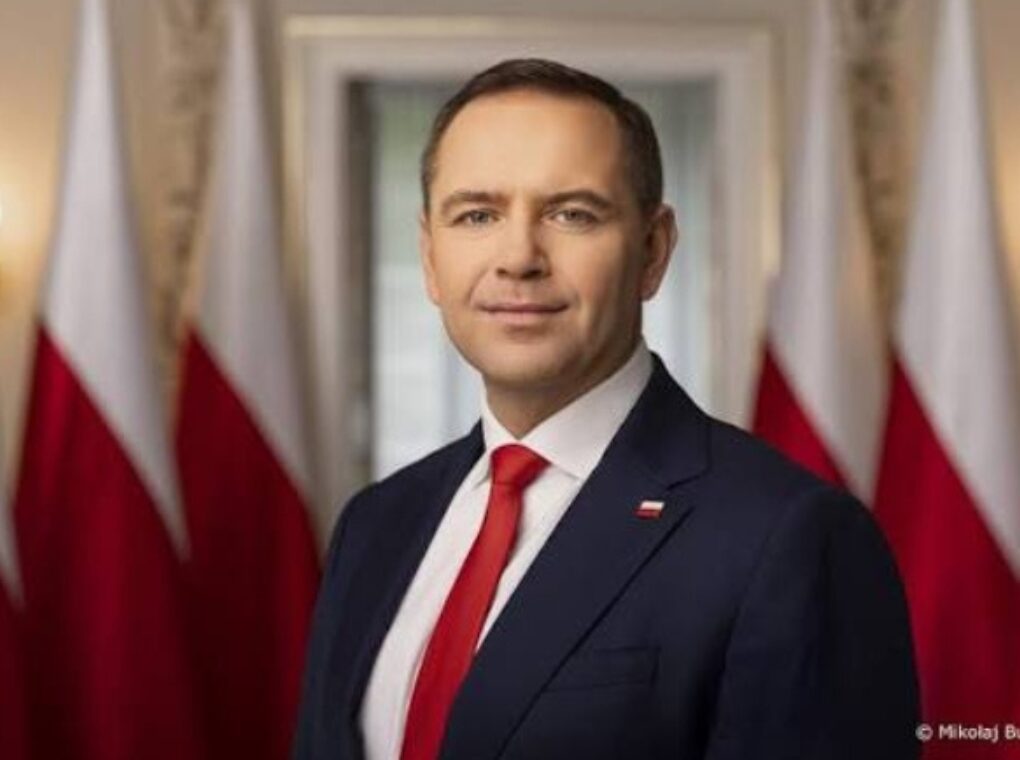
Poland has ignited a major geopolitical debate after President Karol Nawrocki suggested that Warsaw should move toward joining a nuclear weapons project, citing what he described as a growing Russian threat.
Speaking in a recent interview, Nawrocki said he is a “strong supporter” of Poland participating in a nuclear initiative and argued that the country must begin taking concrete steps in that direction. While he stopped short of outlining a detailed roadmap, the remarks mark one of the clearest indications, yet that nuclear deterrence is re-entering mainstream political discussion in Eastern Europe.
Poland’s Strategic Calculus
Poland has dramatically expanded its armed forces since Russia’s invasion of Ukraine, becoming one of NATO’s highest defense spenders relative to GDP. It hosts allied troops, invests heavily in conventional weapons systems, and positions itself as a frontline state within the alliance.
However, Nawrocki’s comments suggest that Warsaw may now be reassessing whether NATO’s existing nuclear umbrella provides sufficient long-term security.
Poland is a signatory to the Nuclear Non-Proliferation Treaty (NPT), which recognizes only five official nuclear-armed states: the United States, Russia, China, France, and the United Kingdom. Any move toward developing an independent Polish nuclear arsenal would raise profound legal, diplomatic, and economic challenges.
Still, the fact that such discussions are occurring publicly reflects heightened anxiety in parts of Europe over Russia’s military posture and the durability of transatlantic security guarantees.
Germany’s Nuclear Taboo Under Pressure
The nuclear debate is not confined to Poland. In Germany, traditionally cautious on nuclear issues due to its post–World War II commitments, the subject is increasingly being discussed in political and strategic circles.
German Chancellor Friedrich Merz confirmed that Berlin has initiated confidential discussions with French President Emmanuel Macron regarding European nuclear deterrence. Merz emphasized that Germany remains bound by its legal obligations and does not intend to develop its own nuclear weapons. Instead, the focus is on strengthening consultation and reinforcing NATO’s existing framework.
Nevertheless, public discourse in Germany has shifted. Some political figures have questioned whether Europe can indefinitely rely on American extended deterrence, particularly amid evolving U.S. foreign policy priorities and calls for greater European defense autonomy.
France’s Expanding Strategic Role
France remains the European Union’s only nuclear power, maintaining an independent deterrent force often referred to as the “force de frappe.” With an estimated 290 warheads, Paris operates its nuclear arsenal outside NATO’s integrated command structure.
Macron has indicated that France is prepared to engage in deeper strategic dialogue with European partners about how its nuclear capabilities might contribute to broader continental security. While this does not imply shared control or transfer of weapons, it signals a willingness to align France’s nuclear doctrine more closely with allied concerns.
Such discussions reflect a broader European reassessment of strategic autonomy. The objective, according to French and German officials, is not to replace NATO but to strengthen Europe’s role within it.
The U.S. Factor and Transatlantic Uncertainty
For decades, European security has depended heavily on the United States’ nuclear umbrella. American warheads stationed in Europe and Washington’s extended deterrence commitments have formed the backbone of NATO’s defense posture.
Recent geopolitical developments, however, have raised questions about long-term U.S. engagement. Policy debates in Washington, shifting global priorities, and disagreements over burden-sharing have fueled European concerns about overreliance on American protection.
These uncertainties, combined with Russia’s ongoing war in Ukraine and periodic nuclear signaling from Moscow, have intensified discussions about Europe’s independent deterrence capacity.
Moscow Take
Russian officials have consistently rejected Western claims of aggression, describing NATO’s military expansion as destabilizing. Russian Security Council Deputy Chairman Dmitry Medvedev recently stated that in a world of growing instability, some countries may conclude that nuclear weapons are the ultimate guarantee of sovereignty and security.
Such rhetoric underscores the delicate balance confronting European leaders. Any move toward expanded nuclear capabilities could trigger further tensions with Moscow and potentially accelerate a new arms competition.
Legal and Political Constraints
Despite heightened rhetoric, significant barriers remain. The NPT continues to serve as the foundation of the global non-proliferation regime. Violating or withdrawing from it would carry substantial diplomatic consequences.
Germany’s constitutional and treaty obligations explicitly prohibit it from acquiring nuclear weapons. Poland, likewise, would face formidable political resistance within the European Union and NATO if it pursued an independent arsenal.
As a result, current discussions appear focused less on proliferation and more on deterrence coordination — particularly exploring how France’s nuclear capabilities might play a broader consultative role within Europe.
A Turning Point in European Security?
The conversations unfolding in Warsaw, Berlin, and Paris represent one of the most significant shifts in European strategic thinking since the end of the Cold War.
Three forces are driving this evolution:
Russia’s continued war in Ukraine and nuclear signaling.
Questions surrounding long-term U.S. strategic commitment.
Europe’s desire to strengthen its own defense capacity.
While no immediate policy breakthroughs are expected, the normalization of nuclear debate itself marks a profound change.
For decades, nuclear deterrence in Europe was largely assumed rather than discussed. Today, it is openly examined at the highest political levels.
Whether this leads to deeper NATO integration, enhanced French strategic consultation, or more dramatic structural changes remains uncertain. What is clear, however, is that Europe’s security architecture is entering a period of reassessment — one that could redefine the balance between transatlantic unity and European strategic autonomy for years to come.