One of the world’s most volatile geopolitical flashpoints is heating up again.
Iran has partially closed the Strait of Hormuz during military drills. At the same time, China, Iran, and Russia are conducting trilateral naval exercises in nearby waters. Meanwhile, the United States and Israel are reportedly reviewing military options as diplomatic efforts appear stalled. Iran’s Supreme Leader has issued warnings that American warships could be targeted if conflict erupts.
What is unfolding is no longer routine regional tension. It is strategic positioning — with implications that stretch far beyond the Middle East.
Why the Strait of Hormuz Matters
The Strait of Hormuz is among the most strategically important waterways in the world. Nearly one-fifth of the global oil supply moves through this narrow corridor every day. Even a temporary disruption can send shockwaves through international energy markets.
When oil flows are threatened, prices rise instantly. Financial markets react. Inflationary pressures intensify. Economies that depend on imported energy feel immediate strain.
Iran understands the leverage embedded in this geography. Closing even a portion of the Strait during military exercises is a powerful signal. It communicates a clear deterrent message: if Iran faces attack, it retains the ability to disrupt a critical global chokepoint.
This transforms geography into strategic leverage — economic influence converted into military deterrence.
Iran’s Military Signaling
Recent exercises by Iranian forces have included live-fire drills featuring naval drones, anti-ship missiles, submarines, and fast-attack craft. These maneuvers are not merely symbolic demonstrations; they reflect operational readiness.
Iran’s doctrine emphasizes asymmetric warfare. Rather than attempting to match U.S. naval power ship for ship, Tehran focuses on increasing the risks and potential costs of confrontation.
Could Iran sink a U.S. warship? Modern American vessels operate with layered missile defense systems, electronic countermeasures, and integrated air support. However, no defense system is entirely immune.
Even significant damage to a single major vessel would carry enormous financial costs — potentially in the billions. The political consequences could be even greater, triggering escalatory pressure in Washington.
The strategic message from Tehran appears calibrated: the cost of war would not be one-sided.
The Trilateral Naval Axis
A more significant shift is the deepening coordination between Iran, China, and Russia.
Joint naval exercises near the Strait of Hormuz represent more than military drills. They are geopolitical statements. Iran already maintains long-term strategic agreements with both Moscow and Beijing. These partnerships are now increasingly synchronized.
Russia contributes advanced military technology, air defense systems, and intelligence collaboration. China offers economic lifelines, energy purchases, satellite navigation systems independent of Western networks, and encrypted communications infrastructure.
Iran contributes something equally vital — geography.
Situated at the crossroads of the Middle East, Central Asia, and major maritime trade routes, Iran occupies a location central to both regional power projection and global energy flows.
For China, whose global ambitions depend on secure trade corridors and diversified energy supply, Iran’s stability holds strategic importance. A collapse of Iranian power or a pivot toward Western alignment would weaken Beijing’s position in West Asia.
The trilateral alignment signals that Iran is not diplomatically isolated.
U.S. and Israeli Military Posture
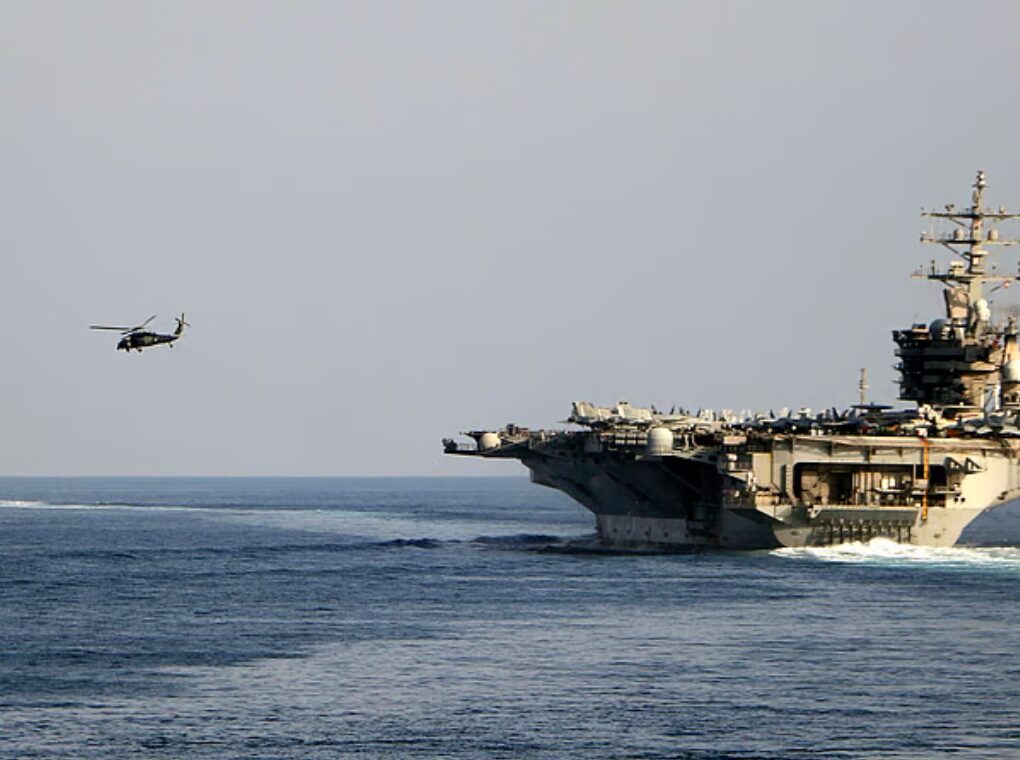
In response, the United States has repositioned substantial military assets across the Middle East. Carrier strike groups, advanced fighter aircraft, surveillance platforms, and aerial refueling tankers have been deployed.
Such movements represent serious pressure — the type of positioning that precedes either negotiation breakthroughs or potential military action.
Israel has reiterated its determination to prevent any Iranian nuclear breakout capability. With diplomacy stalled, contingency planning appears to be intensifying.
However, any military operation against Iran would be complex and high-risk. Iran possesses ballistic missile systems capable of targeting U.S. bases in the region. It maintains allied networks across multiple theaters. Many of its strategic facilities are hardened and underground.
Iran is not a peripheral or isolated state. It has both geographic depth and regional influence.
Technological Sovereignty and Strategic Resilience
One of the less visible yet strategically significant developments is technological integration.
China has reportedly encouraged Iran to reduce reliance on Western digital infrastructure. This includes encrypted communications platforms, cybersecurity systems, and navigation networks independent of GPS.
Strengthening digital sovereignty reduces vulnerability to cyber disruption and electronic warfare. Such quiet support enhances Iran’s resilience without overt military escalation.
In modern conflict, technological autonomy can be as decisive as conventional firepower.
Energy Interdependence and Global Stakes
China remains one of the primary purchasers of Iranian oil exports. These transactions sustain Iran’s economy under sanctions and provide China with a diversified energy supply.
If Iran were to fall or shift alliances, Beijing would lose a critical strategic energy partner. For China, maintaining Iranian stability is less about ideology and more about economic security and geopolitical balance.
Meanwhile, a full closure of the Strait of Hormuz would reverberate worldwide. Oil prices would surge dramatically. Europe, Asia, and the United States would all feel the impact.
This is not merely a regional dispute. It is a global pressure point.
The Risk of Escalation
Iran has pledged strong retaliation in the event of an attack. The United States has warned of consequences should American forces be targeted.
The presence of Russian and Chinese vessels in proximity adds another layer of complexity. Even unintended incidents — radar misinterpretations, navigational errors, or misjudged maneuvers — could escalate rapidly.
History demonstrates that major conflicts do not always begin through deliberate decisions. Sometimes they begin through miscalculation.
When multiple major powers operate within a narrow and militarized maritime space, the margin for error shrinks.
Beyond Nuclear Talks
The current tensions extend beyond nuclear negotiations or sanctions disputes.
They reflect a broader structural shift in global power.
For decades, the Middle East largely operated within a U.S.-dominated security framework. Today, China and Russia are increasingly active participants in shaping regional outcomes.
Iran has become a focal point in this transition. If Tehran withstands pressure with backing from Beijing and Moscow, it reinforces the emergence of a more multipolar order. If it falters, the regional balance could tilt sharply.
What Comes Next?
Whether diplomacy can pull the region back from confrontation remains uncertain.
What is clear is that the Strait of Hormuz has evolved from a vital shipping lane into a frontline of 21st-century geopolitics.
The decisions made in the coming weeks — by Tehran, Washington, Beijing, and Moscow — will not only determine regional stability but may also influence the broader architecture of global power.
In a waterway only a few dozen miles wide, the stakes could not be larger.
And the world cannot afford a miscalculation.