Recently, an adviser to Ukraine’s Ministry of Defence, Serhiy “Flash” Beskrestnov, made a statement that reverberated across Western security circles. He suggested that disconnecting Russian forces from Starlink had not delivered the expected strategic impact. According to him, Russian engineers had developed alternative communication solutions, ensuring uninterrupted internet access for troops even in remote sectors of the front.
Many analysts believe one of those alternatives is Russia’s newly tested stratospheric platform — Barrage-1.
A Stratospheric Alternative to Satellites
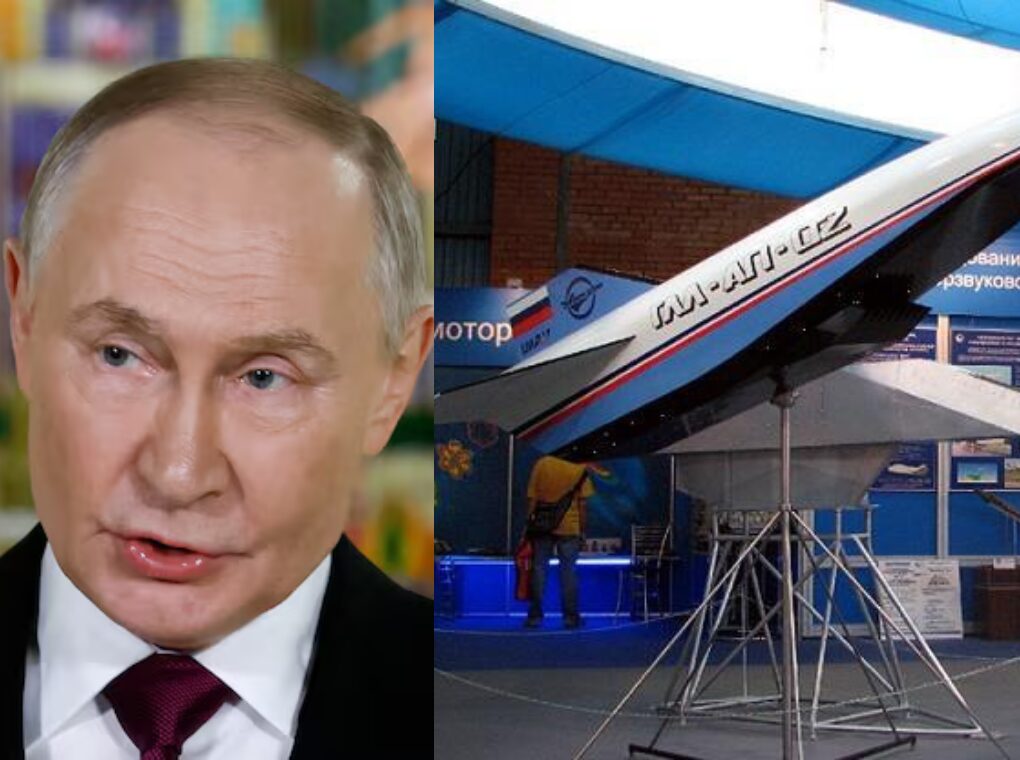
In February 2026, Russia announced the successful maiden flight of Barrage-1, a domestically developed unmanned stratospheric platform. The project was developed by Aerodrommash in collaboration with Bauman Moscow State Technical University, under the oversight of Russia’s advanced research initiatives.
Unlike satellite constellations orbiting hundreds of kilometers above Earth, Barrage-1 operates at approximately 20 kilometers altitude — deep in the stratosphere. At that height, it functions as what experts call a High-Altitude Pseudo Satellite, or HAPS.
It is not a spacecraft. It is not a conventional drone. It is a lighter-than-air aerostat designed to remain stationed over a designated area for extended periods.
This positioning offers a unique advantage: it combines the wide coverage of satellites with the lower latency of terrestrial infrastructure.
Why Latency Is a Strategic Asset
In modern warfare, communication speed can determine operational success.
Traditional geostationary satellites orbit at around 35,786 kilometers above Earth, resulting in signal delays of roughly 240 milliseconds. Low Earth orbit systems like Starlink, operated by SpaceX, reduce latency to around 3–4 milliseconds.
A platform operating at 20 kilometers, however, reduces signal delay to near real-time levels — theoretically as low as 0.3 milliseconds.
For civilian users, this may mean smoother internet browsing. For military operations, it enables:
>Real-time drone control
>Instantaneous transmission of battlefield video
>Rapid data sharing between command centers
>Coordinated swarm drone operations
In the era of AI-enabled warfare and network-centric operations, milliseconds matter.
How Barrage-1 Works
Barrage-1 is designed to carry payloads of up to 100 kilograms. This capacity allows it to host 5G Non-Terrestrial Network relay equipment, communications modules, surveillance sensors, and experimental systems.
One of its most notable technical features is a pneumatic ballasting system. By pumping air in and out of internal chambers, the platform adjusts buoyancy and shifts altitude to exploit favorable wind currents. Much like a sailboat navigating wind layers, Barrage-1 can maintain relative position without continuous propulsion.
This approach offers several advantages:
>Reduced energy consumption
>Potential multi-week endurance
>Lower operational costs
>Rapid deployment capability
Future variants are expected to integrate solar panels, potentially enabling near-continuous operation.
Crucially, the platform relies largely on domestically sourced materials and systems — aligning with Russia’s broader push for technological self-reliance amid sanctions and geopolitical tensions.
Cost Dynamics: Satellites vs. Stratospheric Platforms
Satellite constellations require significant investment. Manufacturing, launching, and maintaining thousands of satellites involves billions of dollars in infrastructure and logistics.
Stratospheric aerostats like Barrage-1 present a different economic model.
>They do not require rocket launches.
>They do not require orbital insertion.
>They can be deployed more quickly and replaced more affordably.
While a single aerostat cannot replicate the global coverage of a satellite network, dozens strategically deployed across key regions could provide resilient, regional connectivity at a fraction of the cost.
In contested environments, this cost-effectiveness becomes strategically significant.
Military Implications in the Drone Era
The growing use of unmanned aerial systems and AI-driven targeting has reshaped modern battlefields. Persistent connectivity is no longer optional — it is foundational.
Drones operating deep in contested territory depend on stable communication links. Interruptions can compromise missions or expose vulnerabilities.
If Barrage-1 can provide reliable 5G-based connectivity along operational fronts, it could serve as a critical backbone for:
>Long-range drone missions
>Real-time intelligence dissemination
>Coordinated electronic warfare operations
>Battlefield command and control systems
The broader implication is clear: communication infrastructure is now a core element of military power projection.
Vulnerabilities and Limitations
Despite its advantages, Barrage-1 is not invulnerable.
Operating at 20–30 kilometers places it within potential reach of advanced air defense systems. Unlike satellites in orbit, stratospheric platforms exist within the atmosphere and could theoretically be targeted.
However, the cost differential shifts the risk calculation. Replacing an aerostat is significantly less expensive than replacing a satellite. This makes stratospheric systems potentially more sustainable in prolonged conflict scenarios.
They are not immune — but they are economically resilient.
A Broader Global Trend
Russia’s Barrage-1 is part of a wider global interest in HAPS technology. Multiple countries are exploring stratospheric platforms for communications, surveillance, and environmental monitoring.
The appeal is clear:
>Reduced dependence on foreign satellite providers
>Enhanced resilience against anti-satellite threats
>Flexible deployment over remote or contested regions
>Lower barriers to entry compared to orbital systems
As space becomes increasingly congested and contested, the stratosphere offers a strategic middle ground.
Not a Replacement — but a Complement
It would be inaccurate to describe Barrage-1 as a direct replacement for Starlink. Satellite constellations provide global coverage and large-scale infrastructure. Stratospheric platforms provide regional persistence and tactical flexibility.
However, in specific operational contexts — particularly military theaters — platforms like Barrage-1 could serve as viable alternatives or supplements to satellite networks.
The objective is not necessarily to surpass global satellite systems, but to ensure sovereign resilience.
Strategic Significance
The reported comments by Serhiy Beskrestnov suggest that attempts to disrupt Russian connectivity may not have had the intended effect. Whether Barrage-1 is solely responsible or part of a layered communication architecture, its development highlights a critical reality:
Connectivity has become a strategic domain.
Modern conflict extends beyond land, sea, air, and space. It encompasses the electromagnetic spectrum and the digital networks that bind military systems together.
Barrage-1 represents more than a technological experiment. It signals a broader shift toward diversified, sovereign communication infrastructures designed to withstand geopolitical pressure.
As nations invest in AI-enabled systems, drone fleets, and network-centric operations, the demand for resilient, low-latency communication platforms will only grow.
<>The race is no longer solely about dominating space.
<>It is also about mastering the stratosphere — the layer just below it.