
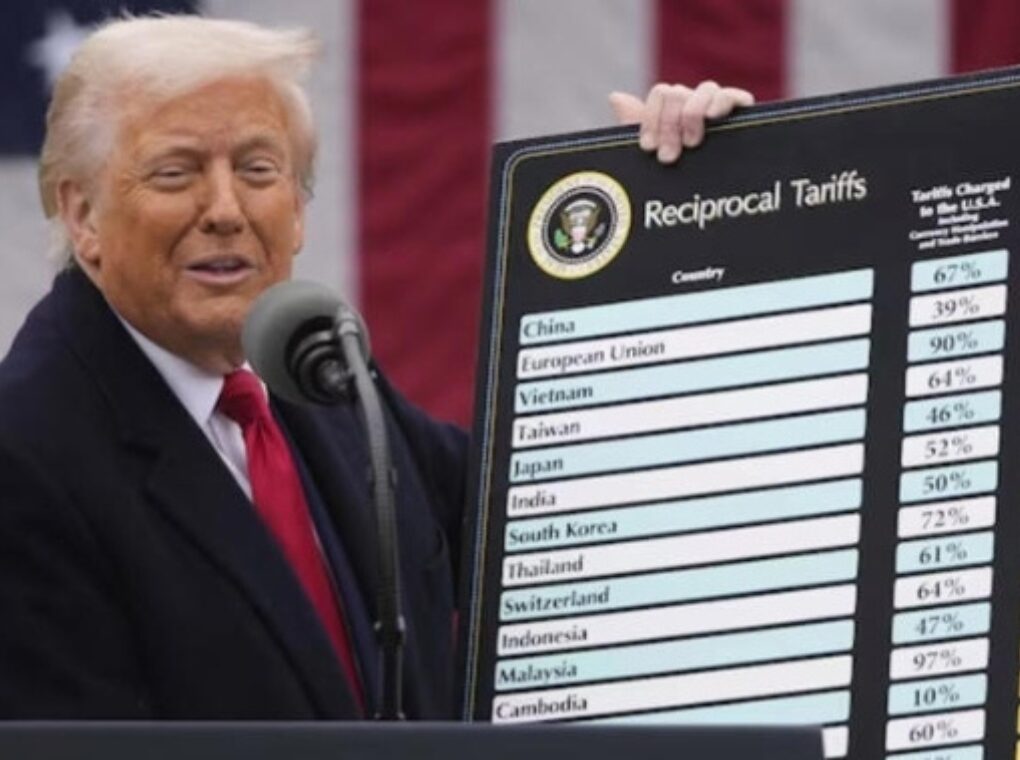
In a whirlwind of US domestic tariff drama, President Donald Trump’s swift response to a Supreme Court defeat has left global trade partners scratching their heads. With a new 10% global tariff imposed under Section 122 of the Trade Act of 1974, countries like India, the European Union (EU), and several Eastern nations could end up paying less than what was negotiated in recent deals. But at what cost? Experts warn that this policy flip-flop is eroding the value of US trade agreements and amplifying worldwide economic uncertainty.
Supreme Court Strikes Down Trump’s Sweeping Tariffs
The saga began on February 20, 2026, when the US Supreme Court delivered a 6-3 ruling invalidating Trump’s use of the International Emergency Economic Powers Act (IEEPA) to impose broad “reciprocal” tariffs. Chief Justice John Roberts, in the majority opinion, emphasized that IEEPA “does not authorize the President to impose tariffs,” marking a major setback for Trump’s aggressive trade agenda.
Trump, undeterred, fired back with defiance. In a White House press briefing, he lambasted the court, calling the decision “deeply disappointing” and even targeting his own nominees, Justices Neil Gorsuch and Amy Coney Barrett. “I’m ashamed of certain members of the court, absolutely ashamed for not having the courage to do what’s right for our country,” Trump said.
Hours later, via a Truth Social post, Trump announced the new 10% global tariff, effective “almost immediately.” This move, limited to 150 days without congressional approval, aims to replace the invalidated IEEPA duties. A White House official told CNBC that it could result in lower rates for some partners compared to prior agreements.
Impact on India, EU, and Eastern Countries: Lower Tariffs, But Questionable Deals
For India, which recently negotiated a tariff reduction from 50% to 25% (with a further drop to 18% pending), the shift to a flat 10% baseline could mean immediate savings on exports to the US. Similarly, the EU, locked into a 15% rate under its deal, might see a temporary dip to 10%. Eastern countries, like those in ongoing talks, could also benefit from reduced levies.
But here’s the catch: What’s the point of painstakingly negotiated US trade deals if a court ruling and executive order can upend them overnight? “This policy uncertainty is stretching too far, leaving the world in limbo,” as one international trade analyst put it, echoing sentiments from global business leaders.
Economists estimate the US could owe up to $175 billion in refunds for tariffs collected under IEEPA, complicating matters further. Dissenting Justice Brett Kavanaugh warned in his opinion that the refund process would be a “mess,” potentially disrupting Treasury operations and existing pacts with nations like China, Japan, and the UK.
China, facing a combined 35% rate under the new setup (down from higher IEEPA layers), exemplifies the chaos. Trump insists tariffs strengthen US manufacturing and national security, but critics argue they burden American consumers and businesses, with a Federal Reserve Bank of New York study showing 90% of the costs passed onto US entities in 2025.
Broader Implications: Trade Policy Uncertainty Rocks Global Economy
Trump’s “Game Two” strategy—leveraging alternative laws like Sections 232 and 301—signals more volatility ahead. Treasury Secretary Scott Bessent assured the Economic Club of Dallas that tariff revenue would remain “virtually unchanged” in 2026, but the 150-day limit on the new global tariff adds pressure for congressional buy-in.
For allies like India and the EU, this raises alarms. “The tariffs at issue here may or may not be wise policy,” Kavanaugh noted in dissent, but the ruling limits presidential overreach, forcing reliance on Congress for long-term changes.
Small businesses, from US furniture retailers to global exporters, face existential threats. The US trade deficit stood at $901 billion in 2025, barely moved by prior tariffs, per CNBC reports.
What’s Next for US Trade Deals?
As Trump prepares for his State of the Union address, the world watches. Will Congress extend the tariffs? Or will this lead to renegotiations? For India, the EU, and Eastern partners, the message is clear: US trade deals, once hailed as stable frameworks, now seem fragile amid judicial and executive tug-of-war.
This uncertainty could deter investments and slow global recovery. As Trump declared, “We have the right to do pretty much what we want to do,” but the Supreme Court’s rebuke reminds us that even presidents aren’t above the law.