
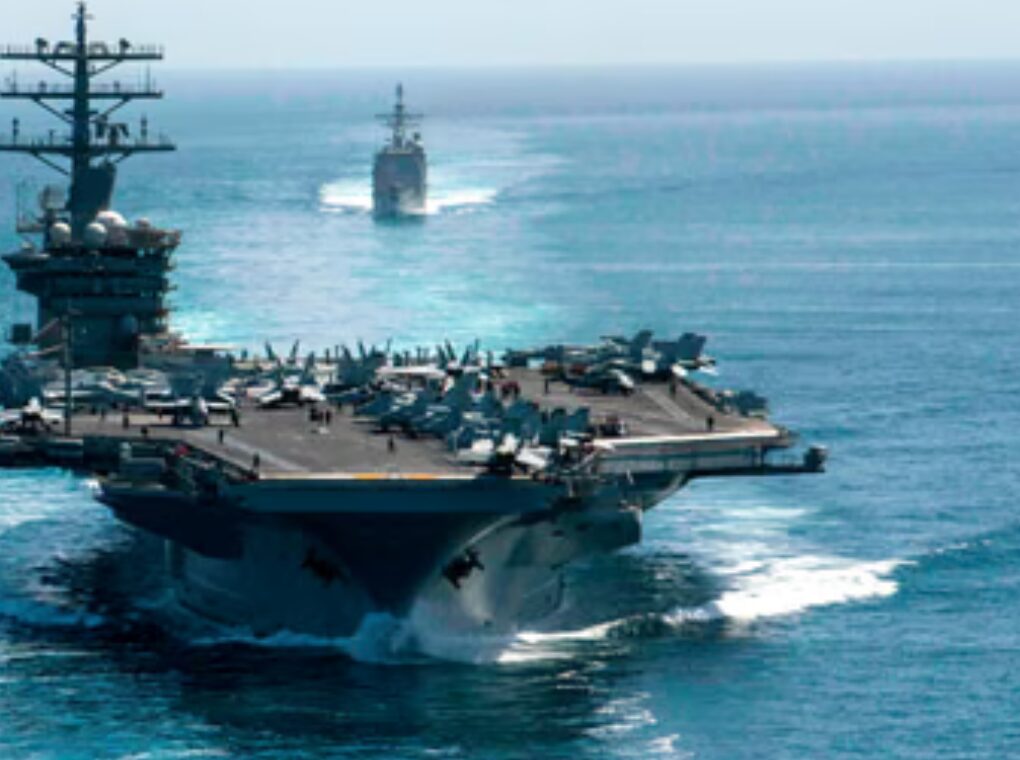
As tensions simmer between Washington and Tehran, the United States Navy’s most advanced aircraft carrier, the USS Gerald R. Ford, is facing an unexpected operational challenge — a persistent breakdown of its onboard sewage system.
The $13-billion warship, commissioned in 2017 as the lead vessel of a new generation of carriers, has reportedly experienced repeated failures in its vacuum-based toilet system during extended deployment. The issue has affected daily life for thousands of sailors at a time when the vessel is operating in strategically sensitive waters.
Hundreds of Breakdowns Reported
The USS Gerald R. Ford carries a crew of approximately 4,500 to 5,000 personnel when fully deployed. It is equipped with roughly 600 to 650 toilets distributed across multiple zones throughout the ship. However, recent reports indicate that large numbers of those toilets have been rendered temporarily unusable due to system failures.
In one period earlier this year, more than 200 breakdown incidents were recorded in just a few days. Because the carrier uses a vacuum-based waste management system, a single valve malfunction can disable an entire section’s restroom facilities. Sailors have reportedly faced extended wait times to access operational toilets, placing additional stress on daily routines.
The problem is not linked to external damage or combat activity but to internal mechanical vulnerabilities within the ship’s Vacuum Collection, Holding, and Transfer (VCHT) system. Designed to conserve water and reduce weight, the vacuum system relies on narrow piping and pressure-sensitive components. Under heavy and continuous usage, these systems appear prone to clogging and cascading failures.
Extended Deployment, Limited Maintenance
The sewage issues have surfaced during one of the carrier’s longest continuous deployments in recent years. After supporting operations in the Caribbean linked to U.S. actions concerning Venezuela, the vessel shifted focus toward West Asia amid heightened tensions with Iran.
Typically, aircraft carriers undergo regular maintenance cycles to address wear and tear. However, shifting operational priorities reportedly reduced the available window for extensive dockyard repairs. Certain fixes — including specialized chemical flushes to clear mineral buildup or stubborn blockages — require shipyard facilities and cannot be performed while at sea.
Hull technicians and engineering crews have reportedly worked extended shifts to manage the ongoing issues, attempting to keep as many systems functional as possible during deployment.
Strategic Backdrop: Growing US Military Presence
The plumbing setbacks come against a backdrop of expanded U.S. naval positioning near Iran. American destroyers have been deployed near the Strait of Hormuz, a critical global oil transit chokepoint. Additional naval assets operate from Bahrain, the Red Sea, and the broader Indian Ocean region, including proximity to strategic bases such as Diego Garcia.
Military analysts have described the scale of current deployments as one of the most significant regional buildups in years, drawing comparisons to force postures seen before the 2003 Iraq War. President Donald Trump has maintained firm rhetoric toward Iran’s leadership, including Supreme Leader Ali Khamenei, amid disputes over regional security and maritime activity.
While U.S. officials have not indicated that the sewage system issues have impaired combat readiness, the episode has attracted attention internationally, with some commentators framing it as an embarrassing setback during a period of heightened geopolitical tension.
Morale and Operational Readiness
Military experts emphasize that a carrier’s offensive capabilities — including flight operations, missile defense systems, and command functions — remain independent of plumbing systems. However, sustained living-condition challenges can influence morale during extended deployments.
Aircraft carriers function as floating cities, and basic sanitation is essential to crew health and endurance. Prolonged system instability increases maintenance strain and adds to crew fatigue, particularly when deployment schedules limit rest and shore leave.
The USS Gerald R. Ford was designed to represent a technological leap in naval warfare, incorporating electromagnetic aircraft launch systems and advanced radar capabilities. Yet the recent issues underscore the complexity of integrating next-generation systems into long-term operational environments.
Broader Implications
Beyond immediate maintenance concerns, the situation highlights broader challenges in sustaining high-tempo naval operations. Extended deployments, shifting strategic demands, and evolving geopolitical pressures place considerable strain on both hardware and personnel.
The United States continues to maintain a powerful deterrent presence in the region, with naval assets positioned to secure maritime routes and respond to potential escalation. At the same time, global markets are closely watching developments in the Gulf, where any disruption could impact energy supplies and international trade.
For now, the USS Gerald R. Ford remains operational and active. Engineering crews continue to manage the sewage system setbacks while the carrier fulfills its assigned mission.
The episode serves as a reminder that even the most advanced military platforms depend on reliable infrastructure behind the scenes. In modern naval operations, strategic power is not measured solely by aircraft and missiles — but also by the resilience of the systems that support thousands of personnel at sea.