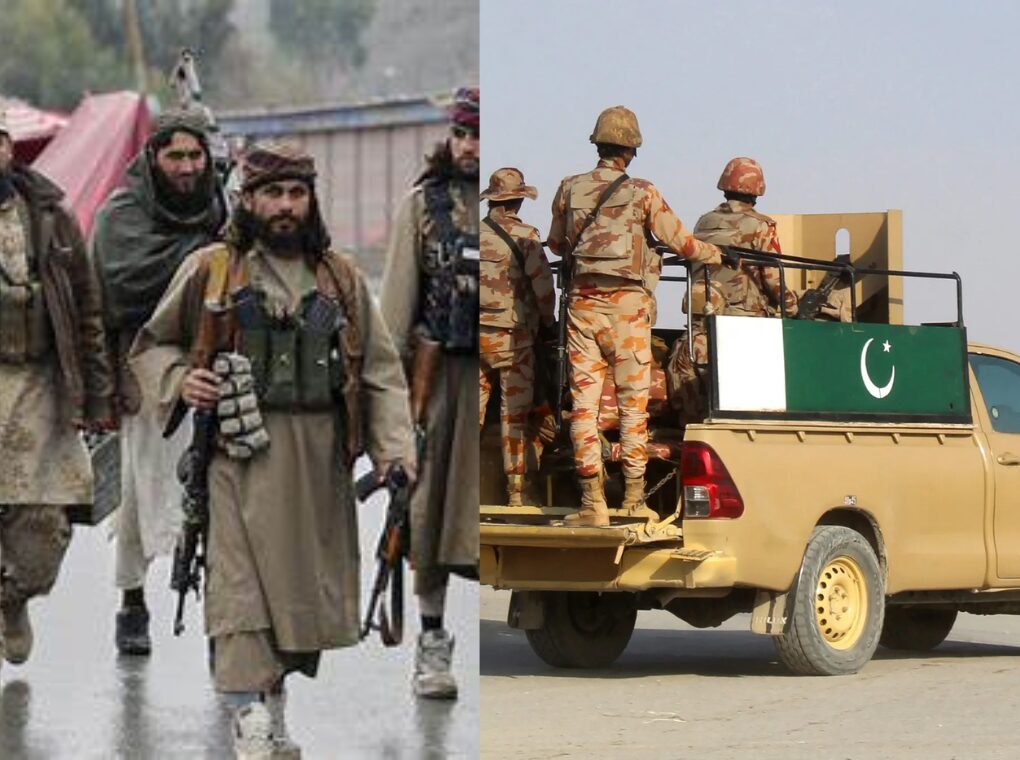
South Asia is witnessing one of its most serious security crises in years after Pakistan’s Defense Minister Khawaja Asif declared that the country is now in an “open war” with Afghanistan’s Taliban-led government. The statement follows days of intense cross-border airstrikes, artillery exchanges, and retaliatory operations that have sharply escalated tensions between the two neighbors.
Explosions were reported in Kabul and other eastern Afghan cities after Pakistani fighter jets targeted what Islamabad described as militant infrastructure. Afghan authorities responded with counter-operations along the border, marking the most severe confrontation between the two countries since the Taliban returned to power in 2021.
Although no formal declaration of war has been issued by Pakistan’s parliament, the rhetoric and military actions signal a dangerous new phase in an already volatile region.
Border Disputes and Militant Allegations
At the heart of the crisis lies the long-disputed Durand Line — a 2,600-kilometer frontier drawn during British colonial rule that Afghanistan has historically refused to formally recognize as an international boundary.
Pakistan accuses the Afghan Taliban of providing sanctuary to the Tehrik-i-Taliban Pakistan (TTP), a militant group responsible for a surge in deadly attacks inside Pakistan in recent months. Islamabad maintains that cross-border safe havens have enabled assaults in areas such as Islamabad, Bajaur, and Bannu.
In response, the Pakistan Air Force conducted airstrikes in Afghanistan’s eastern provinces, including Nangarhar, Paktika, and Khost, targeting what it described as TTP and Islamic State-Khorasan (ISIS-K) positions. Afghan officials condemned the strikes, reporting civilian casualties and labeling the actions as violations of sovereignty.
The Taliban government denies harboring TTP militants and insists that Pakistan’s security challenges are domestic matters.
The Bagram Airbase Dimension
Complicating the situation are geopolitical dynamics involving the United States. In 2025, U.S. President Donald Trump publicly expressed interest in regaining access to Bagram Airbase, citing its strategic location near China’s western region.
Afghanistan’s leadership firmly rejected the proposal, stating that Afghan territory would not be ceded under any circumstances. While Washington has not announced formal military plans regarding the base, analysts suggest that renewed U.S. interest in Bagram has added another layer of complexity to regional calculations.
Some observers argue that instability in Afghanistan could shift strategic leverage, though there is no official confirmation linking Pakistan’s military actions to external pressure regarding the airbase.
Regional Implications and Proxy Concerns
Pakistan has historically maintained security ties with the United States, Saudi Arabia, and China. However, the current crisis is unfolding amid shifting alliances and regional recalibrations.
Beijing, a major investor in Pakistan through the China-Pakistan Economic Corridor (CPEC), has emphasized the need for stability. China has previously expressed concern over militant groups operating near the Pakistan-Afghanistan border that could threaten Chinese interests.
At the same time, Pakistan’s relations with Iran have experienced periodic strain due to cross-border militant activity. Recent security incidents along the Iran-Pakistan border have heightened concerns that broader instability could draw additional regional actors into the conflict.
Humanitarian Impact
The escalation has already taken a toll on civilians. Thousands of residents along the border have reportedly fled their homes amid fears of further airstrikes and artillery exchanges. Aid organizations warn that Afghanistan, already facing severe economic and humanitarian challenges, may struggle to absorb additional displacement.
Pakistan, grappling with its own economic pressures, also faces mounting domestic concerns over security and stability.
Broader Geopolitical Context
The crisis underscores ongoing contradictions within the Muslim-majority world, where regional powers often find themselves in direct confrontation despite shared religious and cultural ties. Military operations by Saudi Arabia in Yemen and Turkey in Syria have previously illustrated how geopolitical interests frequently override calls for broader unity.
While discussions about collective security arrangements among certain Muslim-majority states have circulated in recent years, current realities reflect fragmented regional priorities rather than cohesive blocs.
What Lies Ahead?
Diplomatic channels remain open, and regional mediators such as Qatar have previously facilitated temporary ceasefires between Islamabad and Kabul. However, the intensity of the latest exchanges raises concerns about prolonged confrontation.
Security analysts outline three possible scenarios:
A limited conflict marked by periodic cross-border strikes.
Escalation drawing in additional regional stakeholders.
Renewed diplomatic engagement leading to de-escalation.
Given South Asia’s strategic importance and the presence of nuclear-armed states in the broader region, international observers are closely monitoring developments.
For now, tensions remain high, and the path forward is uncertain. What is clear is that continued escalation would further destabilize a region already navigating complex geopolitical rivalries and humanitarian challenges.