On Sunday, Pakistan’s President, Asif Ali Zardari approved an emergency and governor’s rule in Khyber Pakhtunkhwa (KP). The move suspends the elected government of Imran Khan’s Pakistan Tehreek-e-Insaf (PTI). Islamabad invoked Articles 232 and 234 of the Constitution to do it. The Khyber Pakhtunkhwa emergency tears up yet another page of Pakistan’s democratic script.
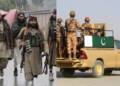
Governor Faisal Karim Kundi now runs the province with an 11-member technocratic council. Troops patrol the streets, and containers choke Peshawar’s roads. Mobile internet has slowed or stopped in parts of the province. PTI leaders say the authorities have detained Chief Minister Sohail Afridi. Islamabad dresses all this up as constitutional housekeeping. But it should be called what it is; a coup by proxy.
Why did Pakistan remove the KP government?
The official answer is terrorism. The federal cabinet accused the provincial government of “deliberate disengagement” from the fight against militants. Information Minister Attaullah Tarar went further and accused the PTI of colluding with terrorists. Afridi had refused to allow fresh military operations in his province. His government also demanded talks with Kabul and a voice in Afghan policy.
The political answer matters more. The PTI planned a long march on Islamabad to demand Khan’s release. Federal ministers warned for weeks that governor’s rule would follow unless the party backed down. The party refused, and the hammer fell.
Even Pakistani commentators reject the security alibi. Writing in Dawn, Fasi Zaka argues that the emergency concerns May 9, not militancy. On that day in 2023, PTI supporters attacked military installations after Khan’s arrest. The army never forgave that humiliation. Zaka also asks why Balochistan, equally violent, escapes similar treatment.
What role did the military play?
Follow the paperwork, and a uniform appears on every page. The government deployed troops under Article 245 of the Constitution. The army deployment order lets the governor fix troop numbers in consultation with General Headquarters. The Military Operations Directorate will coordinate the arrangements. Meanwhile, Prime Minister Shehbaz Sharif used the same cabinet meeting to praise Field Marshal Asim Munir. Such flattery on the day of a constitutional coup tells its own story.
Munir never needed to stage a coup. Parliament handed him one in instalments. In November 2025, the 27th Amendment made him Chief of Defence Forces, commanding all three services. It also granted him lifelong immunity from criminal prosecution. The National Assembly passed it by 234 votes to four. Munir collected his field marshal’s baton after India’s Operation Sindoor humbled his forces in May 2025. Now he has collected a province.
Is Pakistan’s civilian government a farce?
Yes, and many Pakistanis now say so openly. Shehbaz Sharif heads a coalition that the establishment assembled after the disputed 2024 election. Zardari signs what Rawalpindi drafts. Parliament rubber-stamps what the cabinet proposes. The same amendment curbed the Supreme Court and created a new Federal Constitutional Court. The generals now hold every lever that matters.
Even Maulana Fazl-ur-Rehman, no friend of the PTI, called the move an attack on democracy. Yet his protest changes nothing. In Pakistan, civilians debate while the army decides.
Imran Khan deserves no Indian sympathy either. The army backed his rise to power in 2018. It discarded him in 2022 when he grew defiant. Khan also hailed the Taliban’s takeover of Kabul in 2021. The real contest pits an army-made politician against the army that made him. Democracy is not at stake here. Control is.
What does the Khyber Pakhtunkhwa emergency mean for Pakistan?
For Pakistan, the emergency reopens three old wounds.
First, it pits a Punjabi-dominated army against the Pashtun heartland. KP voters gave the PTI a landslide in 2024, and Islamabad has overturned it by decree. Afridi has even likened the Centre’s conduct to the events that cost Pakistan its eastern wing in 1971.
Second, it hands militants a fresh grievance. The banned Tehreek-e-Taliban Pakistan has already condemned governor’s rule. Meanwhile, the army keeps clashing with the Afghan Taliban across the Durand Line.
Third, it hollows out the federal bargain. The 18th Amendment of 2010 promised provinces real autonomy. One cabinet meeting has now sidelined an elected government. Investors and the IMF, which has yet to release a $1.2 billion tranche, will take note. A weaker, angrier Pakistan rarely makes a quieter neighbour.
What happens next?
Article 234 caps governor’s rule at six months. History offers little comfort, though. KP has endured governor’s rule three times before, in 1975, 1994 and 1999. After 1999, military-appointed governors ran the province until 2002. The script never changes. Only the generals’ ranks grow grander.
The PTI has vowed to fight the decision in the courts and on the streets. Rawalpindi will likely answer with more arrests and more containers. Either way, the field marshal sets the terms.