
Germany’s political landscape was jolted this week after a Cologne administrative court suspended the designation of the Alternative for Germany (AfD) as a “confirmed right-wing extremist” organization, marking a significant legal and political development ahead of crucial regional elections.
The ruling temporarily blocks Germany’s domestic intelligence agency, the Federal Office for the Protection of the Constitution (BfV), from enforcing its May 2025 decision to classify AfD as an extremist group. The injunction will remain in place pending a final judicial review.
Court Questions Broad Extremist Classification
The Cologne court stated that controversial or radical remarks made by individual AfD members on issues such as migration and religion were not sufficient to characterize the entire party as a confirmed extremist organization.
The decision represents a procedural setback for the BfV, which had escalated its classification of AfD from a “suspected extremist group” to a “confirmed” one last year. Under German law, such a designation grants intelligence services expanded surveillance powers and can significantly influence public perception of a political party.
Legal analysts note that while the ruling is temporary, it raises questions about how far intelligence agencies can go in labeling democratically elected political parties.
AfD Calls Ruling a “Major Victory”
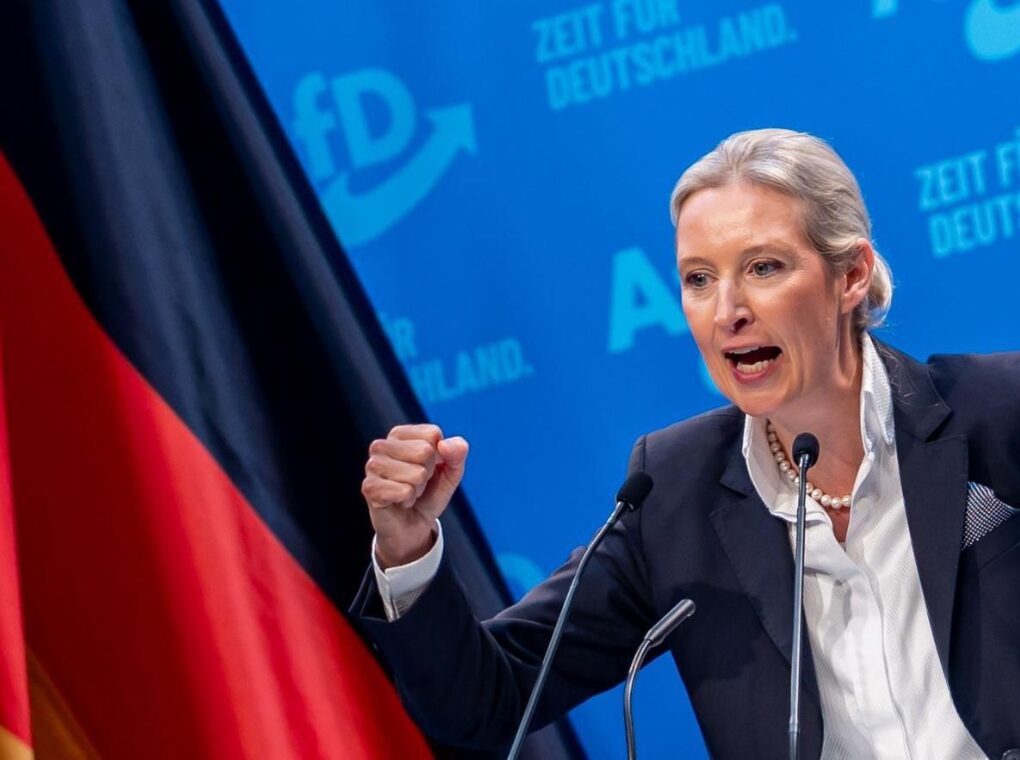
AfD co-leader Alice Weidel welcomed the court’s decision, calling it a “major victory” for both the party and democratic competition in Germany.
“This is a win for political fairness and the rule of law,” Weidel said, arguing that voters — not intelligence agencies — should determine a party’s political future.
AfD’s legal counsel suggested that the suspension significantly weakens efforts by rival parties to push for a complete ban of the party. In Germany, banning a political party requires a ruling from the Federal Constitutional Court and must meet strict constitutional criteria.
Government Urges Patience
German Interior Minister Alexander Dobrindt, a member of the Christian Democrats, responded cautiously, emphasizing that the legal process is ongoing and that a final decision has not yet been made.
He reiterated that the government remains committed to protecting Germany’s constitutional order but acknowledged the importance of judicial oversight in such politically sensitive matters.
Meanwhile, critics from center-left and left-wing parties maintain that AfD’s rhetoric continues to raise constitutional concerns and argue that further examination by Germany’s highest court may still be warranted.
Political Impact Before Regional Elections
The timing of the ruling is particularly significant. Germany is heading into regional elections in Baden-Württemberg and Rhineland-Palatinate in March, and recent national polls show AfD emerging as one of the strongest political forces in the country.
In some surveys, the party has rivaled Chancellor Friedrich Merz and his center-right Christian Democratic bloc, signaling a shifting political dynamic within Europe’s largest economy.
Political observers suggest the court decision could energize AfD supporters, who have long argued that the extremist label was politically motivated and intended to curb the party’s electoral rise.
Broader Debate on Democracy and Security
Germany’s post-war constitutional framework was designed to prevent extremist movements from threatening democratic stability. The BfV plays a central role in monitoring groups considered hostile to the constitutional order.
However, the suspension of AfD’s designation highlights a broader debate: how to balance democratic freedoms with institutional safeguards.
Legal experts point out that courts serve as a crucial check in ensuring intelligence agencies operate within constitutional limits. At the same time, Germany’s history makes questions surrounding extremism particularly sensitive.
The final ruling on AfD’s classification could set an important legal precedent regarding the threshold required to label a major political party as extremist.
What Happens Next?
The injunction remains temporary, and further hearings are expected. Until a final decision is reached, AfD will not be treated as a “confirmed right-wing extremist” organization under German law.
For now, the ruling reshapes the political narrative just weeks before key elections. Whether the decision will translate into increased electoral support for AfD remains to be seen.
What is clear, however, is that Germany’s debate over democracy, constitutional limits, and political pluralism is far from over — and the outcome of this case could have lasting implications for the country’s political future.