
The strategically vital Strait of Hormuz has reportedly been closed to vessel traffic after Iran’s Islamic Revolutionary Guard Corps (IRGC) Navy warned ships over radio communications not to cross the waterway. The development comes amid escalating military confrontation between Iran, the United States, and Israel.
While an EU naval mission official confirmed that the shipping lane appears to be shut, Iranian authorities have not officially acknowledged issuing a formal closure order. However, the warning alone has sent shockwaves across global energy markets and raised fears of a broader regional war.
Why the Strait of Hormuz Matters
The Strait of Hormuz is the world’s most critical oil transit chokepoint. It connects the Persian Gulf with the Gulf of Oman and the Arabian Sea, serving as the main export route for major oil producers including Saudi Arabia, Iran, Iraq, Kuwait, Qatar, and the United Arab Emirates.
According to the U.S. Energy Information Administration, nearly 20% of global oil consumption—roughly 20 million barrels per day—passes through this narrow waterway. A similar share of global LNG exports, particularly from Qatar, also moves through the strait, with over 80% of shipments destined for Asian markets.
At its narrowest point, the strait is only about 33 kilometers wide, making it highly vulnerable to disruption through mines, missile strikes, or naval blockades.
What Triggered the Escalation?
The reported closure follows large-scale U.S. and Israeli airstrikes on Iranian nuclear facilities, including Fordow, Natanz, and Isfahan. U.S. President Donald Trump described the strikes as necessary to eliminate a security threat and prevent Iran from acquiring nuclear weapons.
Iran condemned the attacks as “illegal and unprovoked” and vowed retaliation. Missiles were reportedly launched toward Israeli territory and Gulf states hosting U.S. bases. A senior IRGC commander claimed Iran had used only “limited capability” so far and warned of more severe responses ahead.
Iran’s Supreme Leader, Ali Khamenei, is expected to address the nation as Tehran weighs its next move.
Iran’s Strategic Leverage in the Strait
Iran holds a dominant geographical position along the northern coast of the Strait of Hormuz. It controls key islands including Qeshm, Hormuz, and Larak, as well as the disputed Greater Tunb, Lesser Tunb, and Abu Musa islands.
The Islamic Revolutionary Guard Corps Navy oversees operations in the Gulf and has a long history of confrontations with Western vessels. Iran maintains naval facilities in Bandar Abbas, Jask, and Kish Island, equipped with fast attack craft, anti-ship missiles, submarines, and thousands of naval mines.
Military analysts believe Iran could deploy mines or anti-ship missiles quickly, effectively halting commercial traffic. Even a limited disruption could spike oil prices within hours.
Potential Global Economic Fallout
A sustained closure of the Strait of Hormuz would have immediate and severe economic consequences:
Oil price surge: Crude prices could skyrocket past previous crisis levels.
Inflation spike: Energy-dependent economies would face higher transportation and production costs.
Asia’s hardest hit: India, China, Japan, and South Korea rely heavily on Gulf energy imports.
European vulnerability: Europe, already grappling with energy instability from the Russia–Ukraine conflict, would face renewed supply stress.
Saudi Arabia and the UAE possess alternative pipeline routes, but they can only reroute a limited portion of exports.
U.S. Military Response
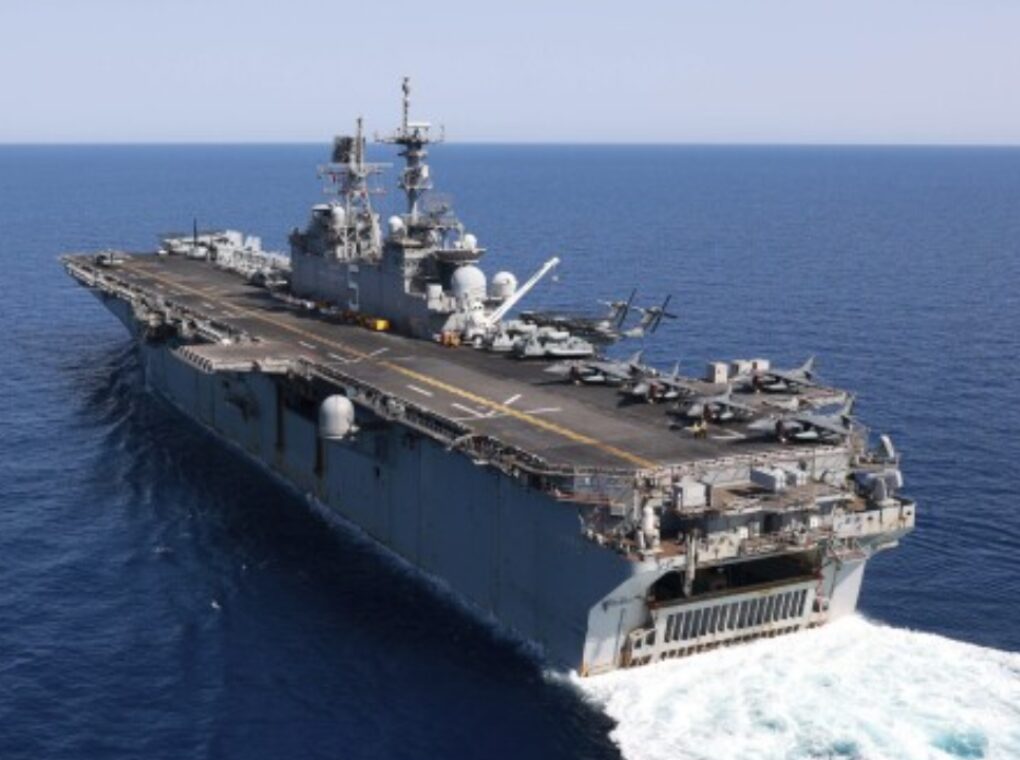
The United States has significantly increased naval deployment in the region. Carrier strike groups, including the USS Harry S. Truman and USS Carl Vinson, are operating in nearby waters. The U.S. Fifth Fleet, headquartered in Bahrain, remains on high alert.
Approximately 40,000 U.S. troops are stationed across the Middle East, including bases in Iraq, Qatar, Bahrain, Kuwait, and Saudi Arabia—many within range of Iranian ballistic missiles.
Washington has warned that any Iranian attack on U.S. personnel or infrastructure would result in a “decisive and overwhelming” response.
What Happens Next?
Iran faces two primary strategic options:
1. Direct Military Retaliation
Iran could target U.S. bases or Israeli assets directly, risking full-scale war with Washington.
2. Economic Warfare via Hormuz
By restricting traffic through the Strait of Hormuz, Iran can exert global economic pressure without immediate confrontation.
Historically, Tehran has threatened to close during periods of high tension but has rarely carried it out, aware that such action could provoke international military intervention.
However, analysts argue that the current situation differs significantly. The recent strikes were not symbolic—they targeted core elements of Iran’s nuclear infrastructure. If Tehran perceives the attacks as existential, it may escalate further.
The Broader Geopolitical Stakes
The unfolding crisis has implications far beyond the Middle East. Major energy consumers like India, China, and Japan are likely to push for rapid diplomatic de-escalation. Russia and China may offer political backing to Iran, but are unlikely to enter direct military confrontation.
If the Strait remains closed for an extended period, global markets could enter a period of severe volatility, potentially triggering a broader economic slowdown.
For now, the world watches closely. The Strait of Hormuz—through which one-fifth of global oil flows—has become the epicenter of a rapidly expanding geopolitical storm.