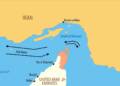
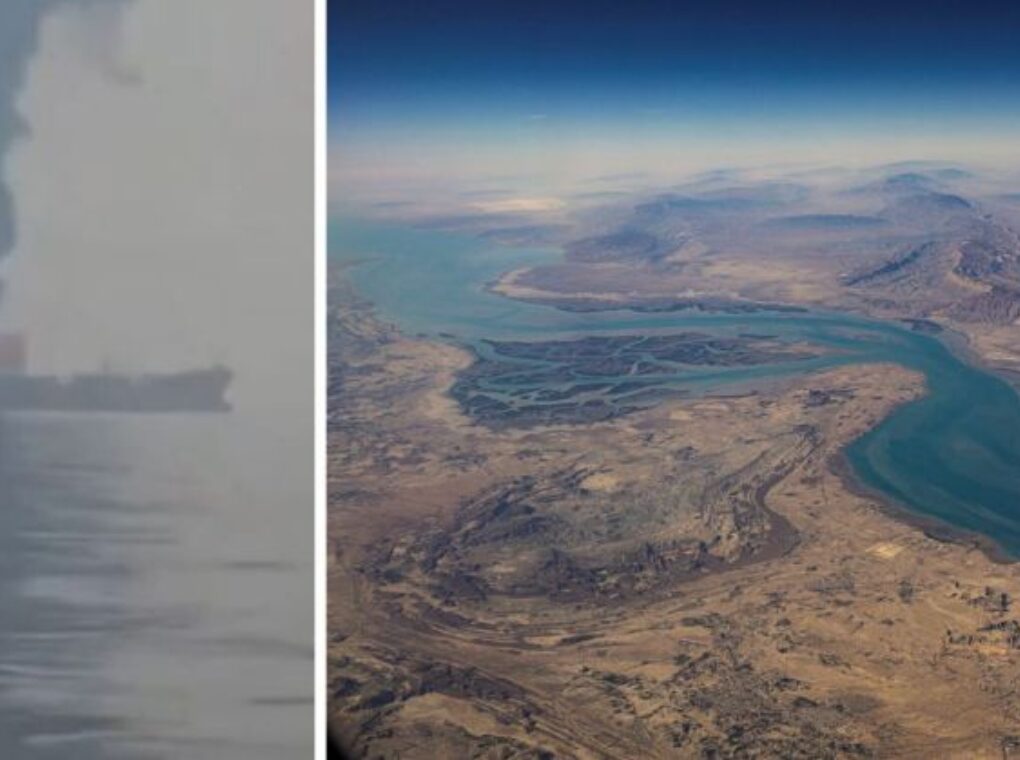
Global oil markets were jolted on Sunday after ship traffic through the Strait of Hormuz plummeted by nearly 70% following joint US and Israeli military strikes on Tehran and an Iranian drone attack on an oil tanker off the coast of Oman.
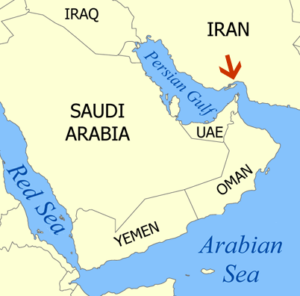
According to ship-tracking platform MarineTraffic, vessel movement through the narrow 33-kilometre corridor — which connects the Persian Gulf to the Gulf of Oman — fell sharply late Saturday. The dramatic slowdown has raised fears of supply disruptions in one of the world’s most critical energy chokepoints.
Tanker Hit Off Oman’s Coast
On Sunday afternoon, a Palau-flagged oil tanker, identified as the Skylight, was struck by an Iranian drone approximately five nautical miles north of Khasab Port near Oman’s Musandam Peninsula. Oman’s Maritime Security Centre confirmed that at least four crew members were injured in the attack. The vessel was carrying a crew of 20, including 15 Indian nationals and five Iranians.
The strike marked a significant escalation in maritime tensions, particularly as Oman had recently played a mediating role between Tehran and Western powers.
In a separate incident, facilities at the Port of Duqm in Oman were also reportedly targeted by two drones, further heightening regional security concerns.
IRGC Warning, But No Formal Closure
Iran’s Islamic Revolutionary Guard Corps (IRGC) reportedly issued VHF radio warnings to ships transiting the Strait, declaring that no vessel would be allowed to cross. However, Tehran has stopped short of formally announcing a complete closure of the passage.
Despite the absence of an official shutdown, several major shipping firms have already suspended transits through the strait or rerouted vessels amid safety concerns. German shipping giant Hapag-Lloyd confirmed it has halted all vessel movements through the waterway.
Some tankers were seen altering course, with at least one vessel reportedly making a U-turn near the Bab el-Mandeb Strait due to fears of potential Houthi attacks.
Industry experts note that while some ships continue to transit the area, it remains unclear whether certain vessels are sailing with their Automatic Identification Systems (AIS) switched off to avoid detection.
Oil Prices Spike, $100 in Sight?
Oil markets reacted swiftly to the developments. Brent crude surged by 10% in over-the-counter trading on Sunday, reaching around $80 per barrel. Analysts warned that if disruptions persist or escalate, prices could climb to $100 per barrel in the coming weeks.
The global benchmark had already been trending higher, closing at $73 on Friday — its highest level since July — amid mounting speculation about possible strikes in the region.
The Strait of Hormuz handles roughly 30% of the world’s traded oil and petroleum products daily, including exports from Saudi Arabia, Iraq, Kuwait, the United Arab Emirates, and Qatar. Liquefied natural gas shipments, particularly from Qatar, are also heavily dependent on the route.
“Saudi Arabia, Iraq, the UAE, and Qatar are the most exposed, as the majority of their seaborne crude and LNG exports pass through Hormuz,” a senior shipping risk analyst told international media.
OPEC+ Moves to Stabilise Supply
In response to mounting volatility, OPEC+ agreed to raise output by 206,000 barrels per day in an effort to stabilise markets. Sources indicated that Saudi Arabia and the UAE have already increased exports to reassure buyers and prevent panic-driven price spikes.
However, analysts caution that production increases may not immediately offset disruptions if shipping through Hormuz remains constrained.
Can Iran Sustain a Blockade?
While Tehran has repeatedly threatened to close the Strait since the 1979 Islamic Revolution, it has never formally attempted a full shutdown. Experts argue that a prolonged closure would likely provoke a significant naval response from the United States, potentially exposing Iranian ports and infrastructure to retaliation.
Moreover, Iran itself exports approximately 1.65 million barrels per day of crude oil and gas condensate, much of it destined for China. A sustained blockade would therefore also damage Iran’s own economic interests and risk diplomatic pressure from Beijing.
Still, even a partial disruption — or the perception of risk — is enough to unsettle already fragile global energy markets.
Broader Economic Impact
A prolonged crisis in the Strait of Hormuz could trigger ripple effects across global supply chains, increase shipping insurance premiums, and exacerbate inflationary pressures worldwide. Energy-importing nations in Asia and Europe are particularly vulnerable to price shocks.
With tensions escalating rapidly and no clear diplomatic breakthrough in sight, markets are bracing for further volatility. The coming days will likely determine whether the Strait remains a pressured but open corridor — or becomes the epicentre of a broader regional conflict with global economic consequences.