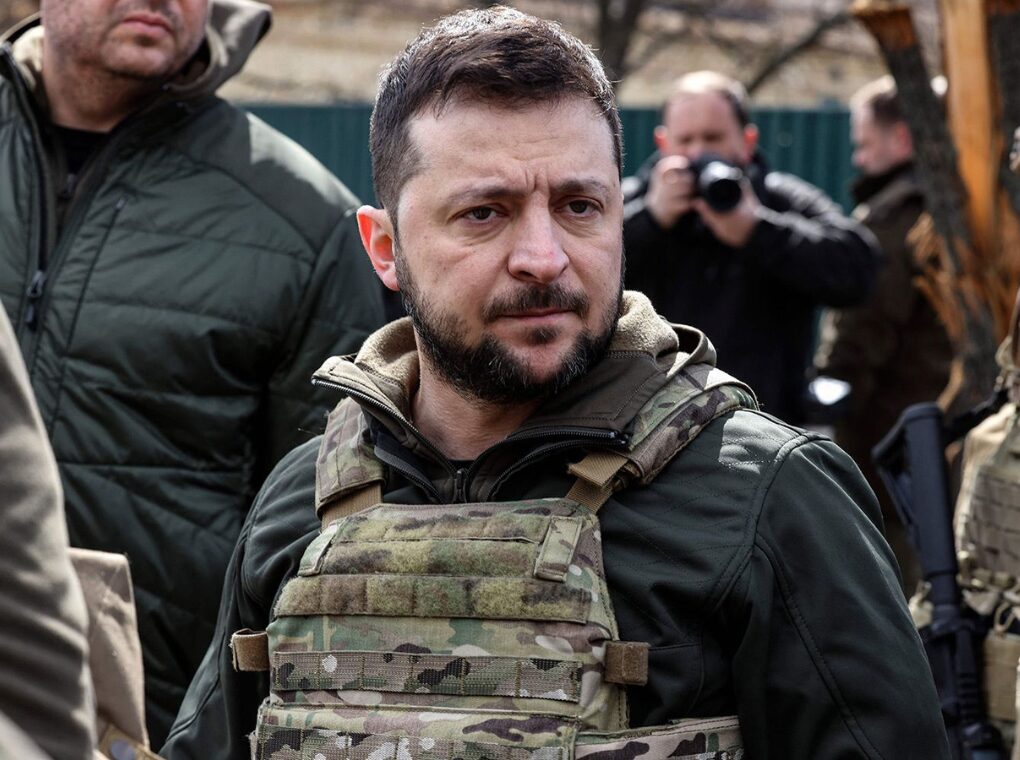
Volodymyr Zelenskyy announced that Ukraine will deploy military specialists to the Middle East to assist regional partners in countering Iranian drone and missile threats, a move that signals Kyiv’s growing role in global security cooperation beyond the battlefield of its war with Russia. The announcement comes amid escalating tensions in the Middle East, where Iranian drone and missile attacks have increasingly targeted Gulf states and U.S. partners.
The Ukrainian leader said the decision was made following consultations with allies and regional leaders. According to Zelenskyy, Ukrainian experts have gained extensive operational experience in countering Iranian-made drones during the ongoing war between Ukraine and Russia, making them well positioned to assist countries currently facing similar threats.
In a statement posted on the social media platform X, Zelenskyy said he had instructed key Ukrainian institutions to prepare assistance plans. These include the Ministry of Foreign Affairs, the Ministry of Defense, intelligence agencies, and the Secretary of Ukraine’s National Security and Defense Council. The goal, he emphasized, is to support partner nations without weakening Ukraine’s own defense capabilities.
“We are ready to help protect lives, defend civilians, and support real efforts to stabilize the situation,” Zelenskyy said. He added that Ukraine’s assistance would also focus on restoring safe navigation in the region, a growing concern as drone attacks threaten shipping routes and energy infrastructure in the Persian Gulf.
The Ukrainian president warned that Iran has significantly intensified its use of drones and missiles in recent days. According to his estimates, Tehran has launched more than 800 missiles and over 1,400 attack drones within a short period, creating widespread instability across the region. Zelenskyy said these weapons are not only a regional security issue but also a global economic concern.
He noted that Iranian drone and missile attacks have already disrupted energy markets and shipping routes, contributing to volatility in global oil and gas prices. The Persian Gulf is one of the world’s most critical energy corridors, and any disruption there can have immediate ripple effects across international markets.
Ukraine’s involvement is largely driven by its battlefield experience with Iranian-designed drones, particularly the Shahed-136 loitering munition. These delta-wing drones have been widely used by Russian forces against Ukrainian cities and infrastructure since late 2022. Ukrainian air defenses have spent years developing tactics to counter them, including radar tracking, mobile anti-aircraft units, electronic warfare systems, and interceptor drones.
Zelenskyy said that several Middle Eastern countries now face the same threat that Ukraine has been dealing with for years. “Iranian attack drones are the same ‘Shaheds’ that have been striking our cities, villages, and infrastructure,” he said, emphasizing that the experience Ukraine gained in defending against them can now be shared with partners facing similar attacks.
The Ukrainian president confirmed that he has held discussions with officials from the United Arab Emirates, Qatar, Jordan, and Bahrain, while additional talks with Kuwait and other regional states are expected. These countries have increasingly become targets of Iranian drone and missile strikes, particularly because of their close security cooperation with the United States and the presence of American military bases.
Reports indicate that Iranian drones have struck several U.S. regional partners, including Saudi Arabia, Kuwait, Qatar, Bahrain, Jordan, and the United Arab Emirates. These attacks have targeted military bases, energy infrastructure, ports, and other strategic facilities.
U.S. officials have also warned that the drones present a growing challenge to traditional air defense systems. During a closed-door briefing in Washington, officials reportedly told lawmakers that many drones fly at low altitude and slow speeds, making them difficult to detect and intercept consistently. As a result, defending forces often need to use expensive interceptor missiles to destroy relatively cheap drones.
The cost imbalance has become a major strategic problem. While a Shahed drone is estimated to cost roughly $50,000, the missiles used to intercept them can cost hundreds of thousands or even millions of dollars each.
Ukraine has been experimenting with alternative methods to counter these drones, including interceptor drones and low-cost defense systems. Zelenskyy indicated that these techniques could now be shared with partner nations facing the same threat.
However, he also made clear that Ukraine’s assistance will depend on continued military support from its allies. Zelenskyy said Kyiv would require additional air defense systems, particularly Patriot missile systems, to replace any resources diverted to assist partners abroad.
“We received a request from the United States for specific support in protection against Shaheds in the Middle East region,” Zelenskyy said. “Ukraine helps partners who help ensure our security and protect the lives of our people.”
The announcement highlights how Ukraine’s battlefield experience is increasingly being viewed as valuable expertise by Western and regional allies. As drone warfare becomes a central element of modern conflict, Kyiv’s lessons learned from years of defending against Iranian-designed systems may now influence security strategies far beyond Eastern Europe.