The ongoing conflict between the United States, Israel, and Iran is rapidly becoming a real-world test of modern missile defense systems. As Iranian hypersonic missiles reportedly strike Israeli cities and U.S. military bases across the Middle East, analysts and military observers—especially in China—are closely studying the performance of American air defense technology.
A recent Chinese research paper has renewed debate about whether advanced U.S. systems such as THAAD, Patriot, and Aegis can effectively counter the growing threat of hypersonic weapons. The study argues that the speed, maneuverability, and flight characteristics of these missiles make them extremely difficult to intercept using existing defense systems.
War in the Middle East Becomes Real-World Missile Defense Test
The current escalation began on February 28, when the United States and Israel reportedly launched large-scale military operations against Iran. Tehran responded with a barrage of drones, ballistic missiles, and hypersonic weapons targeting strategic locations across the region.
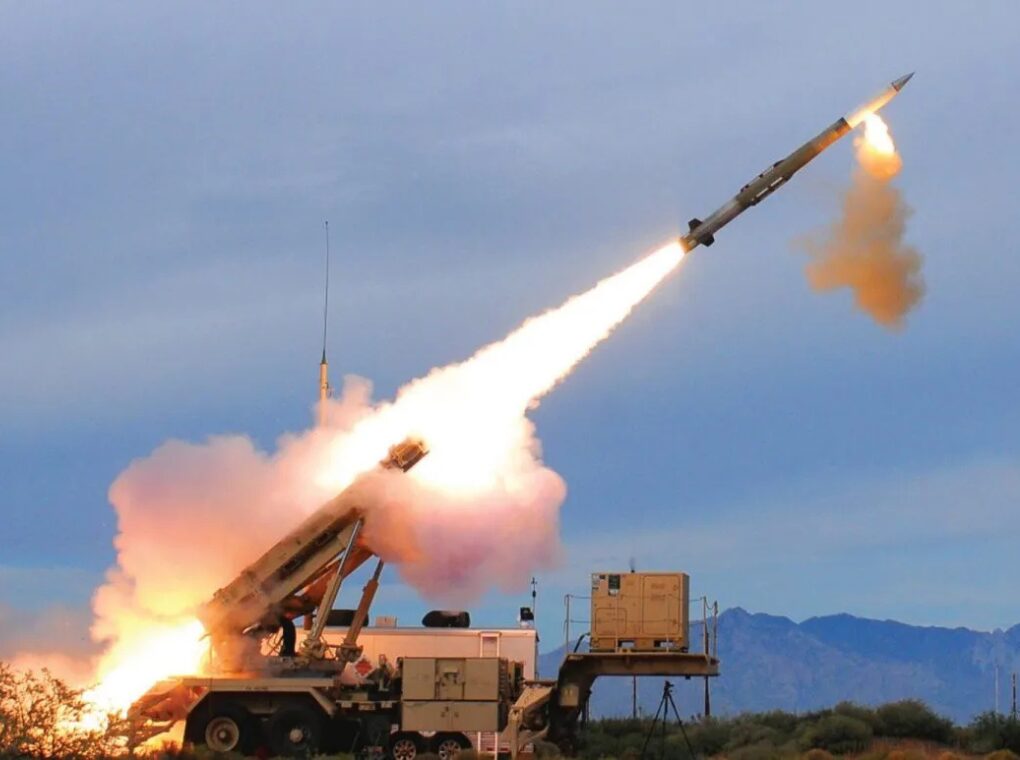
Among the systems deployed by the U.S. and its allies are Patriot missile batteries, multiple Terminal High Altitude Area Defense (THAAD) systems, and ship-based Aegis missile defense interceptors. These systems form the backbone of Washington’s layered missile defense network designed to intercept threats at different stages of flight.
Additional early warning capabilities include Qatar’s AN/FPS-132 Upgraded Early Warning Radar and Aegis SM-3 midcourse interceptors positioned on naval vessels.
Despite this extensive defensive shield, several Iranian missiles reportedly penetrated Israeli air defenses, raising concerns about the ability of existing systems to counter next-generation weapons.
Chinese Research Questions Effectiveness of U.S. Systems
A research team publishing in the Chinese journal Tactical Missile Technology analyzed the capabilities of U.S. missile defense systems against hypersonic weapons. According to the study, while some interceptions may be theoretically possible, the physics of hypersonic flight create serious limitations.
Hypersonic missiles travel at speeds greater than Mach 5—five times the speed of sound—and often maneuver unpredictably during flight. These characteristics reduce the reaction time available for defensive systems and complicate targeting calculations.
The researchers also noted that infrared sensors used by interceptor missiles can struggle to track targets moving at extreme speeds because the heat generated during atmospheric travel can obscure detection.
According to the paper, interceptors such as the Aegis SM-3 are most effective outside the atmosphere, typically above 100 kilometers in altitude. However, many hypersonic glide vehicles travel at lower altitudes, limiting interception opportunities.
Terminal Defense Systems Face Narrow Reaction Window
When a missile descends below higher-altitude defense layers, interception duties shift to terminal-phase systems like THAAD and Patriot PAC-3. These systems attempt to destroy incoming threats during the final stage of flight.
However, the Chinese researchers argue that this phase offers only a very small interception window. If a hypersonic weapon is maneuvering aggressively while traveling at speeds exceeding Mach 6, interceptors may struggle to match its lateral acceleration and speed.
The study modeled a scenario involving the Patriot PAC-3 MSE interceptor attempting to destroy a hypersonic glide vehicle similar to the experimental HTV-2. The results suggested that successful interception becomes unlikely if the target maintains speeds above Mach 6 during its terminal dive.
Some interceptors, such as Aegis SM-2 and SM-6 missiles, travel at around Mach 4—making them even slower than the Patriot interceptor and potentially less effective against hypersonic threats.
Iranian Hypersonic Missiles Enter the Battlefield
Iran has claimed that its latest missile attacks included hypersonic systems such as the Fattah-1 and other advanced missiles like the Qader and Kheibar Shekan. Iranian state media reports that these weapons were used during the 17th round of “Operation True Promise 4.”
The Islamic Revolutionary Guard Corps (IRGC) stated that several missiles penetrated the U.S.-made THAAD defense network and struck strategic targets in Israel, including areas near Tel Aviv and Ben Gurion International Airport.
While independent verification of all claims remains difficult during active conflict, video footage circulating on social media has shown missiles evading multiple interceptors before striking their targets.
Hypersonic Weapons Changing Modern Warfare
Hypersonic weapons differ significantly from traditional ballistic missiles. While ballistic missiles follow a predictable parabolic trajectory, hypersonic glide vehicles travel at lower altitudes and can change direction mid-flight.
This maneuverability allows them to evade radar tracking and defensive interceptors more effectively.
There are two main categories of hypersonic weapons. Hypersonic glide vehicles are launched by rockets before gliding toward their targets at extreme speeds, while hypersonic cruise missiles use advanced air-breathing engines called scramjets to maintain sustained hypersonic flight.
Both technologies represent a major challenge for existing air defense systems.
Global Hypersonic Arms Race Intensifies
The United States has been working on several hypersonic programs, including the Army’s Long-Range Hypersonic Weapon (LRHW), the Navy’s Conventional Prompt Strike system, and the Air Force’s Hypersonic Attack Cruise Missile program.
Despite significant investment—nearly $6.9 billion requested in the Pentagon’s 2025 budget—none of these systems has yet entered full operational service.
Meanwhile, Russia and China have already deployed operational hypersonic weapons. Russia fields systems such as the Kinzhal, Tsirkon, and Avangard missiles, while China operates the DF-17 hypersonic missile and continues to develop advanced scramjet-powered systems.
Military analysts say the ongoing conflict in the Middle East may provide the first large-scale battlefield demonstration of how hypersonic weapons perform against modern air defense systems.
As the war continues, the results could shape the future of missile defense technology—and potentially redefine the balance of military power in the global hypersonic arms race.