Modern warfare is increasingly defined by the battle between advanced air defence systems and the sophisticated weapons designed to destroy them. Recent developments in the ongoing U.S.–Iran confrontation have highlighted how vulnerable even the world’s most advanced missile defence systems can be. According to military assessments, the United States reportedly lost nearly $2 billion worth of military equipment in the first four days of operations in Iran, including radar systems, satellite communications infrastructure, and aircraft.
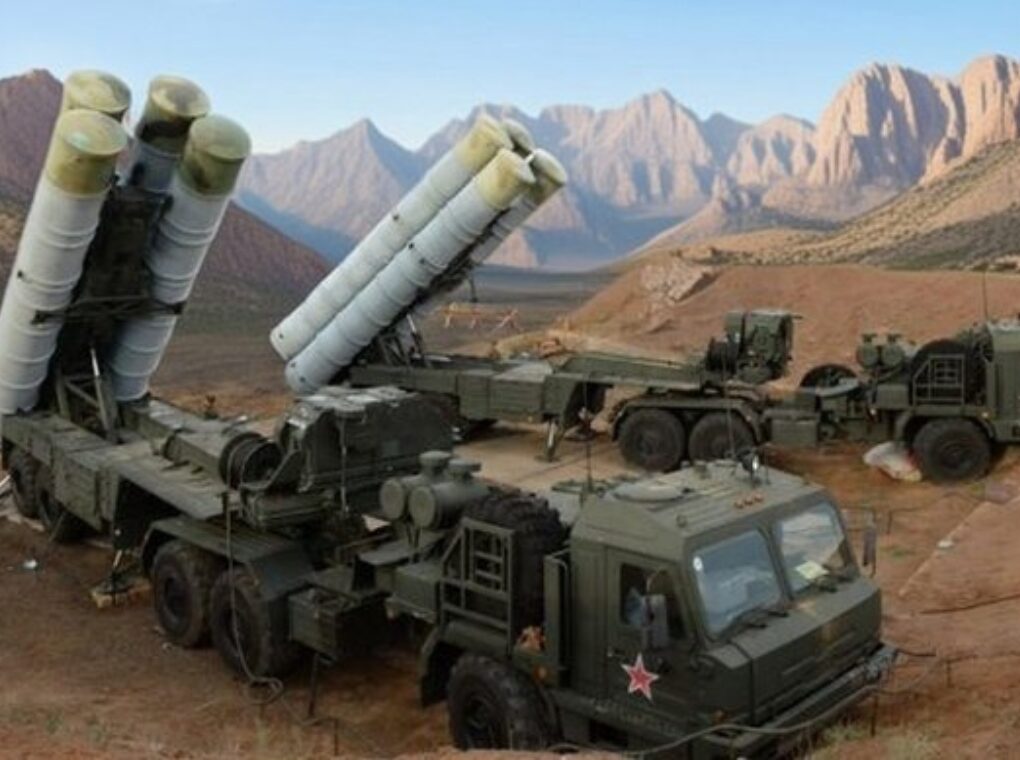
In contrast, Indian military experts argue that India’s layered air defence model — built around the S-400 system and integrated missile networks — has proven far more resilient, thanks to a strategy often described as the “onion-skin” defence approach.
U.S. Radar Systems Hit in Iranian Strikes
One of the most significant losses reported was the AN/FPS-132 early warning radar system stationed at Al Udeid Air Base in Qatar, valued at approximately $1.1 billion. The radar was struck during an Iranian missile attack on February 28 and was partially damaged, according to confirmation from Qatari authorities.
Iran also targeted the U.S. Navy’s Fifth Fleet headquarters in Manama, Bahrain, where missile strikes destroyed satellite communications terminals and several buildings.
Another major blow came when Iranian precision-guided missiles and one-way attack drones hit AN/TPY-2 radar systems linked to the THAAD missile defence batteries in Jordan and the United Arab Emirates. These radars, which serve as the “eyes” of the THAAD system, are estimated to cost around $300 million each.
Military analysts say the strikes demonstrate a new reality of modern conflict: relatively inexpensive drones and precision weapons can threaten extremely costly defence systems.
Lessons From Modern SEAD Warfare
The attacks underline the importance of Suppression of Enemy Air Defences (SEAD) operations — military actions designed to destroy or neutralize enemy radar and surface-to-air missile networks.
Historically, SEAD has played a decisive role in many conflicts. During the 1991 Gulf War, coalition forces quickly paralyzed Iraqi air defences using anti-radiation missiles and electronic warfare. Similarly, the Israeli Air Force’s 1982 Operation Mole Cricket 19 destroyed nearly twenty Syrian missile batteries in just two hours.
More recently, the United States demonstrated the effectiveness of modern SEAD during Operation Absolute Resolve in Venezuela in January 2026, where more than 150 aircraft including F-35 stealth fighters and EA-18G Growlers carried out a massive electronic warfare assault that blinded Russian-supplied radar systems within minutes.
However, conflicts such as the Russia–Ukraine war have also shown the limits of airpower. Russia’s inability to fully suppress Ukrainian air defences resulted in a “mutual air denial” scenario, preventing either side from achieving complete air superiority.
India’s “Onion-Skin” Defence Strategy
Indian defence experts say the best way to protect expensive air defence systems is through a multi-layered architecture, commonly described as the “onion-skin” model.
According to Indian Air Force veteran Air Marshal Anil Chopra, this strategy creates multiple rings of protection around critical radar and missile batteries.
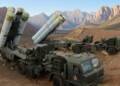
At the outer layer, long-range systems like the S-400 detect and intercept ballistic missiles and aircraft hundreds of kilometers away. The next layer includes medium-range systems such as MR-SAM and Akash, which defend against incoming aircraft and cruise missiles.
Closer to the defended asset, short-range systems like SPYDER and anti-aircraft guns provide point defence against low-flying threats, drones, and loitering munitions.
Finally, electronic warfare systems jam enemy sensors and disrupt guidance systems, while decoys and mobility tactics prevent enemy targeting.
This layered approach ensures that if one defensive ring fails, another immediately engages the threat, greatly improving survivability.
Mobility and Deception as Key Advantages
One major advantage of systems like the S-400 is mobility. During a brief military confrontation between India and Pakistan in May 2025, Pakistani forces reportedly attempted to track Indian S-400 batteries using satellite intelligence.
However, Indian crews repeatedly relocated the missile batteries, preventing them from being accurately targeted. This “shoot-and-scoot” tactic is considered essential in modern warfare, where anti-radiation missiles can strike radar emissions within minutes.
Military forces also deploy inflatable decoys, fake radar emitters, and camouflage techniques to trick enemy sensors and waste precision munitions.
Electronic Warfare and Counter-Drone Defence
Modern air defence systems must also survive electronic warfare attacks and massive drone swarms. Advanced radars now use techniques such as frequency hopping, beam steering, and spread spectrum transmission to resist jamming.
At the same time, militaries are developing directed-energy weapons such as high-energy lasers and microwave systems to destroy drones at extremely low cost compared to missile interceptors.
Artificial intelligence is also being integrated into air defence networks to automatically detect threats and allocate interceptors in real time.
The Growing Drone Challenge
Recent Iranian strikes highlight another trend: cheap drones are increasingly being used to overwhelm expensive air defence systems.
For example, Iranian Shahed-136 kamikaze drones, which cost around $50,000, can force defenders to launch interceptors worth millions of dollars. This cost imbalance is forcing militaries to rethink their strategies.
Experts say future air defence systems will need autonomous drone interceptors, airburst ammunition, and laser weapons to counter these low-cost threats effectively.
A New Era of Air Defence Warfare
The recent strikes on U.S. radar systems show that even the most advanced missile defence networks can be vulnerable when faced with coordinated attacks involving missiles, drones, and electronic warfare.
For countries like India, the focus is increasingly on layered defence, mobility, deception, and integrated command networks to protect critical assets.
As air defence technology continues to evolve, experts believe that the ability to rapidly adapt tactics, repair damaged systems, and maintain layered protection will determine success in future conflicts.
In the age of drone swarms and precision missiles, the battlefield is shifting — and the “onion-skin” defence model may become the global standard for protecting high-value military systems.