A viral remark from António Costa, President of the European Council, has ignited global debate over the geopolitical consequences of the ongoing Middle East crisis and the broader energy war shaping the global economy. Speaking in Brussels, Costa warned that amid the escalating confrontation involving the United States, Israel, and Iran, Russia may be the biggest strategic beneficiary of the turmoil.
“So far, there is only one winner in this war – Russia,” Costa said, referring not to battlefield gains but to the profound shifts in global energy markets and geopolitical leverage that have emerged since tensions in the Middle East intensified.
His comments quickly went viral across social media and international news platforms because they captured a growing concern among policymakers: in modern geopolitical conflicts, control over energy supplies can be as powerful as military force.
Energy Warfare Replaces Conventional Conflict
The escalating crisis demonstrates how modern conflicts increasingly extend beyond traditional military engagement. Rather than relying solely on missiles and airstrikes, nations are leveraging economic and supply chain disruptions to gain a strategic advantage.
Energy supplies—particularly oil, gas, and fertilizer—remain the backbone of global economic activity. When these resources are disrupted, the ripple effects spread quickly across industries, financial markets, and national economies.
In the current crisis, two countries have emerged as key players shaping the global energy landscape: Iran and Russia.
Iran’s Pressure Tactics in the Strait of Hormuz
The Middle East escalation intensified following U.S. and Israeli strikes targeting Iranian facilities. In response, Tehran moved to exert pressure on global energy markets by targeting the Strait of Hormuz, one of the world’s most critical maritime chokepoints.
Roughly 20 percent of global oil shipments pass through the Strait of Hormuz, making it a vital artery for international energy trade. Reports indicate that Iranian forces began deploying naval mines and increasing patrols around the strait, creating uncertainty for commercial tanker traffic.
The mere threat of disruption has already had a dramatic impact. Shipping insurance costs have surged, tanker traffic has slowed, and several Gulf refineries have temporarily reduced output due to safety concerns.
However, analysts note that Iran appears to be pursuing a selective disruption strategy rather than a complete blockade. Shipping data indicates that millions of barrels of Iranian oil have continued to transit the strait since the conflict began, with a large portion reportedly destined for China.
This selective flow suggests Tehran is attempting to maintain revenue streams while applying economic pressure on Western-aligned economies.
Russia’s Strategic Energy Leverage
While Iran’s actions are disrupting physical supply routes, Russia has been exerting influence through energy policy.
Since the start of the Russia–Ukraine War in 2022, the European Union has worked aggressively to reduce dependence on Russian energy. At the beginning of the conflict, Russia supplied roughly 40 percent of Europe’s natural gas.
Through diversification efforts, sanctions, and increased imports of liquefied natural gas, Europe reduced Russian gas dependence to about 14–15 percent by 2025. Brussels also announced a long-term strategy to fully phase out Russian energy imports by 2027.
Yet the ongoing Middle East crisis has complicated these plans.
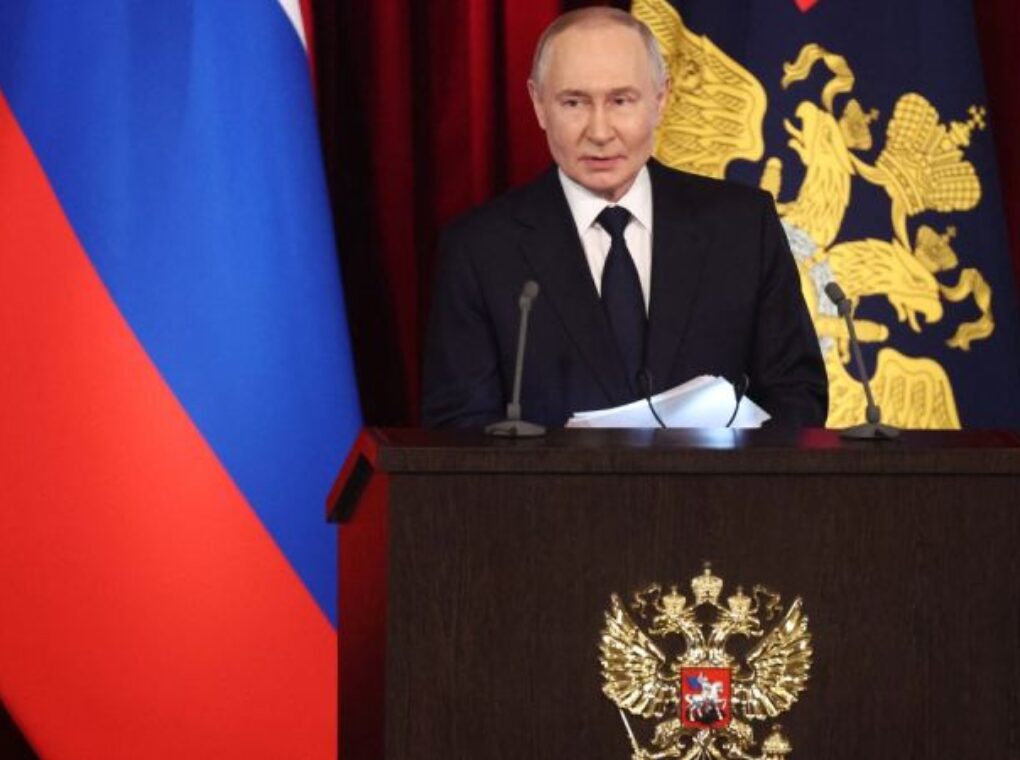
Amid rising energy prices and supply uncertainty, Vladimir Putin signaled that Russia could halt remaining energy exports to Europe even earlier than expected. Moscow has indicated that it may redirect supplies to Asian markets, where demand—particularly from China—continues to rise.
Russia still supplies limited volumes of gas and oil to certain European countries, including Hungary and Slovakia, but a full cutoff would significantly tighten the continent’s already strained energy market.
Fertilizer Supply Adds Another Pressure Point
Energy is not the only sector where Russia holds leverage. Moscow is also the world’s largest exporter of fertilizers, a crucial input for global agriculture.
Despite sanctions, many European countries have continued importing Russian fertilizers due to limited alternatives. If Russia reduces those exports, global fertilizer prices could spike, increasing the cost of agricultural production worldwide.
Such disruptions could push food prices higher, particularly in developing countries that rely heavily on imported fertilizers and grain.
Risk of a New Global Energy Crisis
The simultaneous pressures created by Iran’s actions in the Persian Gulf and Russia’s potential energy restrictions have sparked fears of a global energy shock.
Oil prices have already shown sharp volatility, and natural gas prices in Europe have risen amid supply concerns. Analysts warn that the situation could evolve into a crisis comparable to the 1973 Oil Crisis, when an OPEC embargo triggered global inflation and economic stagnation.
Economists are increasingly warning about the possibility of stagflation, a scenario in which rising energy prices fuel inflation while slowing economic growth.
Industries such as manufacturing, aviation, chemicals, and steel are particularly vulnerable to energy price spikes. For European economies already grappling with inflation and slowing growth, the impact could be severe.
Washington Engages Moscow
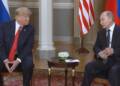
The growing energy crisis has also triggered diplomatic activity. Reports indicate that U.S. President Donald Trump has held discussions with Russian President Vladimir Putin regarding global energy stability.
The talks underscore the difficult position facing Western policymakers. After years of sanctions and efforts to isolate Russia economically, Moscow remains one of the world’s largest energy suppliers and retains the ability to influence global markets.
These dynamic highlights the complexity of modern geopolitics, where economic interdependence often persists despite political confrontation.
Ukraine Conflict Adds Further Uncertainty
The situation is further complicated by ongoing developments in Ukraine. President Volodymyr Zelenskyy has authorized continued strikes against Russian energy infrastructure and naval assets, including elements of the Russian Black Sea Fleet.
While these attacks aim to weaken Russia’s war economy, they also contribute to volatility in global energy markets by disrupting production and export routes.
This interconnected web of conflicts—spanning Eastern Europe, the Middle East, and global energy markets—has intensified uncertainty for governments and businesses alike.
A Geopolitical Shift in the Energy Landscape
António Costa’s warning reflects a broader realization among Western leaders: the global energy system remains deeply vulnerable to geopolitical shocks.
For decades, policymakers assumed that sanctions and diversification could gradually reduce dependence on Russian energy. However, the current crisis demonstrates how quickly global supply chains can be disrupted.
Iran’s ability to threaten a critical shipping route and Russia’s influence over energy exports have created a scenario in which economic pressure is becoming as significant as military power.
As energy markets remain volatile and geopolitical tensions continue, the coming months will determine whether global powers can stabilize supplies or whether the world is entering a prolonged period of economic and energy uncertainty.
Costa’s statement may have been controversial, but it reflects a growing concern in Europe and beyond: in today’s interconnected world, controlling energy flows may be the ultimate strategic advantage.