
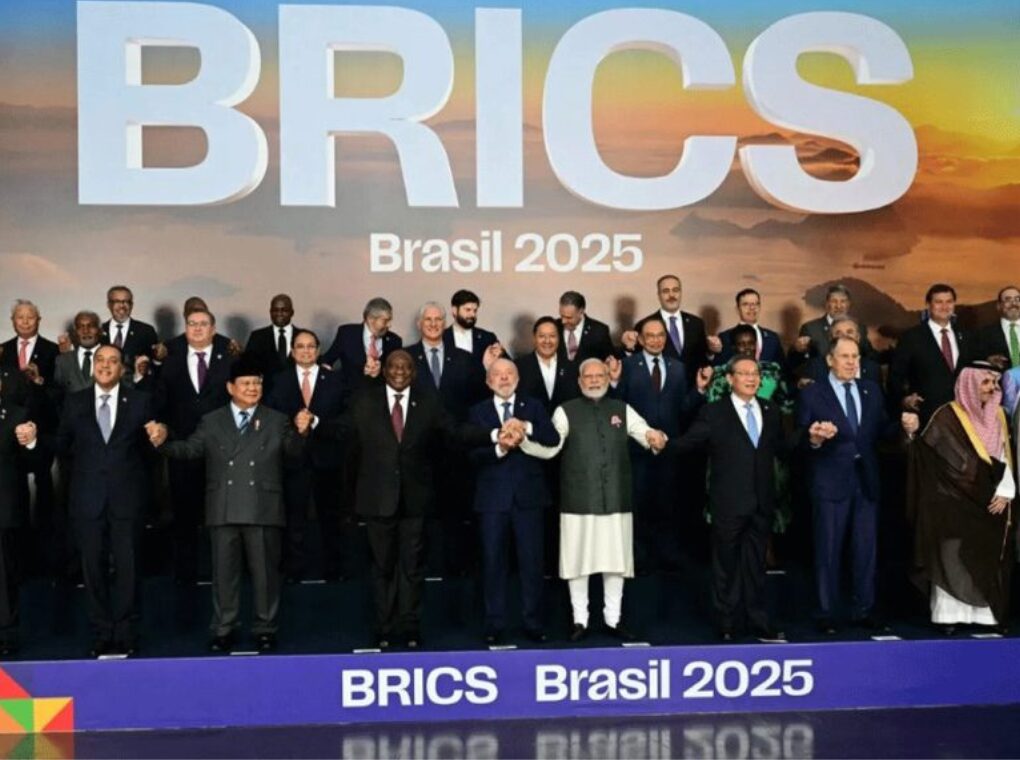
Amid rapidly escalating tensions in West Asia, Iran’s President Masoud Pezeshkian has called on the BRICS alliance to play a decisive and independent role in halting what Tehran describes as ongoing aggression by the United States and Israel.
The appeal comes at a critical moment, as India—currently chairing BRICS—finds itself at the center of a complex geopolitical balancing act. During a recent phone conversation with Indian Prime Minister Narendra Modi, Pezeshkian emphasized the need for collective action to restore stability in the region.
India’s Strategic Role Under Spotlight
Iran specifically urged India to leverage its leadership position within BRICS to push for de-escalation. Pezeshkian proposed the creation of a regional security framework involving West Asian nations, aimed at ensuring peace through cooperation without external interference.
India, while expressing concern over the worsening conflict, stopped short of directly condemning any specific country. However, Modi highlighted the serious risks posed by attacks on critical energy infrastructure, warning that such disruptions could threaten global food supply chains and energy security.
Particular emphasis was placed on maintaining stability in the Strait of Hormuz, a crucial maritime route through which a significant portion of the world’s oil supply passes. Any prolonged disruption here could trigger global economic repercussions.
Trump Rules Out Ceasefire as Military Campaign Expands
On the other side, US President Donald Trump has taken a hardline stance, rejecting calls for a ceasefire. Trump claimed that American forces have already inflicted substantial damage on Iran’s military infrastructure, stating that halting operations at this stage would be strategically unsound.
According to US Central Command, thousands of targets have been struck across Iran since the conflict began in late February, including missile systems, naval assets, and drone facilities. Washington maintains that these operations are aimed at weakening Iran’s offensive capabilities.
Rising Humanitarian and Infrastructure Concerns
As military operations intensify, reports from Iran indicate significant damage to civilian infrastructure. Medical facilities, including hospitals, have reportedly been hit, raising concerns about potential violations of international humanitarian law.
Iranian authorities claim that hundreds of healthcare centers have been affected since the beginning of the conflict, with casualties reported among medical personnel. Tehran has stated it is compiling evidence to present to international organizations, including the United Nations.
Regional and Global Reactions Mount
The situation has drawn reactions from multiple global players. Russian President Vladimir Putin described Iran as a “reliable partner,” signaling continued diplomatic support from Moscow.
Meanwhile, a coalition of 22 countries—including European powers and Gulf nations—issued a joint statement condemning Iran’s actions in the Persian Gulf, particularly targeting commercial shipping and energy infrastructure. These nations have also expressed readiness to ensure safe navigation through key maritime routes.
Escalation Across Multiple Fronts
The conflict has expanded beyond direct US-Iran tensions. Reports indicate drone strikes near military installations in Baghdad and alleged Iranian attacks targeting infrastructure near Tel Aviv’s Ben Gurion Airport.
In parallel, Iraq has declared force majeure on several oilfields due to disruptions in tanker traffic, causing a sharp decline in crude production. This development further underscores the broader economic fallout of the conflict.
Uncertain Path Ahead
With no clear signs of de-escalation, the situation remains volatile. Calls for diplomatic intervention—particularly through multilateral platforms like BRICS—are growing louder. However, deep divisions among global powers and ongoing military operations continue to complicate efforts toward a peaceful resolution.
India’s role as BRICS chair now carries heightened significance, as the world watches whether the bloc can move beyond economic cooperation and emerge as a meaningful geopolitical force in times of crisis.
As tensions persist, the stakes are not just regional but global, with energy markets, trade routes, and international security all hanging in the balance.