
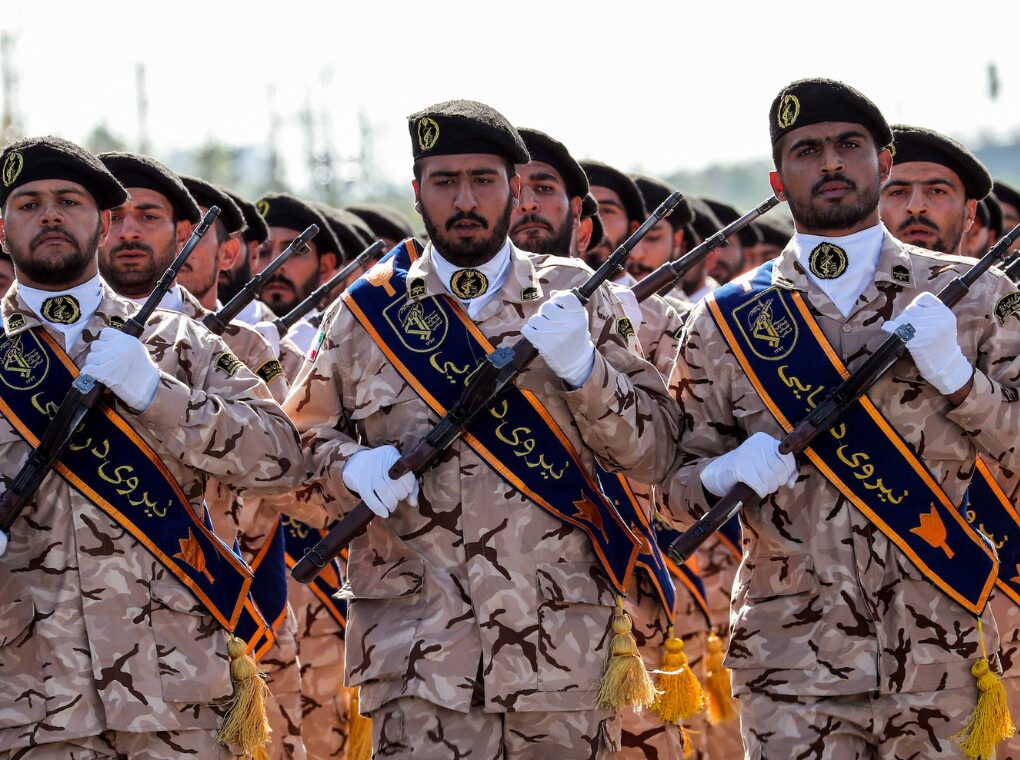
As tensions intensify across West Asia, one institution continues to define Iran’s posture on the global stage—the Islamic Revolutionary Guard Corps. Often misunderstood as just another military unit, the IRGC is in reality a powerful hybrid force that blends ideology, economic control, and unconventional warfare. Its unique structure explains why Iran remains defiant despite mounting military and diplomatic pressure.
A Revolutionary Beginning
The IRGC was established in the aftermath of the Iranian Revolution by Ayatollah Ruhollah Khomeini. Its original purpose was to protect the Islamic Republic and preserve the revolutionary ideology from both internal dissent and foreign interference.
Unlike the regular military, known as the Artesh, the IRGC was designed as a parallel force—loyal not just to the state, but to the revolution itself. Over time, this distinction allowed it to expand far beyond traditional military roles.
More Than a Military Force
Today, the IRGC operates as a vast organization with multiple branches, including ground forces, aerospace units, naval divisions, and the elite Quds Force. It also commands the Basij, a paramilitary network capable of mobilizing large numbers of civilians in times of crisis.
This structure enables the IRGC to function as a hybrid force—capable of both conventional warfare and irregular operations. Its emphasis is not on matching global powers weapon-for-weapon, but on exploiting vulnerabilities through unconventional tactics.
Asymmetric Warfare Doctrine
The IRGC’s defining strength lies in its asymmetric warfare strategy. Rather than competing directly with technologically superior adversaries, it relies on:
Ballistic missile programs
Advanced drone and UAV systems
Cyber warfare operations
Iranian drones, developed under IRGC oversight, have become a key tool in reconnaissance and strike missions. Similarly, cyber capabilities allow the IRGC to target critical infrastructure and financial systems, creating disruption without direct military engagement.
This approach reduces costs while maximizing strategic impact—making Iran a difficult opponent to counter.
Strategic Control of the Strait of Hormuz
One of the IRGC’s most critical roles is maintaining influence over the Strait of Hormuz, through which a significant portion of the world’s oil supply passes.
The IRGC Navy specializes in unconventional maritime tactics such as:
Fast attack craft and swarm strategies
Harassment and escort of oil tankers
Coastal defense operations
These capabilities allow Iran to exert pressure on global energy markets without requiring a large conventional navy.
Regional Reach Through Proxy Networks
Beyond Iran’s borders, the IRGC extends its influence through the Quds Force, which supports allied groups across the region. These include:
Hezbollah
Hamas
Through training, funding, and coordination, these networks provide Iran with strategic depth and the ability to engage adversaries indirectly. While recent conflicts have weakened some of these alliances, they remain a key component of Iran’s regional strategy.
Economic Powerhouse
The IRGC’s influence is not limited to military operations. Over the years, it has built a vast economic empire within Iran, controlling sectors such as:
Infrastructure and construction
Energy and oil projects
Telecommunications
Through state-linked enterprises, the IRGC secures major contracts, giving it significant control over the national economy. This financial independence also helps Iran withstand international sanctions.
Political Influence and Leadership Dynamics
The IRGC plays a crucial role in Iran’s political landscape. Its close alignment with Supreme Leader Ali Khamenei has made it one of the most powerful institutions in the country.
Speculation about succession, particularly involving Mojtaba Khamenei, highlights the organization’s deep influence over Iran’s future leadership. The IRGC’s backing is widely seen as a decisive factor in shaping political outcomes.
Why Iran Remains Defiant?
The IRGC’s ability to operate across multiple domains—military, economic, ideological, and cyber—makes it a uniquely resilient institution. Its strategy is built on:
Flexibility and adaptability
Low-cost, high-impact operations
Strategic unpredictability
Even when facing setbacks, the IRGC quickly recalibrates, ensuring that Iran maintains its strategic posture.
In today’s volatile West Asian landscape, the IRGC stands at the center of Iran’s power structure. It is not merely a military force, but a state within a state—driving policy, shaping strategy, and sustaining resistance.
As geopolitical tensions continue to rise, understanding the IRGC is essential to understanding why Iran is not blinking.