
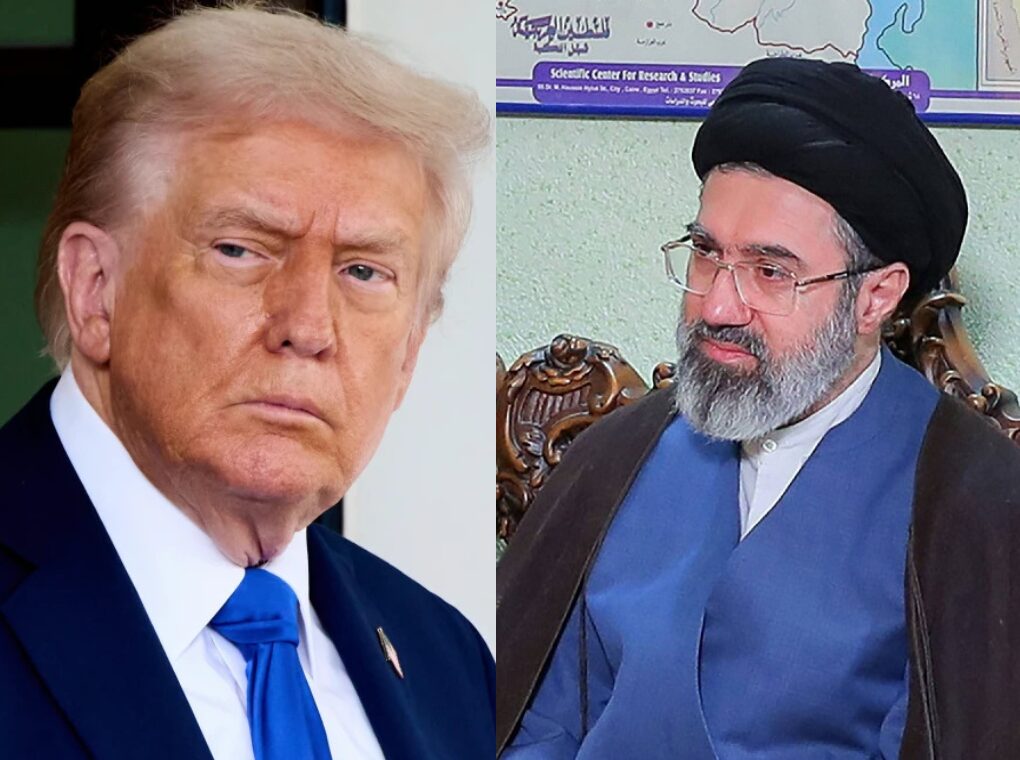
The administration of Donald Trump is quietly preparing for a worst-case oil price surge that could send crude soaring to an unprecedented $200 per barrel, according to a report by Bloomberg. The internal discussions, revealed on March 26, 2026, underscore mounting concerns that escalating tensions with Iran could trigger a severe global energy shock.
Officials stress that the exercise is not a formal forecast but part of routine contingency planning during geopolitical crises. However, the scale of the scenario being modeled reflects the seriousness of the risks tied to ongoing military tensions in the Middle East—particularly around the strategically vital Strait of Hormuz.
Why $200 Oil Is Being Considered?
The Strait of Hormuz handles nearly 20% of the world’s traded oil supply, making it one of the most critical chokepoints in global energy markets. Any prolonged disruption—whether through military conflict, shipping blockades, or infrastructure attacks—could sharply restrict supply and send prices skyrocketing.
According to sources familiar with the discussions, even a sustained oil price of $170 per barrel would significantly damage global economic growth. At $200, the impact could be far more severe, described internally as an “enormous shock to the world economy.”
The scenario comes amid intensifying U.S.-Israel military operations targeting Iranian assets, which have already contributed to volatility in oil markets. Brent crude has climbed close to $100 per barrel, up sharply from pre-conflict levels of around $70, with analysts warning that the risk premium remains elevated.
Iranian officials have also issued warnings that continued escalation could push oil prices toward $200, raising fears of retaliatory strikes on shipping lanes and regional energy infrastructure.
Economic Fallout: Inflation and Growth at Risk
A spike in oil prices to such levels would have far-reaching consequences. Historically, even modest increases in oil prices have slowed global growth. Economists often estimate that every $10 rise in crude prices can reduce global GDP growth by about 0.1%.
At $200 per barrel, the effects could include:
Surging Inflation: Higher energy costs would ripple through transportation, manufacturing, and food sectors, pushing consumer prices upward and eroding purchasing power.
Economic Slowdown: Rising fuel costs act as a tax on households and businesses, reducing consumption and investment. Key sectors like aviation, logistics, and chemicals would face severe cost pressures.
Global Recession Risks: Energy-importing economies in Europe and Asia would be particularly vulnerable, potentially triggering recessions that could feed back into the U.S. economy.
Market Volatility: While oil producers may benefit in the short term, broader financial markets could face instability as investors react to inflation and growth concerns.
The situation could also complicate monetary policy decisions for institutions like the Federal Reserve, which may be forced to balance inflation control against slowing growth.
White House Strategy and Response
Publicly, the Trump administration has downplayed the likelihood of oil reaching $200. Officials argue that the U.S. is better positioned than in previous crises due to its status as a leading energy producer.
Energy policies under Trump have emphasized “energy dominance,” focusing on expanding domestic oil production and reducing reliance on foreign supply routes. Supporters say this provides a buffer against supply shocks, even if global prices rise.
To address immediate risks, the administration has coordinated with allies through the International Energy Agency to release strategic reserves. Planned releases include tens of millions of barrels from the U.S. Strategic Petroleum Reserve, aimed at stabilizing markets and easing supply pressures.
However, critics argue that such measures may offer only temporary relief if disruptions persist, noting that fuel prices in the U.S. are still tied to global benchmarks.
Geopolitical Risks Driving Market Uncertainty
The broader geopolitical backdrop remains highly volatile. Attacks on shipping, rising insurance costs, and infrastructure damage in the Persian Gulf have already disrupted supply chains. Markets continue to react sharply to developments, with prices swinging on military updates and diplomatic signals.
Historically, major oil shocks—such as those in 1973 and 1979—have triggered global recessions. Today’s economic environment, marked by post-pandemic recovery challenges and high debt levels, may be even more sensitive to such disruptions.
What Comes Next?
The administration’s internal modeling highlights the deep interconnection between geopolitics and global energy markets. While officials hope the $200 scenario remains theoretical, the mere need to prepare for it signals the high stakes involved.
A diplomatic resolution could quickly ease pressures, potentially bringing oil prices down. But if tensions escalate further, the global economy could face one of its most severe energy shocks in decades.
For now, the world watches closely as the situation unfolds—aware that the difference between stability and crisis may hinge on developments in one of the most strategically critical regions on Earth.