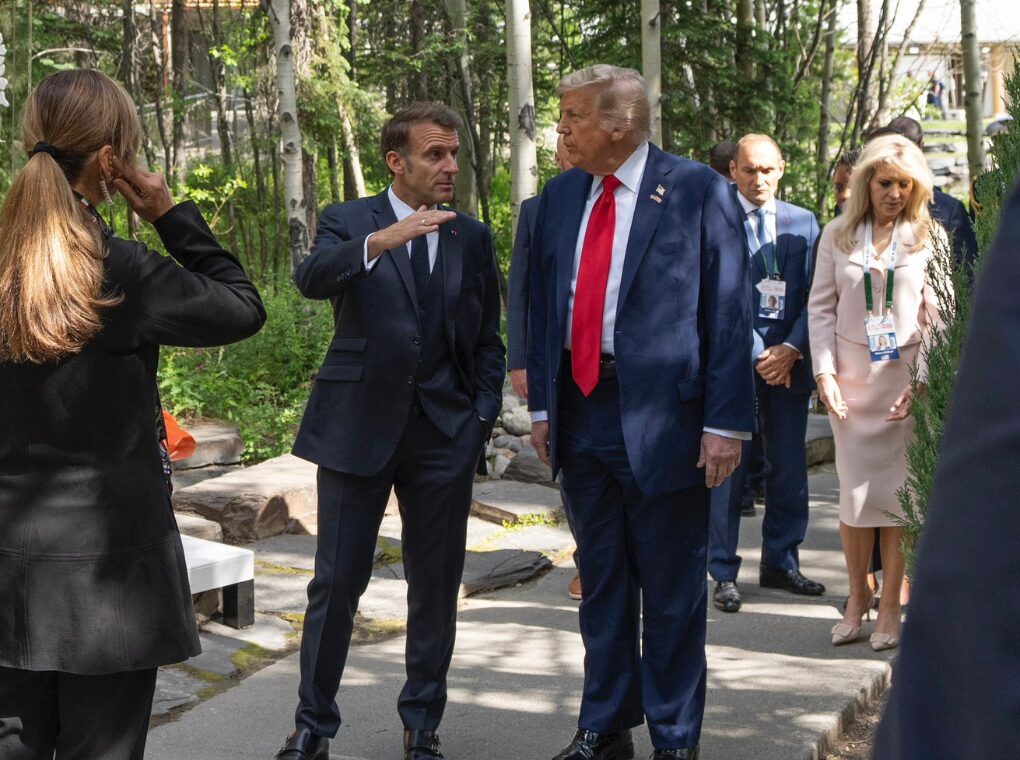
In a sharp escalation of transatlantic tensions, US President Donald Trump has publicly criticized France for refusing to allow American military aircraft carrying supplies to Israel to pass through its airspace. The controversy comes amid the intensifying geopolitical fallout from the ongoing Iran conflict, further exposing divisions between the United States and key European allies.
Taking to Truth Social, Trump described France as “very unhelpful” and warned that Washington would “remember” the decision. His remarks underscore growing frustration within the US administration as European nations increasingly distance themselves from military operations linked to the conflict involving Iran.
Israel Retaliates, Halts Defence Deals with France
The fallout was swift. According to reports from The Jerusalem Post, Israel has halted defence procurement from France, citing what it described as a “hostile attitude” from Paris over the past two years.
The decision was reportedly formalized by Israeli Defence Minister Israel Katz, with backing from Prime Minister Benjamin Netanyahu. Officials indicated that France’s refusal to grant overflight permissions to US aircraft was “the straw that broke the camel’s back,” signaling a significant deterioration in Franco-Israeli relations.
This move could have long-term implications for defence cooperation between the two nations, particularly in areas such as advanced weapons systems and joint military projects.
France Defends Its Position
Responding to Trump’s criticism, French President Emmanuel Macron maintained that Paris had not altered its stance since the beginning of the conflict. French officials reiterated that the country would not permit its territory or bases to be used for offensive operations against Iran.
However, France has left the door open for limited cooperation, stating it may allow temporary access for missions strictly related to the defense of allied nations in the region.
This nuanced position reflects France’s broader strategic objective: supporting allies while avoiding direct involvement in escalating military actions that could trigger a wider regional war.
Italy and Spain Also Push Back
France is not alone in its resistance. Italy has similarly denied the US access to the Sigonella airbase, a critical NATO installation. Italian Defence Minister Guido Crosetto reportedly rejected the request after discovering that US aircraft intended to use the base without prior authorization.
Italian Prime Minister Giorgia Meloni reinforced the country’s stance, emphasizing that Italy does not want to be drawn into war.
Meanwhile, Spain has also expressed opposition to US-led military operations. Prime Minister Pedro Sanchez has consistently voiced his government’s anti-war position and even hinted at broader diplomatic consequences, including tensions in trade relations with Washington.
Growing Divide Between US and Europe
The developments highlight a widening rift between the United States and several of its European allies over the approach to the Iran conflict. While Washington continues to support Israel militarily, many European nations are prioritizing de-escalation and diplomatic solutions.
This divergence is not just strategic but also political, reflecting domestic pressures within European countries where public opinion largely opposes further military engagement in the Middle East.
The disagreement also raises questions about the future cohesion of alliances such as NATO, as member states increasingly pursue independent foreign policies in response to global crises.
What next?
As tensions continue to mount, the standoff over airspace access and military cooperation could have far-reaching consequences. The US may seek alternative routes and partners to sustain its logistical operations, while European nations could face increased diplomatic pressure from Washington.
At the same time, Israel’s decision to halt defence deals with France signals that the geopolitical ripple effects of the Iran conflict are already reshaping international partnerships.
With the situation in West Asia entering a critical phase, the coming days are likely to test not only military strategies but also the resilience of long-standing alliances.