
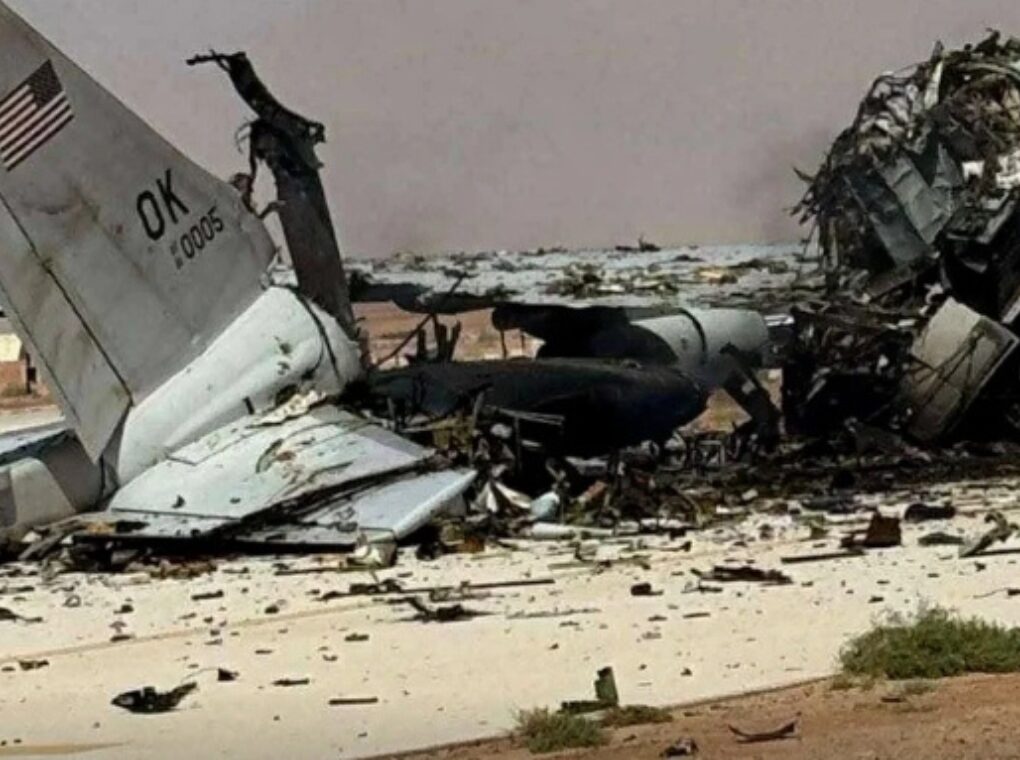
As the ongoing US-Iran conflict intensifies, prominent geostrategist Brahma Chellaney has sparked fresh debate by pointing to reports suggesting that American military losses may be significantly higher than publicly acknowledged.
Taking to X (formerly Twitter), Chellaney argued that both the United States and Israel maintain structured censorship mechanisms when it comes to reporting damage from enemy strikes. He emphasized that sensitive military losses—especially involving advanced systems—are often downplayed or delayed in public disclosure.
Report Claims 20 US Aircraft Damaged or Destroyed
Chellaney cited a report by Air & Space Forces Magazine, which revealed that nearly 20 US Air Force aircraft have been damaged or destroyed within the first three weeks of the conflict. This figure includes fighter jets, aerial refueling tankers, and unmanned aerial systems.
Among the most notable incidents was damage to an F-35A stealth fighter—considered the backbone of US air superiority. According to the report, the aircraft was struck by ground fire during a combat mission over Iran on March 19. The pilot sustained shrapnel injuries but managed to safely land the aircraft at a regional base.
Experts believe the jet may have been hit by a surface-to-air missile, despite operating at high altitude—raising questions about the effectiveness of Iran’s air defense capabilities.
Friendly Fire and Accidents Add to Losses
While the F-35 incident drew global attention, the majority of US aircraft losses appear to stem from non-combat causes. Notably, three F-15E Strike Eagles were downed in a friendly fire incident early in the conflict during what has been dubbed Operation Epic Fury.
US President Donald Trump addressed the incident, describing it as “a little bit of a mishap,” while confirming that the aircraft were mistakenly shot down by allied Kuwaiti air defenses. Fortunately, all crew members survived after ejecting safely.
In another tragic event, a KC-135 Stratotanker crashed in western Iraq on March 12, killing all six personnel on board. The crash is believed to have resulted from a mid-air collision with another tanker aircraft, highlighting the risks associated with high-intensity aerial operations.
Additionally, around a dozen MQ-9 Reaper drones have reportedly been lost—either shot down or destroyed on the ground during Iranian strikes on US bases.
Iran’s Claims and Information Warfare
Iran has also sought to shape the narrative. The Islamic Revolutionary Guard Corps released footage claiming to show an F-35 being targeted, though the authenticity of the video remains unverified.
Tehran has further claimed it struck a US F-15E near its coastline, though US officials have not confirmed such losses beyond the acknowledged incidents.
This battle over information underscores a broader theme of modern warfare—where perception management and psychological operations are as critical as battlefield success.
US Maintains Air Superiority Despite Setbacks
Despite these setbacks, US defense officials insist that the broader air campaign has been overwhelmingly successful. According to Pentagon briefings, American forces have significantly degraded Iran’s air defense systems, missile infrastructure, and naval assets.
The US Department of Defense claims that Iranian drone and missile attacks have dropped by nearly 90% since the start of operations. Furthermore, over 100 Iranian vessels and multiple high-value military targets have reportedly been destroyed or damaged.
Military analysts argue that while losses—especially due to friendly fire—are concerning, they do not fundamentally alter the strategic balance. Instead, they reflect the complexities and risks of high-tempo, multi-domain warfare.
Strategic Implications and the Road Ahead
Chellaney’s remarks have reignited concerns about transparency in wartime reporting and the true cost of modern conflict. The apparent gap between official statements and independent reporting could influence public perception, allied confidence, and geopolitical calculations.
As Donald Trump signals openness to a diplomatic resolution, the coming weeks may determine whether the conflict transitions from kinetic warfare to negotiation.
For now, the US appears to retain air dominance, but the reported losses—especially involving advanced platforms like the F-35—serve as a reminder that even the most technologically superior forces are not immune to battlefield risks.
The evolving situation will continue to test both military strategy and information credibility in one of the most closely watched conflicts in recent history.