
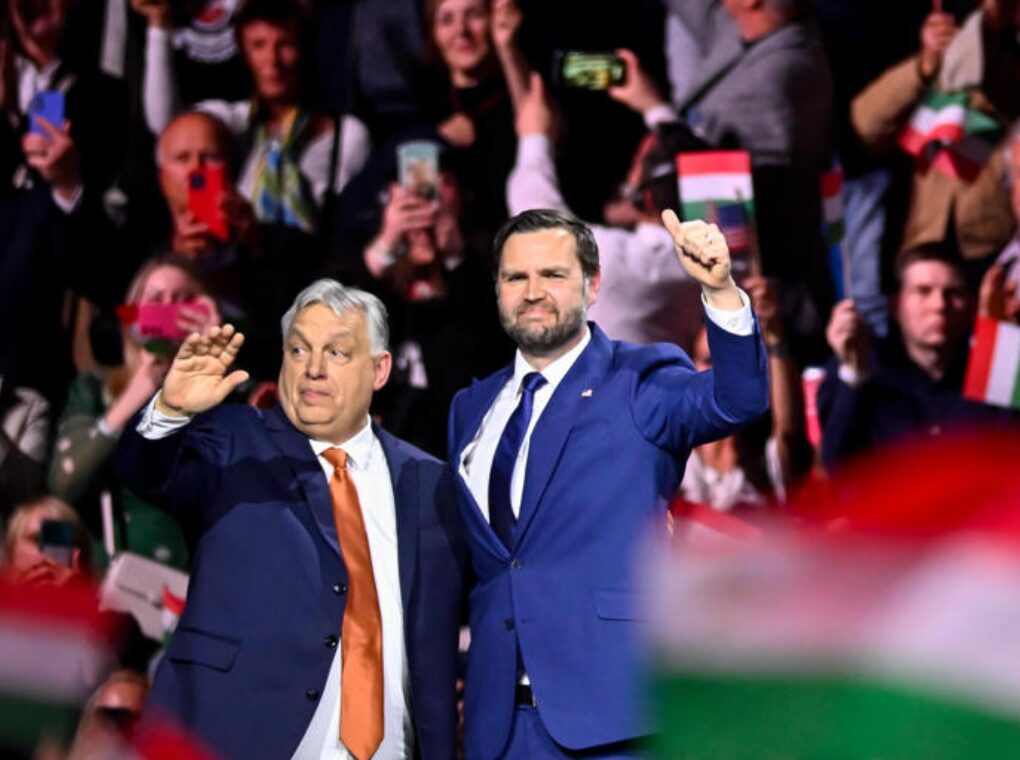
In a dramatic escalation of transatlantic political tensions, U.S. Vice President JD Vance has openly accused the European Union of interfering in Hungary’s upcoming parliamentary elections, while simultaneously voicing strong support for Hungarian Prime Minister Viktor Orbán.
Speaking at a press conference in Budapest, Vance criticized what he described as “bureaucrats in Brussels” attempting to influence Hungary’s democratic process. His remarks come just days before the highly anticipated April 12 elections, which are shaping up to be one of the toughest political battles in Orbán’s 16-year rule.
Vance Backs Orbán, Calls EU Actions “Foreign Interference”
During his visit, Vance made it clear that his presence in Hungary was intended to support Orbán’s re-election campaign. Addressing a crowd, he stated, “We have got to get Viktor Orbán reelected as prime minister of Hungary,” framing the Hungarian leader as a defender of national sovereignty and traditional Western values.
Vance also dismissed criticism that his involvement constitutes foreign interference. Instead, he turned the accusation toward the European Union, claiming that financial pressure tactics—such as withholding billions in funds—amount to direct meddling in Hungary’s internal affairs.
“There’s been a lot of conversation about foreign influence,” Vance said. “But apparently it’s not foreign influence when the EU threatens Hungary financially because it chooses to protect its borders.”
The vice president’s comments reflect the broader stance of U.S. President Donald Trump, who has long praised Orbán’s leadership. In a phone call broadcast during a rally in Budapest, Trump reportedly expressed admiration for Hungary and its prime minister, reinforcing the growing ideological alignment between the two leaders.
Hungary Elections: Orbán Faces Toughest Challenge Yet
The upcoming Hungarian elections are considered a critical moment for the country’s political future. Orbán, seeking his fifth consecutive term, is facing a strong challenge from opposition leader Péter Magyar.
According to multiple independent polls, Orbán’s ruling Fidesz party is trailing behind Magyar among decided voters—an unprecedented development after more than a decade of political dominance.
Orbán’s tenure has been marked by his advocacy of “illiberal democracy,” a governance model that prioritizes national sovereignty, strict immigration controls, and traditional values over liberal democratic norms. While this approach has earned him strong support among conservative leaders globally, it has also drawn sharp criticism from European institutions.
EU Pushes Back Against Vance’s Claims
European Union officials swiftly rejected Vance’s accusations. A spokesperson for the European Commission reiterated that elections within EU member states are determined solely by their citizens.
“In Europe, elections are the sole choice of citizens,” officials stated, emphasizing that the EU’s policies aim to strengthen democratic institutions rather than interfere with them.
The EU also highlighted legislative measures such as the Digital Services Act, which is designed to curb misinformation and protect electoral integrity by regulating major online platforms.
Additionally, EU representatives confirmed that diplomatic channels would be used to communicate concerns about Vance’s statements to U.S. authorities, signaling potential strain in EU-U.S. relations.
Broader Implications for EU-U.S. Relations
Vance’s remarks underscore a growing ideological divide between segments of the American political establishment and European leadership. His strong endorsement of Orbán aligns with a broader trend among conservative figures in the United States who view Hungary as a model for resisting globalization, immigration, and liberal social policies.
At the same time, critics argue that such endorsements risk undermining democratic norms by supporting leaders accused of weakening independent institutions. Organizations like Freedom House have classified Hungary as “partly free,” citing concerns over electoral fairness and media independence.
A Defining Moment for Hungary
As Hungary heads into its April 12 elections, the stakes are higher than ever. The outcome will not only determine Orbán’s political future but could also reshape Hungary’s relationship with the European Union and its position within the broader Western alliance.
With global attention focused on Budapest, the election is emerging as a key battleground in the wider ideological contest between nationalist and liberal democratic visions of governance.
Whether Vance’s intervention will influence voters—or backfire—remains to be seen. But one thing is certain: Hungary’s Election is no longer just a domestic affair—it has become a focal point of global political debate.