
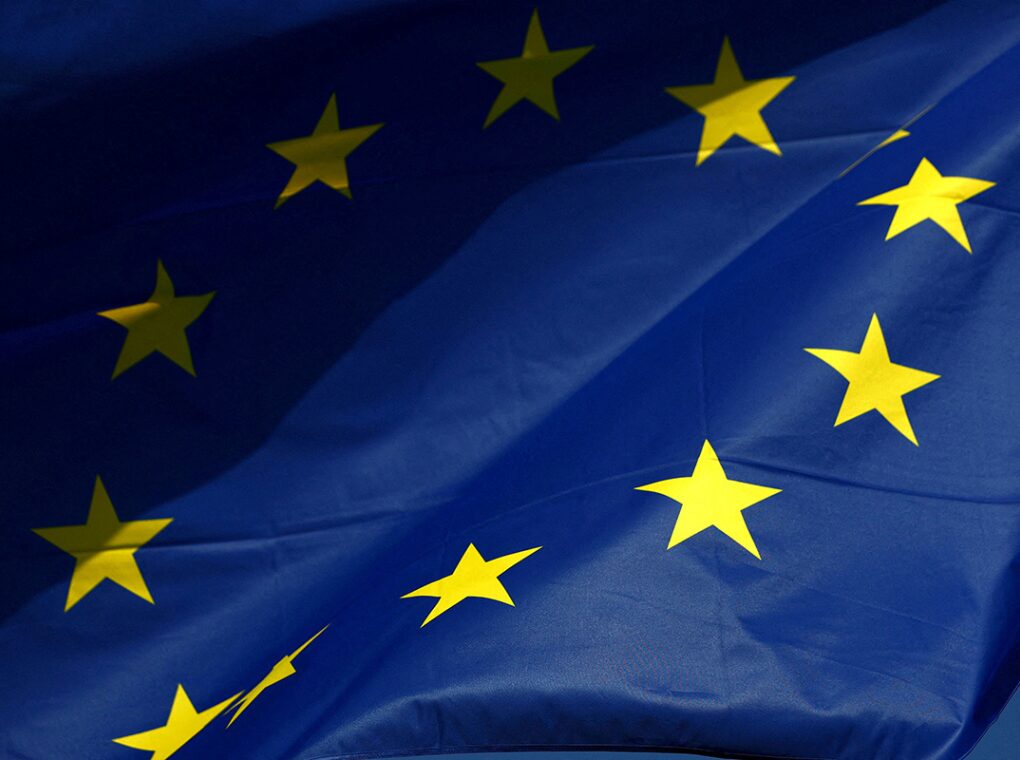
A fresh geopolitical controversy has emerged after Russia’s Foreign Intelligence Service (SVR) alleged that the European Union is quietly exploring the possibility of developing its own nuclear weapons capability. The claims, which have not been independently verified, come at a time of heightened global tensions and ongoing debates within Europe over defense independence and strategic autonomy.
According to the SVR, officials in Brussels have initiated confidential discussions aimed at building a “pan-European nuclear deterrence” framework. This alleged plan would rely on the existing nuclear arsenals of France and the United Kingdom while incorporating financial, industrial, and technological support from other EU member states. The Russian agency claims that the initiative is being pursued discreetly, even as European leaders publicly continue to emphasize reliance on NATO and the United States’ nuclear umbrella.
The European Commission, led by Ursula von der Leyen, has not issued any official response to the allegations. Similarly, Kaja Kallas and other European leaders have not publicly confirmed any move toward establishing an independent nuclear arsenal. Western officials have historically dismissed similar claims from Moscow as part of broader information campaigns.
Russia’s Allegations and Strategic Concerns
The SVR’s statement portrays the alleged EU initiative as a destabilizing move that could undermine the global nuclear non-proliferation framework. It argues that the European Union is using what it describes as a “Russian threat narrative” to justify expanding its military capabilities, including nuclear deterrence.
Russia further claims that the EU is considering the creation of independent nuclear command structures, separate from NATO. Such a move, if realized, would represent a significant shift in Europe’s defense posture, potentially reducing reliance on the United States and reshaping transatlantic security dynamics.
The SVR also highlighted the growing coordination between France and the United Kingdom—Europe’s only two nuclear-armed states—as a possible foundation for a broader European nuclear doctrine. While both countries maintain independent nuclear arsenals, deeper integration into an EU-wide framework would mark an unprecedented development.
Does the EU Have the Capability?
Although the EU does not currently possess a unified nuclear weapons program, several member states have advanced nuclear infrastructure and technical expertise. Countries such as Germany, Italy, the Netherlands, Sweden, and Belgium operate nuclear facilities or have significant experience in nuclear technology.
Experts note that civilian nuclear capabilities, in theory, could be adapted for military purposes. Uranium enrichment facilities, for instance, can produce low-enriched uranium for energy production but may be reconfigured to produce highly enriched uranium suitable for weapons. Similarly, spent nuclear fuel from power reactors can be reprocessed to extract plutonium, another key material used in nuclear warheads.
The SVR specifically alleged that German facilities could produce enough weapons-grade plutonium for a nuclear device within a short timeframe under certain conditions. However, independent analysts caution that such claims may oversimplify the technical, political, and regulatory challenges involved in developing nuclear weapons.
Legal and Political Barriers
One of the most significant obstacles to any EU nuclear weapons program is the Treaty on the Non-Proliferation of Nuclear Weapons (NPT), which most European countries have signed. The treaty is designed to prevent the spread of nuclear weapons and promote disarmament, making any move toward new nuclear capabilities highly controversial and legally complex.
Additionally, the European Union itself does not have a unified military command structure comparable to a nation-state, raising questions about who would control such weapons and under what authority. Decision-making in the EU often requires consensus among member states, which could complicate any effort to centralize nuclear control.
Public opinion across Europe is another critical factor. Many EU countries have strong anti-nuclear sentiments, shaped by historical experiences and environmental concerns. Any attempt to develop nuclear weapons could face significant domestic opposition.
Strategic Autonomy vs. Escalation
The debate over a potential EU nuclear capability is closely tied to the broader concept of “strategic autonomy,” which has gained traction in recent years. European leaders have increasingly emphasized the need to reduce dependence on external powers, particularly in defense and security.
Supporters of greater autonomy argue that Europe must be prepared to defend itself in an increasingly unpredictable global environment. However, critics warn that pursuing nuclear weapons could escalate tensions and trigger a new arms race, particularly with Russia.
Moscow has framed the alleged EU plans as a direct threat to global stability, warning that such a move would erode decades of arms control efforts. At the same time, European officials have largely focused their public discussions on strengthening conventional military capabilities rather than pursuing nuclear expansion.
A Narrative in Dispute
At present, there is no independent confirmation that the European Union is actively developing a nuclear weapons program. The claims remain part of a broader информационное противостояние—an information confrontation—between Russia and Western nations.
Nevertheless, the issue highlights a shifting security landscape in Europe. The war in Ukraine, evolving NATO dynamics, and uncertainties about long-term U.S. commitments have all contributed to renewed discussions about Europe’s defense future.
Whether or not the EU is seriously considering nuclear weapons, the conversation itself signals a significant change. Nuclear deterrence, once largely confined to Cold War-era superpower rivalry, is again becoming a topic of debate in modern geopolitics.
The allegations by Russia’s SVR have added a new layer of tension to already strained international relations. While the European Union has not confirmed any such plans, the discussion underscores the growing complexity of global security challenges.
If Europe were ever to pursue an independent nuclear capability, it would mark a historic shift with far-reaching consequences. For now, however, the claims remain unverified, and the future of Europe’s defense strategy continues to evolve amid uncertainty and competing narratives.